 Preview
 Send
Send Share
Share
 Details

 Download
 Similars
 X-Ray
X-Ray Diaporama
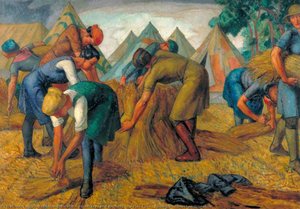
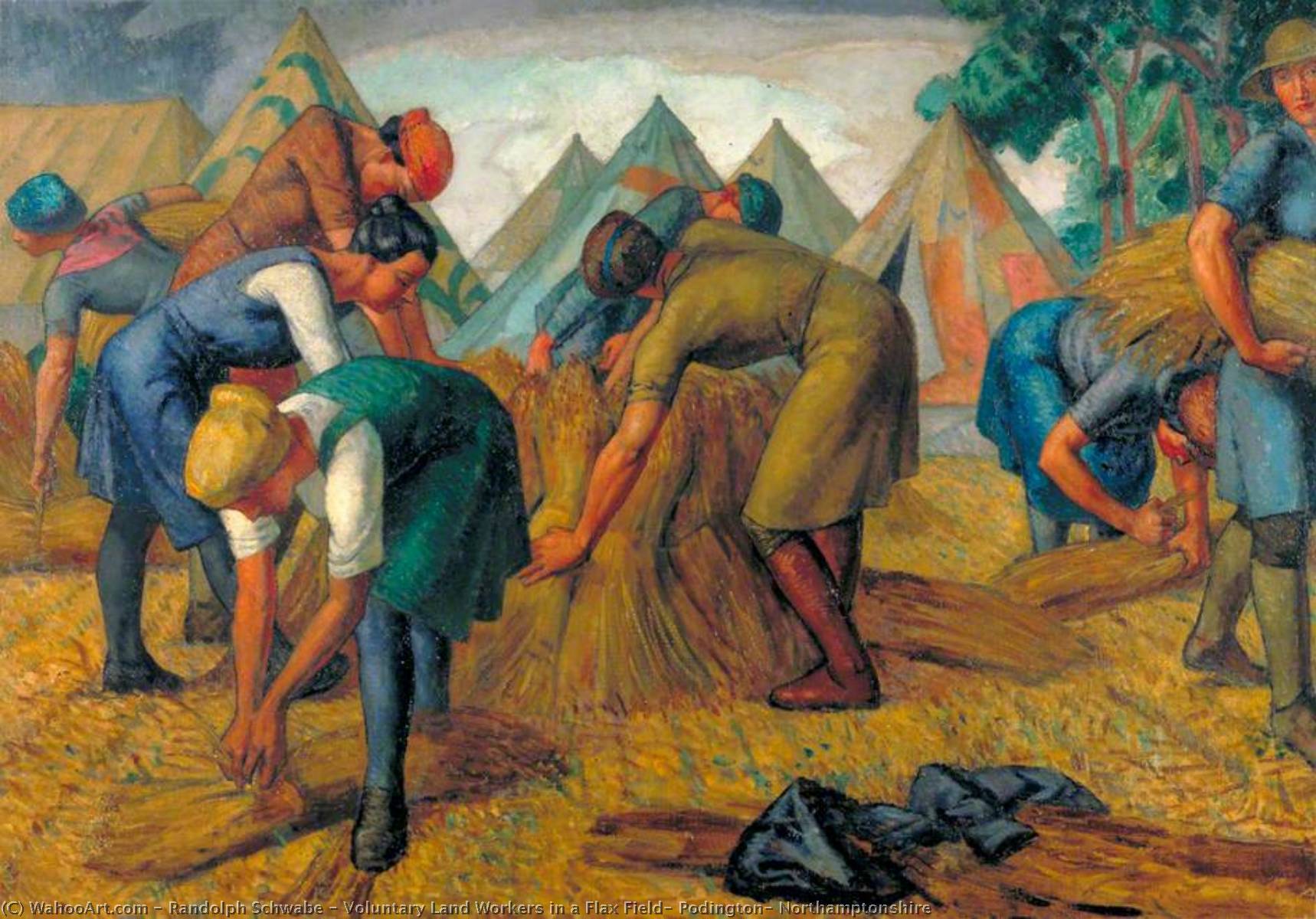
Voluntary Land Workers in a Flax Field, Podington, Northamptonshire
 1919
1919 107.0 x 152.0 cm
 Read More
Hand Made Oil Reproduction
Hand-painted oil on canvas in your size and frame, made to order by our artists. ( Buy Print Buy Image)




































Pick from our preset sizes that match the artwork's original proportions.

You may enter your own dimensions to fit a specific frame or space. If your selected size does not match the original image's proportions, we will either crop the artwork or extend the painting with additional hand-painted elements. A digital mockup will be sent for your approval before production begins.
Please note that the on-screen preview does not reflect the actual cropping or extension. Only the mockup will accurately show the final composition.
While custom sizes are available, we recommend selecting a dimension from the predefined list to preserve the original proportions.
After order, ArtsDot.com team will email client for instructions and provide a mockup preview
Worldwide Delivery () in 3/4 weeks instead of standard 5 weeks. (21 August). No compromise on quality.

Free Worldwide Express Shipping

High-Quality Linen Canvas

Full Shipping Insurance

Customs Tax Refund Guarantee

True Color Matching Guarantee

60-Day Return Policy (Defects Only)

100% Money-Back Guarantee

Bulk Discount Offer
 Glass option is only available in size under 110 CM

Voluntary Land Workers in a Flax Field, Podington, Northamptonshire
Reproduction Medium
Reproduction Size
-


Total Price
$ 263
Related Artworks
Artist Biography
Randolph Schwabe: A Portraitist of British Life
Randolph Schwabe (1885-1948) wasn’t merely a painter; he was a meticulous observer, a recorder of his time, and a subtle chronicler of the shifting social landscape of early twentieth-century Britain. Born in Eccles, Lancashire, into a family with roots tracing back to Germany – a lineage that subtly informed his artistic sensibility – Schwabe's journey from a quiet childhood to becoming one of the nation’s most respected portraitists and illustrators is a testament to both innate talent and an unwavering dedication to craft. His work, often imbued with a poignant realism and a keen awareness of social themes, offers a valuable window into a period defined by rapid change, war, and the evolving role of women in society.
Schwabe’s artistic education began modestly, initially at a private school before he enrolled at the Royal College of Art. However, it was his transfer to the Slade School of Fine Art in 1900 that proved formative. The Slade, with its emphasis on draughtsmanship and traditional techniques, instilled in him a rigorous approach to observation and representation. This foundation would later underpin his remarkable ability to capture not just physical likeness but also the subtle nuances of character and emotion. His time at the Académie Julian in Paris further broadened his artistic horizons, exposing him to new influences and techniques, particularly within the burgeoning modern art movements.
The War Artist and Social Commentary
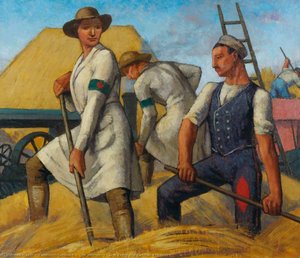
World War I marked a significant turning point in Schwabe’s career. Appointed an Official War Artist, he eschewed grand battle scenes, instead focusing on the often-overlooked realities of wartime life – the tireless efforts of women working in the Women's Land Army, their faces etched with determination and resilience. These intimate portraits weren’t simply depictions of labor; they were powerful statements about the changing roles of men and women during a time of national crisis. His work from this period is imbued with a quiet dignity and a profound empathy for those bearing the burdens of war.
Following the war, Schwabe continued to serve as an Official War Artist during World War II, documenting the devastation caused by bombing raids on cities like Coventry. His sketches and paintings captured not only the physical destruction but also the emotional toll on the civilian population – a stark reminder of the human cost of conflict. Beyond his official commissions, he was deeply involved in theatrical design, illustrating books for publishers such as Beaumont Press, including notable works like *Historic Costume* and *The Tinkers of Elstow*, demonstrating his versatility and artistic range.
Teaching and Legacy at the Slade
In 1930, Schwabe assumed the prestigious role of Slade Professor of Fine Art at University College London, succeeding Henry Tonks. This appointment was a fitting continuation of the Slade’s tradition of rigorous training in draughtsmanship and observation. Unlike Tonks, who was known for his demanding style, Schwabe fostered a more collaborative and encouraging environment, earning the respect and affection of his students. He remained at the helm until 1948, shaping generations of artists and upholding the school's reputation as a leading center for artistic education.
Schwabe’s influence extended beyond the confines of the Slade School. His meticulous draughtsmanship, combined with his insightful understanding of human character, informed his portraiture, which is characterized by its quiet dignity and emotional depth. His work reflects not only a mastery of technique but also a deep engagement with the social realities of his time – a poignant blend of realism and empathy that continues to resonate today. His legacy lies in his ability to capture the essence of British life during a period of profound transformation, offering a valuable record of a nation grappling with war, change, and the evolving role of its citizens.
Key Works and Artistic Style
Schwabe’s artistic style is defined by its meticulous draughtsmanship, precise observation, and subtle use of color. He favored watercolor and gouache, employing these mediums to create works that are both detailed and atmospheric. His portraits are particularly notable for their ability to capture not just physical likeness but also the inner life of his subjects – their personalities, emotions, and experiences. His depictions of rural life, such as those from his war-time commissions, are characterized by a quiet dignity and a keen awareness of the hardships faced by ordinary people.
Notable works include his series of portraits of women working in the Women’s Land Army during World War I, his illustrations for *Historic Costume*, and his sketches documenting the devastation caused by bombing raids on Coventry. His work is held in numerous public collections, including the Tate Gallery and the Imperial War Museum, ensuring that his legacy as one of Britain's most important portraitists continues to be celebrated.
randolph schwabe
1885 - 1948
Quick Facts
- Artistic Movement Or Style: Portraiture, Realism
- Artists Or Movements Influenced By This Artist: ['Slade School Tradition']
- Artists Who Influenced This Artist: ['Henry Tonks']
- Date Of Birth: May 9, 1885
- Date Of Death: September 19, 1948
- Full Name: Randolph Schwabe
- Nationality: British
- Notable Artworks:
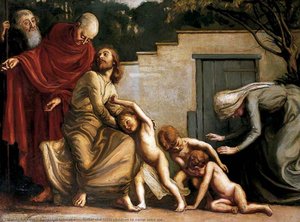
- Suffer the little children
- Historic Costume
- Place Of Birth: Eccles, Greater Manchester