 Preview
 Send
Send Share
Share
 Details

 Download
 Similars
 X-Ray
X-Ray Diaporama
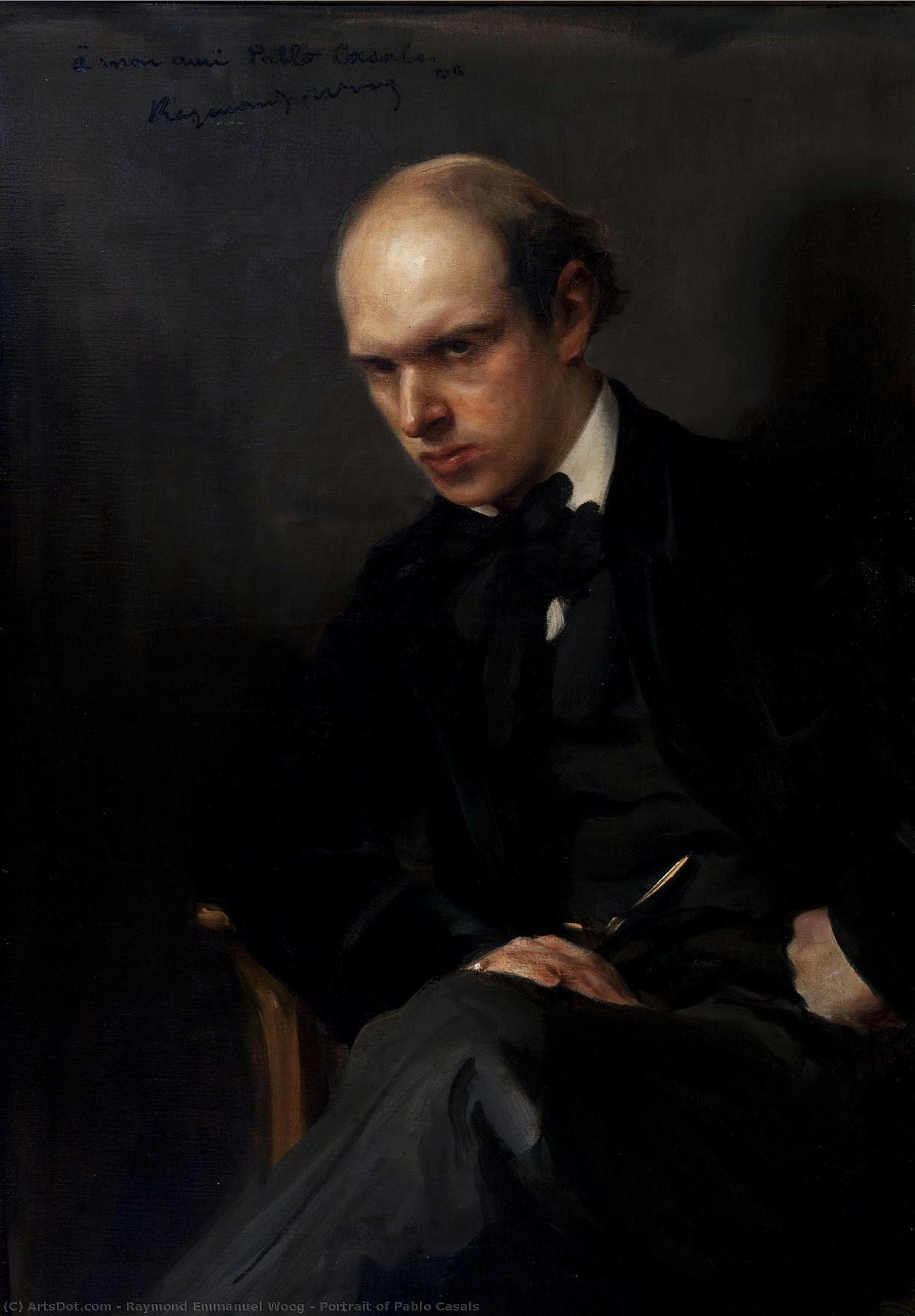
Portrait of Pablo Casals
 Oil On Canvas
- WallArt
- French Romanticism
 1906
1906 65.0 x 92.0 cm
 Vil·la Casals-Museu Pau Casals
 Read More
Giclée / Art Print
Museum-quality giclée or canvas print with fast production and flexible finish options. ( Buy Hand Made Painting Buy Image)




P118B $10

P118H $10

P118W $10

P438Z $10

P508JH $12

P508YH $12

P805H $10

P805Z $10

P919BZ $10

P919G $10

P919XJ $10

P959ZH $10

P968JZ $12

W106C $8

W218G $10

W218JH $8

W218Y $10

W307PJ $10

W316G $10

W316PJ $8

W316Y $10

W398PJ $8

W4111J $10

W500HY $15

W500JH $15

W692G $12

W849H $8

W940BG $15

W953PJ $8




Pick from our preset sizes that match the artwork's original proportions.

You may enter your own dimensions to fit a specific frame or space. If your selected size does not match the original image's proportions, we will either crop the artwork or extend the image with a mirrored or solid-fill edge. A digital mockup will be sent for your approval before production begins.
Please note that the on-screen preview does not reflect the actual cropping or extension. Only the mockup will accurately show the final composition.
While custom sizes are available, we recommend selecting a dimension from the predefined list to preserve the original proportions.
Worldwide Delivery () in 2 weeks instead of standard 4/5 weeks. (25 August)

Free Worldwide Express Shipping

High-Quality Linen Canvas

Full Shipping Insurance

Customs Tax Refund Guarantee

True Color Matching Guarantee

60-Day Return Policy (Defects Only)

100% Money-Back Guarantee

Bulk Discount Offer
 Glass option is only available in size under 110 CM

Portrait of Pablo Casals
Giclée / Art Print
Reproduction Size
-


Total Price
$ 63
Collectible Description
A Portrait Steeped in Dignity: Exploring Raymond Woog’s Reverent Depiction of Pablo Casals
Raymond Emmanuel Woog's 1906 portrait of Pablo Casals isn’t merely a likeness; it’s an embodiment of artistic reverence and a masterful distillation of Impressionistic principles. Executed in oil on canvas, measuring 65 x 92 cm, the painting transcends simple representation to convey a profound sense of melancholy beauty—a characteristic hallmark of Corot's oeuvre and a testament to Woog's dedication to capturing the essence of his subject.The Atmosphere of Reflection
Woog skillfully employs muted tonal palettes dominated by blacks, grays, and browns, mirroring the somber mood inherent in Casals’ persona and reflecting the broader artistic currents of the period. The artist eschews vibrant hues, prioritizing instead subtle gradations of light that illuminate Casals' face and hands with a diffused glow—a technique directly influenced by Impressionist luminists like Corot himself. This deliberate restraint contributes to an overall feeling of quiet contemplation, inviting viewers into the contemplative space inhabited by the cello maestro. The indistinct background serves not as mere backdrop but as an amplifier of Casals’ presence, emphasizing his isolation and inner seriousness.Formal Composition and Delicate Rendering
The portrait adheres to a classic three-quarter pose, positioning Casals squarely before the viewer—a compositional choice that speaks volumes about respect for tradition while simultaneously conveying immediacy. Woog's meticulous attention to detail is evident in the rendering of Casals’ facial features, capturing the subtle nuances of expression with remarkable accuracy. Soft brushstrokes delineate the contours of his face and hands, creating a tactile quality that draws the eye inward. Furthermore, the drapery of Casals’ suit—rendered with flowing lines and careful consideration for folds—adds textural richness to the canvas and reinforces the painting's sense of dignified composure.Echoes of Corot: Light, Texture, and Symbolism
Woog’s artistic vision is undeniably rooted in the legacy of Jean-Baptiste-Camille Corot, whose groundbreaking explorations into capturing atmospheric effects revolutionized landscape painting and profoundly impacted subsequent generations. Like Corot, Woog prioritizes conveying mood over precise topographical detail—a decision that aligns perfectly with the Impressionist movement's rejection of academic conventions. The dramatic lighting emanating from an unseen source on Casals’ left casts long shadows across his face, highlighting his gaze and creating a visual metaphor for introspection. Similarly, Woog employs textured brushstrokes to simulate the weight and drape of fabric—a technique reminiscent of Corot’s masterful depictions of rural scenes. Ultimately, this portrait serves as a poignant reminder that art can transcend mere representation, capturing not just what is seen but also what is felt—a timeless achievement worthy of admiration.Related Artworks


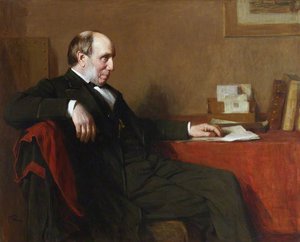
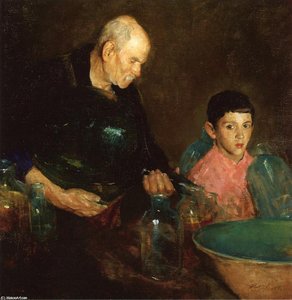
Artist Biography
Jean-Baptiste-Camille Corot: Bridging Realism and Impressionism
Jean-Baptiste-Camille Corot (1796-1875) stands as a pivotal figure in the transition between Neoclassicism and the burgeoning world of Impressionism. More than simply a landscape painter, Corot was a master of atmosphere, light, and color, profoundly influencing generations of artists who followed. His career spanned over seven decades, marked by an evolution from meticulously detailed academic works to looser, more evocative depictions of nature – a journey that cemented his place as one of the most significant figures in French art history.
Born in Paris into a comfortable bourgeois family—his father a wigmaker and mother a milliner—Corot’s early life offered him an unusual degree of freedom. Unlike many aspiring artists who were forced to endure grueling apprenticeships, he received a scholarship to study at the Lycée Pierre-Corneille, though his academic struggles led him to abandon formal schooling. This unconventional beginning allowed him to pursue art with a relative lack of financial constraint, a privilege that shaped his artistic approach and provided him with the time and resources to develop his unique vision.
His initial training involved studying under Achille Etna Michallon, a student of Pierre-Henri de Valenciennes, both known for their meticulous academic style. However, Corot quickly outgrew these constraints, seeking a more direct engagement with nature. He spent several formative years in Italy (1825-1828), immersing himself in the landscapes and light of the Roman countryside and the Campagna. This period proved crucial, establishing his understanding of color theory and composition while simultaneously rejecting the rigid conventions of academic painting. Returning to Paris, he continued to refine his technique under Jean-Victor Bertin, further solidifying his foundation before embarking on a career largely defined by independent exploration.
The Pursuit of Atmospheric Landscape
Corot’s artistic philosophy centered around capturing the fleeting effects of light and atmosphere. He eschewed grand historical or mythological subjects in favor of humble landscapes—forests, fields, riversides, and glimpses of villages—that offered a more immediate connection to the natural world. His approach was revolutionary for its time; he prioritized *plein-air* painting – working outdoors directly from nature – over the traditional studio method. This commitment to direct observation resulted in paintings characterized by loose brushstrokes, subtle color gradations, and an emphasis on capturing the ephemeral qualities of light.
Unlike many of his contemporaries who sought to replicate photographic realism, Corot deliberately blurred outlines and softened edges, creating a sense of atmospheric depth and mystery. His palette was muted and earthy, dominated by greens, browns, grays, and blues—colors that he skillfully blended to evoke the mood and texture of the landscape. He wasn’t interested in precise representation but rather in conveying the *feeling* of being present within the scene.
Influences and Legacy
Corot's artistic development was shaped by a diverse range of influences, including the Barbizon School painters, whose emphasis on rural life and landscape resonated with his own sensibilities. However, he also drew inspiration from earlier masters such as Claude Lorrain and Nicolas Poussin, adapting their compositional techniques while rejecting their idealized forms. The influence of Japanese prints—particularly those depicting landscapes—is also evident in his work, particularly in the use of asymmetrical compositions and flattened perspectives.
Crucially, Corot’s commitment to *plein-air* painting paved the way for Impressionism. Artists like Monet, Renoir, and Pissarro directly built upon his techniques, embracing his focus on capturing fleeting moments of light and color. While often overshadowed by the more flamboyant figures of the Impressionist movement, Corot's contribution is undeniable; he provided a crucial bridge between academic tradition and modern artistic expression.
Major Works and Characteristics
Several paintings exemplify Corot’s distinctive style and evolving approach. *View at Narni* (1837), exhibited at the Salon of 1837, showcases his early Italian period—characterized by clear forms and bright colors. Later works, such as *The Church at Louveciennes* (1869) and *The Forest of Fontainebleau* (various dates), demonstrate a shift towards looser brushwork, atmospheric effects, and a greater emphasis on capturing the mood of the landscape. These paintings are often imbued with a sense of melancholy and solitude, reflecting Corot’s own contemplative nature.
His later works, particularly those painted in the 1860s and 70s, are notable for their subtle color palettes and hazy atmosphere—a testament to his lifelong dedication to capturing the elusive beauty of light and shadow. Corot's legacy extends beyond individual paintings; he established a new standard for landscape painting, influencing countless artists who followed in his footsteps.
A Lasting Impact
Jean-Baptiste-Camille Corot died in Paris in 1875, leaving behind a vast and influential body of work. His paintings are now housed in major museums around the world, including the Musée d'Orsay in Paris, the National Gallery in London, and the Metropolitan Museum of Art in New York. Corot’s enduring appeal lies not only in his technical skill but also in his ability to evoke a profound sense of connection with nature—a quality that continues to resonate with viewers today.
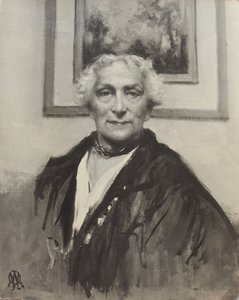
raymond emmanuel woog
1875 - 1949 , France
Quick Facts
- Artistic Movement Or Style: Realism, Landscape
- Artists Or Movements Influenced By This Artist: ['Impressionism']
- Artists Who Influenced This Artist:
- Michallon
- Bertin
- Date Of Birth: 1796-07-16
- Date Of Death: 1875-02-22
- Full Name: Jean-Baptiste-Camille Corot
- Nationality: French
- Notable Artworks:
- Views at Narni
- Roman Campagna
- Place Of Birth: Paris, France
Related Articles

The Enduring Legacy of Oil on Canvas: Technique, History & Aesthetic Impact
Explore the rich history & techniques of oil painting – from Renaissance masters to Impressionism. Discover pigments, layering methods, and why this timeless medium endures. Expert insights for artists & art enthusiasts.
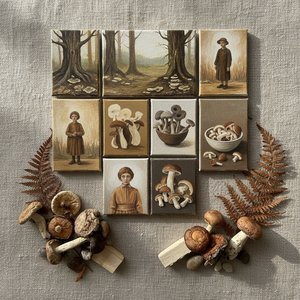
Earthy Hues & Masterpieces: Top 10 Paintings with 'Mushroom' Tones |
Explore 10 iconic paintings with captivating 'mushroom' tones! Discover Van Gogh, Monet & Rembrandt’s masterpieces—earthy palettes, rich history & artistic techniques. Find museum-quality art reproductions and curated decor ideas at

Oil on Canvas: A Historical & Technical Exploration of a Timeless Artistic Medium
Explore the rich history & enduring techniques of oil painting on canvas. Discover the science behind its longevity, conservation practices, and contemporary relevance. Expert insights for art enthusiasts.
Dark Gray Masterpieces: 10 Iconic Paintings & Timeless Home Decor Ideas
Explore 10 iconic paintings dominated by dark gray tones, from Rembrandt & Caravaggio to Goya. Discover the stories behind these masterpieces and find museum-quality art reproductions for your home at . Explore the full collection online.
Sandstone & Sunlight: 10 Masterpieces of Earth-Toned Art |
Journey through 10 iconic paintings bathed in 'sand' tones – from Van Gogh to Monet. Explore the stories, techniques & warm palettes of these timeless masterpieces. Find museum-quality art reproductions at and bring classic beauty home.