 Preview
 Send
Send Share
Share
 Details

 Download
 Similars
 X-Ray
X-Ray Diaporama
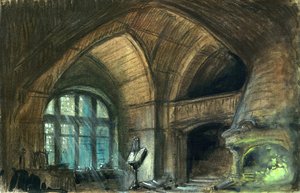
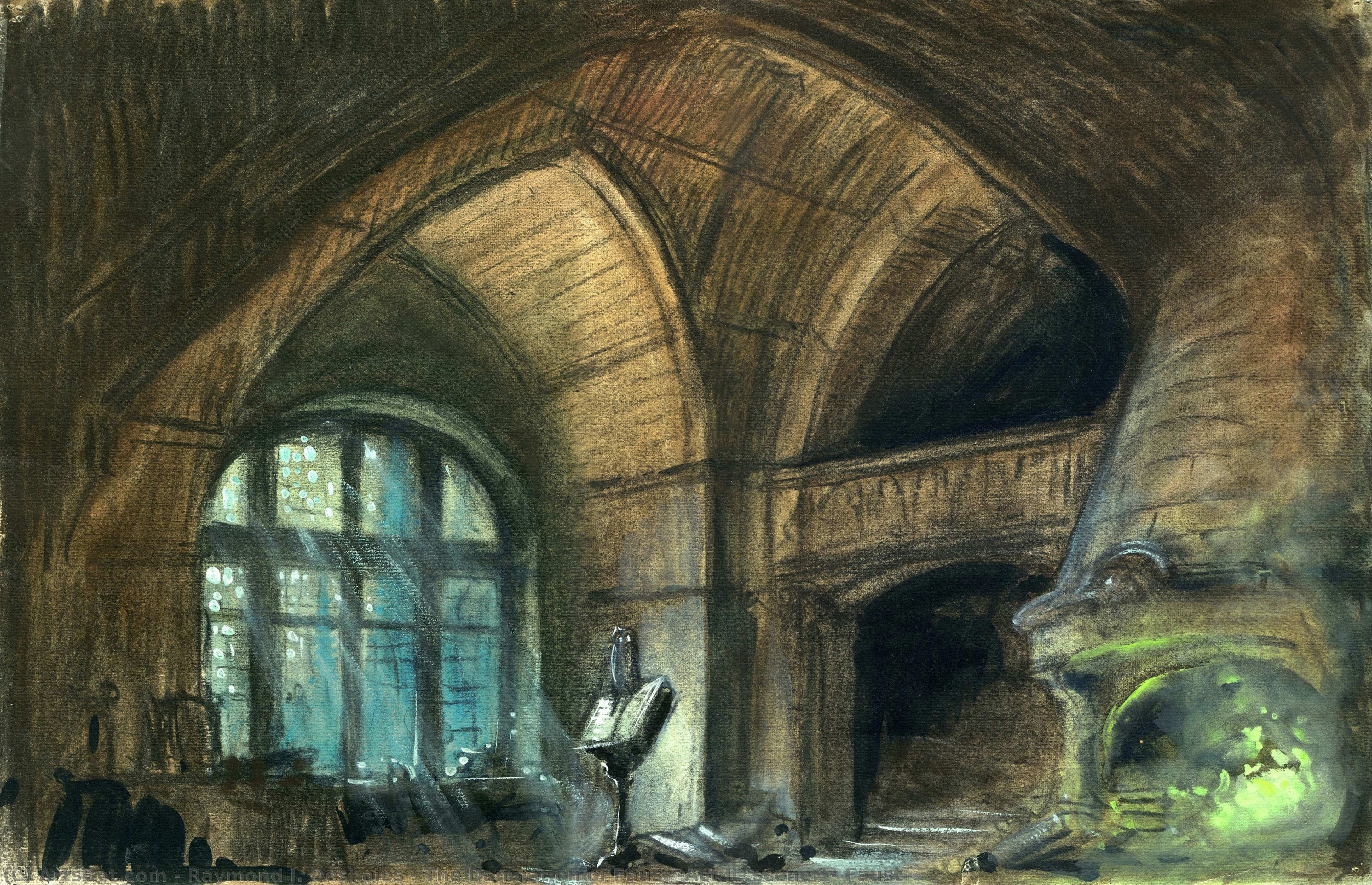
The Damnation of Faust (Act II, scene 1, Faust


 Read More
Giclée / Art Print
Museum-quality giclée or canvas print with fast production and flexible finish options. ( Buy Hand Made Painting Buy Image)




































Pick from our preset sizes that match the artwork's original proportions.

You may enter your own dimensions to fit a specific frame or space. If your selected size does not match the original image's proportions, we will either crop the artwork or extend the image with a mirrored or solid-fill edge. A digital mockup will be sent for your approval before production begins.
Please note that the on-screen preview does not reflect the actual cropping or extension. Only the mockup will accurately show the final composition.
While custom sizes are available, we recommend selecting a dimension from the predefined list to preserve the original proportions.
Worldwide Delivery () in 2 weeks instead of standard 4/5 weeks. (26 August)

Free Worldwide Express Shipping

High-Quality Linen Canvas

Full Shipping Insurance

Customs Tax Refund Guarantee

True Color Matching Guarantee

60-Day Return Policy (Defects Only)

100% Money-Back Guarantee

Bulk Discount Offer
 Glass option is only available in size under 110 CM

The Damnation of Faust (Act II, scene 1, Faust
Giclée / Art Print
Reproduction Size
-


Total Price
$ 63
Related Artworks








Artist Biography
The Alchemist of Light and Lyricism
In the rare intersection where the precision of molecular biology meets the sweeping drama of the operatic stage, one finds the singular vision of Raymond J. Deshaies. An artist whose work functions as a bridge between two seemingly disparate worlds, Deshaies brings a scientist’s eye for detail to the ethereal realms of classical music and historical narrative. Born in Waterbury, Connecticut, in 1961, his journey began not with a paintbrush, but with the microscopic wonders of life itself. His academic path, marked by a doctorate from the University of California, Berkeley, and a distinguished professorship at Caltech, established him as a formidable figure in the field of biochemistry. Yet, beneath the rigorous study of protein homeostasis and cellular degradation lies an enduring passion for the lyrical beauty of opera, a passion that would eventually transform his scientific discipline into a profound method of artistic inquiry.
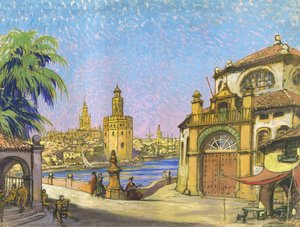
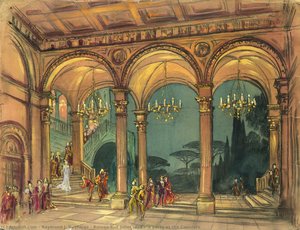
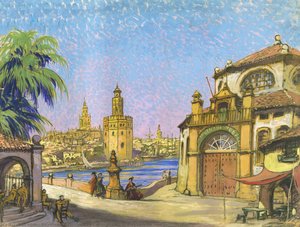
Deshaies’s approach to illustration is far more than mere decoration; it is a visual dissection of emotion. Drawing upon his deep understanding of physiological nuance, he approaches the canvas as if examining the very essence of human experience. When he depicts the sun-drenched streets of Seville in Carmen or the opulent, chandelier-lit ballrooms of Romeo and Juliet, he is not simply recreating a set; he is capturing the visceral sensations of the characters. His background in cell biology allows him to perceive the subtle interplay of light, posture, and facial expression as elements that constitute the psychological landscape of a scene. This unique perspective imbues his work with a sense of theatrical suspended animation, where every brushstroke serves to freeze a moment of profound dramatic tension.
A Symphony of Gouache and Shadow
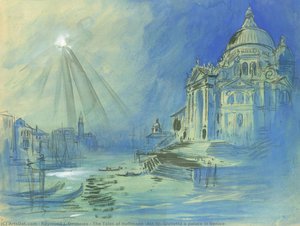
The technical mastery of Deshaies is most evident in his use of gouache, a medium that allows for the rich, opaque textures necessary to convey the weight of history and the fluidity of atmosphere. In his celebrated depictions of The Tales of Hoffmann, particularly the Venetian dreamscape of Act IV, one can witness a breathtaking mastery of light and shadow. He utilizes the medium to create a luminous world where the architecture of Venice meets the shimmering surface of the lagoon, bathing the scene in a warm, golden glow that evokes both romance and a haunting sense of nostalgia. The meticulousness of his technique—a hallmark of his scientific training—is visible in the way light interacts with the surfaces of ancient buildings and the gentle, rhythmic ripples of the canal.
His oeuvre is characterized by several key thematic explorations:
- The Intersection of Science and Art: Utilizing the analytical rigor of biochemistry to inform the composition, lighting, and emotional depth of his illustrations.
- Operatic Narrative: Reimagining iconic moments from masterpieces such as Faust, Carmen, and The Tales of Hoffmann through a lens of visual storytelling.
- Atmospheric Realism: Creating immersive environments that transport the viewer to specific historical and geographical locales, from the bustling squares of Andalusia to the majestic palaces of Venice.
Ultimately, the significance of Raymond J. Deshaies lies in his ability to prove that the analytical and the expressive are not mutually exclusive. His work stands as a testament to the idea that a deep understanding of the physical world can enhance our appreciation for the ephemeral beauty of art. Through his illustrations, the complex mechanisms of life and the dramatic crescendos of the opera house find a common language, resulting in a body of work that is as intellectually stimulating as it is visually captivating.
raymond j. deshaies
1961 - , United States of America
Quick Facts
- Artistic Movement Or Style: Opera Illustration
- Date Of Death: Living
- Full Name: Raymond J. Deshaies
- Nationality: American
- Notable Artworks:
- Romeo and Juliet (Act I, a party at the Capulets)
- Carmen (Act I, a square in Seville)
- The Tales of Hoffmann (Act IV, Giulietta a palace in Venice)
- Place Of Birth: United States of America