 Preview
 Send
Send Share
Share
 Details

 Download
 Similars
 X-Ray
X-Ray Diaporama
 Stats
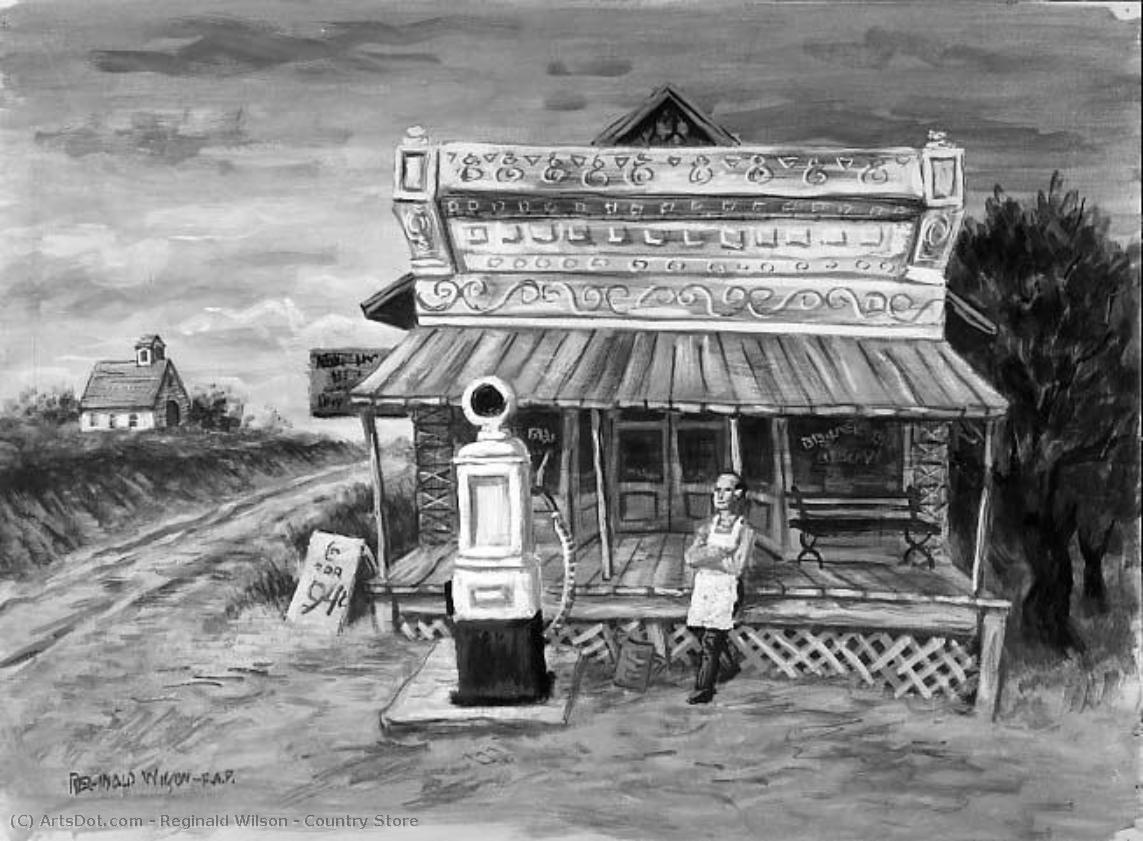
StatsCountry Store
 1939
1939 38.0 x 51.0 cm
 Read More
Giclée / Art Print
Museum-quality giclée or canvas print with fast production and flexible finish options. ( Buy Hand Made Painting Switch to Digital Image)




































Pick from our preset sizes that match the artwork's original proportions.

You may enter your own dimensions to fit a specific frame or space. If your selected size does not match the original image's proportions, we will either crop the artwork or extend the image with a mirrored or solid-fill edge. A digital mockup will be sent for your approval before production begins.
Please note that the on-screen preview does not reflect the actual cropping or extension. Only the mockup will accurately show the final composition.
While custom sizes are available, we recommend selecting a dimension from the predefined list to preserve the original proportions.
Worldwide Delivery () in 2 weeks instead of standard 4/5 weeks. (10 September)

Free Worldwide Express Shipping

High-Quality Linen Canvas

Full Shipping Insurance

Customs Tax Refund Guarantee

True Color Matching Guarantee

100-Day Return Policy (Defects Only)

100% Money-Back Guarantee

Bulk Discount Offer
 Glass option is only available in size under 110 CM

Country Store
Giclée / Art Print
Reproduction Size
-


Total Price
$ 63
Related Artworks





Artist Biography
A Life Composed: The Geometric Worlds of Reginald (Reggie) Wilson
Born in Butler, Ohio, in 1909, Reginald Wilson – often known as Reggie Wilson – embarked on a journey that would lead him from the American Midwest to a distinctive place within the landscape of geometric abstraction. While not a household name, Wilson’s meticulously crafted acrylic paintings represent a compelling and quietly powerful contribution to mid-20th century modernism. His life story, though relatively undocumented compared to his more celebrated contemporaries, reveals an artist dedicated to exploring the fundamental elements of form, color, and composition with unwavering precision. He wasn't driven by flamboyant expression or overt narrative; instead, Wilson sought a visual language rooted in structure and balance, a testament to order within complexity.Early Studies and Artistic Formation
Wilson’s formal artistic training took him across the Atlantic to the Goldsmiths’ College School of Art, a significant institution fostering experimentation and innovation. The precise details of his curriculum remain somewhat elusive, but it's clear that this period profoundly shaped his aesthetic sensibilities. The influence of European modernism – particularly Constructivism and the Bauhaus movement – is readily apparent in his mature work. These schools championed abstraction as a means of reflecting the dynamism of the machine age and the underlying mathematical principles governing the universe. While studying at Goldsmiths', Wilson began to develop the core tenets of his style: a preference for clean lines, carefully chosen palettes, and an emphasis on the interplay between geometric shapes. He wasn’t merely replicating these influences; he was internalizing them, distilling their essence into something uniquely his own. The rigorous academic environment likely instilled in him a discipline that would become a hallmark of his practice.A Language of Color and Form
Wilson's paintings are characterized by their striking geometric compositions, built from precisely rendered acrylic forms. He favored a limited but potent range of colors – often bold primaries juxtaposed with more subdued earth tones – creating a visual tension that draws the viewer into the work. His canvases aren’t chaotic arrangements; they possess an inherent logic and harmony. Shapes overlap and intersect, creating layers of depth and movement, yet always remain firmly grounded in a sense of structural integrity. The artist wasn't interested in spontaneous gesture or emotional outpouring. Instead, he approached painting as a deliberate act of construction, akin to assembling a complex puzzle. Each element is carefully considered for its relationship to the whole, resulting in works that feel both intellectually stimulating and visually captivating. The surfaces are smooth and polished, further emphasizing the precision and control inherent in his technique.Exhibition History and Recognition
Despite not achieving widespread fame, Wilson’s work was exhibited at several prestigious institutions during his lifetime, including the Royal Academy, the Royal Scottish Academy, and the Royal Glasgow Institute. These exhibitions demonstrate that his art resonated with a discerning audience within the British art world. Participation in these venues suggests he was viewed as a serious artist engaging with contemporary trends, even if his style didn’t align perfectly with dominant movements. The fact that his work was consistently selected for inclusion speaks to its quality and originality. While detailed records of critical reception are scarce, it's reasonable to assume that his paintings were appreciated for their formal rigor and subtle beauty. He continued to paint steadily throughout his life, refining his style and exploring new variations within his established vocabulary until his death in 1993.Historical Significance and Legacy
Reginald Wilson’s place in art history is perhaps best understood as a quiet but significant voice within the broader context of American modernism. He represents a strand of abstraction that prioritized structure, order, and intellectual clarity over emotional expression or subjective interpretation.- His work shares affinities with artists like Josef Albers and Gene Davis,
- who similarly explored the expressive potential of color field painting and geometric forms.
- However, Wilson’s paintings possess a unique character—a sense of restrained elegance and meticulous craftsmanship that sets them apart.

reginald (reggie) wilson
1909 - 1993 , United States of America
Quick Facts
- Artistic Movement Or Style: Geometric Constructivism
- Date Of Birth: 1909
- Date Of Death: 1993
- Full Name: Reginald (Reggie) Wilson
- Nationality: American
- Place Of Birth: Butler, USA