 Preview
 Send
Send Share
Share
 Details

 Download
 Similars
 X-Ray
X-Ray Diaporama
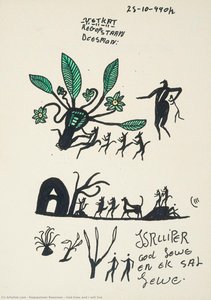
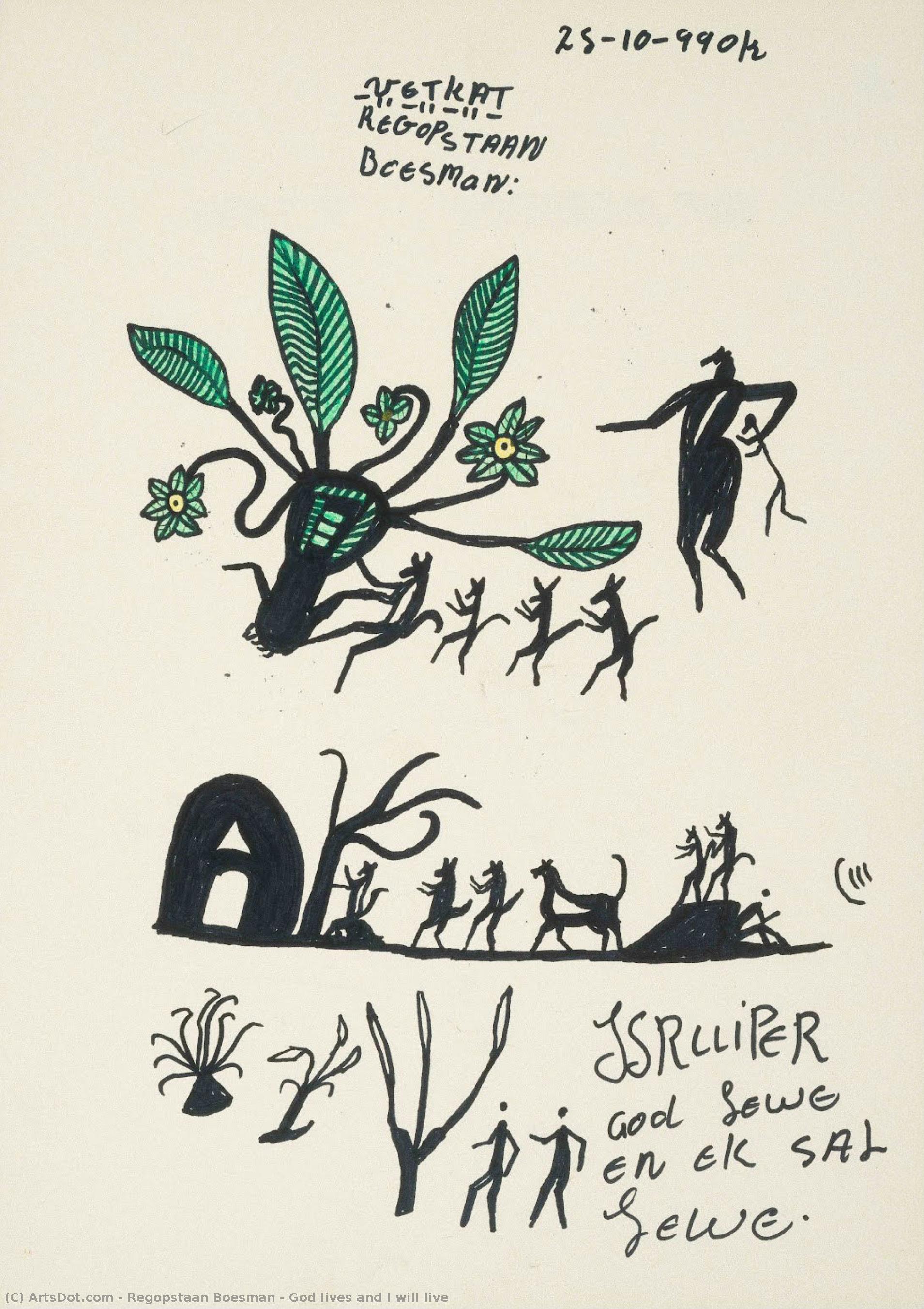
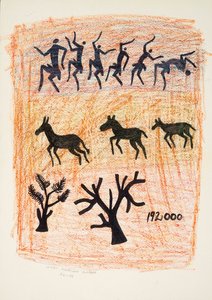
God lives and I will live
 1999
1999 42.0 x 29.0 cm
 University of Pretoria Museums
 Read More
Giclée / Art Print
Museum-quality giclée or canvas print with fast production and flexible finish options. ( Buy Hand Made Painting Buy Image)




































Pick from our preset sizes that match the artwork's original proportions.

You may enter your own dimensions to fit a specific frame or space. If your selected size does not match the original image's proportions, we will either crop the artwork or extend the image with a mirrored or solid-fill edge. A digital mockup will be sent for your approval before production begins.
Please note that the on-screen preview does not reflect the actual cropping or extension. Only the mockup will accurately show the final composition.
While custom sizes are available, we recommend selecting a dimension from the predefined list to preserve the original proportions.
Worldwide Delivery () in 2 weeks instead of standard 4/5 weeks. (25 August)

Free Worldwide Express Shipping

High-Quality Linen Canvas

Full Shipping Insurance

Customs Tax Refund Guarantee

True Color Matching Guarantee

60-Day Return Policy (Defects Only)

100% Money-Back Guarantee

Bulk Discount Offer
 Glass option is only available in size under 110 CM

God lives and I will live
Giclée / Art Print
Reproduction Size
-


Total Price
$ 63
Collectible Description
Related Artworks









Artist Biography
The Soul of the Kalahari: The Life and Legacy of Regopstaan Boesman
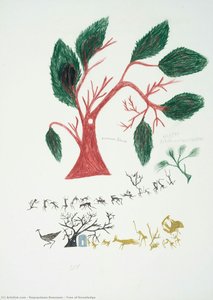
In the vast, sun-drenched expanses of the Kalahari Desert, where the horizon meets the ancient rhythms of the earth, the art of Regopstaan Boesman was born. Known to many by his evocative moniker, Vetkat Kruiper—a name translating to “Wild Cat Hunter” in Setswana—Boesman emerged from the ǂKhomani San community not merely as a painter, but as a visual storyteller of an ancestral lineage. Born in Kakamas, South Africa, in 1958, his life was deeply intertwined with the natural and spiritual landscapes of his homeland. His work serves as a profound bridge between the prehistoric echoes of San rock art and the vibrant, expressive possibilities of contemporary fine art.
Boesman’s early years were characterized by an intimate observation of the world around him. Growing up within the ǂKhomani San tradition, he developed a keen eye for the subtle movements of wildlife, the intricate patterns of desert flora, and the spiritual weight of the landscape. This foundational period was less about formal training and more about a deep, sensory immersion in the environment. His early sketches and paintings were imbued with a reverence for the sacred, capturing the essence of animals and landscapes that held profound cosmological significance for his people. This connection to the land would become the heartbeat of his entire oeuvre.
A Synthesis of Tradition and Modernity
What distinguishes Boesman’s contribution to the art world is his refusal to remain static within tradition. While his themes are deeply rooted in the heritage of the San, his technique reflects a dynamic engagement with modern artistic languages. He possessed a remarkable ability to take the geometric motifs and symbolic shorthand found in ancient rock art and reimagine them through a lens of bold color and fluid composition. His work often features a striking juxtaposition: the raw, primal energy of tribal themes met with a sophisticated use of space and pigment that speaks to a modern sensibility.
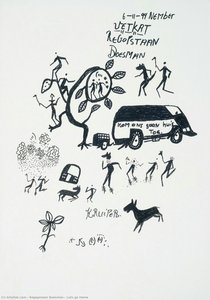
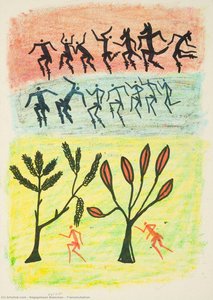
In masterpieces such as Transmutation, one can witness this spiritual alchemy in action. Through his brush, communal dances and ceremonial transitions are rendered with a vibrant intensity that invites the viewer into a sacred space. Similarly, works like Me and Everyone utilize energetic depictions of people and horses to capture the very spirit of the Khomani San tradition. His ability to blend these elements creates a visual dialogue that is both culturally specific and universally accessible, allowing his art to resonate far beyond the borders of South Africa.
Recognition and Enduring Significance
Though his life was tragically cut short in 2010, Boesman’s impact on the landscape of South African indigenous art remains indelible. His work has found a place in prestigious collections, including those held by the University of Pretoria Museums, where pieces like his drawing Home serve as vital cultural artifacts. The recognition of his talent on international platforms has ensured that the voice of the ǂKhomani San continues to be heard in the global art discourse.
The legacy of Regopstaan Boesman is defined by several key contributions:
- Cultural Preservation: He acted as a vital link, translating ancient San symbolism into a contemporary medium that ensures its survival for future generations.
- Stylistic Innovation: By merging geometric traditionalism with modern expressive techniques, he expanded the boundaries of what indigenous art could achieve on the world stage.
- Spiritual Narrative: His work provides a window into the complex spiritual cosmology of the Kalahari, making the intangible aspects of San life visible through color and form.
Today, as we look upon the vibrant textures and soulful compositions of Vetkat Kruiper, we see more than just beautiful imagery; we see the enduring spirit of a people and the triumph of an artist who successfully navigated the delicate balance between honoring the past and embracing the new.
regopstaan boesman
1958 - 2010 , South Africa
Quick Facts
- Artistic Movement Or Style: Traditional San & Modern Techniques
- Date Of Birth: 1958
- Full Name: regopstaan boesman
- Nationality: South African
- Notable Artworks:
- God is Love
- Transmutation
- Animals
- Place Of Birth: Kakamas, South Africa