

 Send
Send Share
Share
 Details

 Download
 Similars
 Diaporama
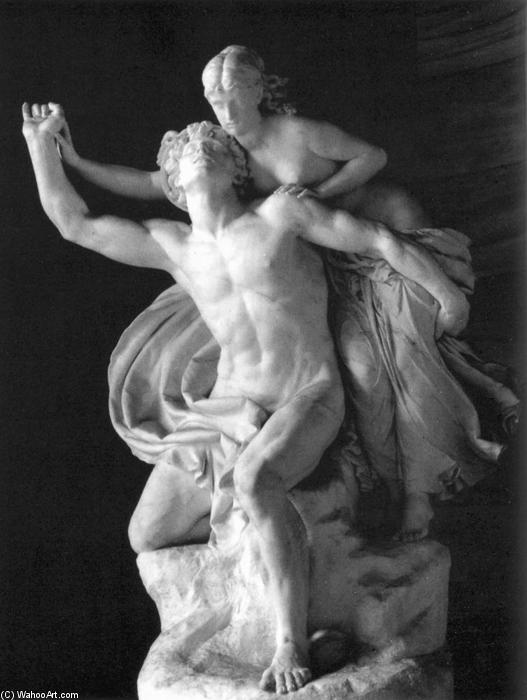
Mercury and Psyche


 Read More
Purchase a high-resolution, enhanced digital image, far superior to the online preview.
Each file is meticulously prepared by our in-house specialists using advanced tools and expert manual retouching. We ensure every image has exceptional clarity, precise color accuracy, and fine detail.
The final file is delivered via email within 72 hours, optimized for immediate use in professional, editorial, and print environments. This is the same quality trusted by top-tier design studios, publishers, and galleries.
Digital Image
Download a high-resolution file for personal display, printing, and creative projects. ( Buy Print Buy Hand Made Painting)
Included in Every Digital Image Order
Expert Digital Delivery, Guaranteed
When you choose ArtsDot.com, you're not just getting an image - you're receiving a professionally enhanced digital artwork, crafted with precision and backed by a satisfaction guarantee. Here's everything that comes with your order, automatically:

Fast Email Delivery
Your high-resolution digital image file will be emailed to you within 72 hours of ordering - ready for immediate use.

AI-Enhanced Digital File
Your artwork is professionally optimized using advanced AI tools and manual editing, ensuring maximum detail, clarity, and color accuracy.

Free Lifetime Re-Delivery
Accidentally deleted or lost your file? No worries - we'll resend it to you anytime, free of charge.

No Import Fees - Ever
Enjoy your artwork instantly with zero customs, duties, or delivery fees - digital downloads are always tax-free.

Color Accuracy Guarantee
We ensure your digital image reflects the original colors as closely as possible using professional tools and color management.

60-Day Satisfaction Guarantee
If you're not satisfied with your digital image, we'll revise it or refund 100% within 60 days - no questions asked.

100% Money-Back Guarantee
Not satisfied? Get a full refund within 60 days of receiving your digital file - no questions asked.

Bulk Order Discounts
Buy 3 images, save 10% - Buy 5, save 15% - Buy 10+, save 20%. Great for creative projects, galleries, and agencies.
Collectible Description
A Symphony in Marble: Exploring Reinhold Begas’s “Mercury and Psyche”
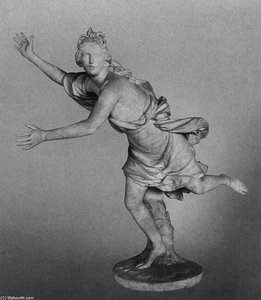
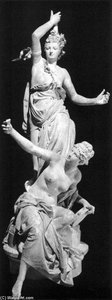
Reinhold Begas's "Mercury and Psyche," sculpted in 1878, stands as a testament to Prussia’s artistic fervor during the late Romantic period. More than just a depiction of mythology—the tale of Hermes (Mercury) and Psyche—it embodies a profound exploration of love, transformation, and divine grace, meticulously rendered in alabaster marble by a sculptor who had absorbed the stylistic currents of Arnold Böcklin and Franz von Lenbach during his formative years in Italy. The sculpture’s placement at the entrance to Berlin’s Alte Nationalgalerie underscores its significance as a cornerstone of Prussian artistic heritage.- Subject Matter & Narrative: Begas captures a pivotal moment from Psyche and Hermes's legendary romance—a tender embrace symbolizing their yearning for connection amidst celestial obstacles. The sculpture isn’t merely illustrating a story; it’s conveying an emotional resonance that speaks to universal themes of desire, vulnerability, and the pursuit of beauty.
- Style & Influences: Heavily influenced by Romantic idealism, “Mercury and Psyche” aligns itself with the broader artistic movement prioritizing expressive emotion and idealized forms. Böcklin’s fascination with nocturnal landscapes and Lenbach's embrace of Bavarian folklore contributed to Begas’s stylistic sensibilities—a desire to evoke a sense of sublime wonder and spiritual contemplation.
Technique & Material Considerations
Begas employed subtractive sculpting techniques, painstakingly removing marble chips to sculpt the figures into their final form. This meticulous process demanded considerable skill and patience, reflecting the exacting standards upheld by Prussian sculptors of the era. The choice of alabaster marble—known for its translucent qualities—allowed Begas to achieve remarkable luminosity and textural detail, capturing the subtle nuances of skin tone and drapery folds with breathtaking accuracy. Careful attention was paid to achieving a harmonious balance between form and light, maximizing the sculpture’s visual impact.- Sculpting Process: The sculptor utilized chisels and hammers—traditional tools honed over generations—to carve away excess marble material, gradually revealing the underlying contours of the figures.
- Marble Selection & Properties: Begas selected a block of alabaster marble possessing exceptional purity and translucency. These qualities ensured that the sculpture would radiate an ethereal glow when illuminated from within—a deliberate artistic decision intended to heighten its expressive power.
Symbolism & Emotional Resonance
Beyond its narrative depiction, “Mercury and Psyche” is laden with symbolic significance. Hermes’s outstretched arm represents divine authority and aspiration, while Psyche’s gaze conveys admiration and longing—a poignant portrayal of human desire for transcendence. The intertwined figures embody the transformative power of love—suggesting that even amidst hardship and separation, beauty and connection endure. The sculpture's serene posture invites contemplation on themes of faith, devotion, and the pursuit of spiritual enlightenment.- Hermes’ Wings: Hermes’s wings symbolize his divine messenger status and ability to ascend beyond earthly limitations—a visual metaphor for spiritual liberation.
- Emotional Impact: The sculpture's understated elegance and masterful execution evoke a profound sense of tranquility and beauty, prompting viewers to reflect on the enduring power of human emotion and artistic expression.
Historical Context & Legacy
Created during Prussia’s Golden Age—a period characterized by intellectual ferment and artistic innovation— “Mercury and Psyche” exemplifies the Romantic movement's preoccupation with mythology, emotion, and sublime landscapes. Begas’s sculpture cemented his reputation as one of Prussia’s foremost sculptors, securing a place in art history alongside luminaries like Rauch and Wichmann. Today, it continues to inspire admiration for its technical brilliance and artistic depth—a timeless masterpiece that transcends stylistic boundaries and speaks to the universal human experience.Related Artworks
Artist Biography
The Sculptor of Prussian Grandeur
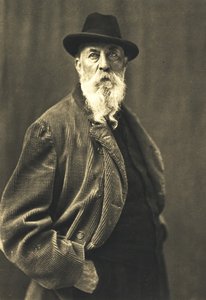
Reinhold Begas (1831-1911) stands as a titan of the late 19th-century sculptural landscape, an artist whose hands breathed life into the very essence of Prussian identity. Born in Berlin to a family where art was woven into the fabric of daily existence—his father, Carl Joseph Begas, being a painter himself—he was destined for a life of creative devotion. His early years were defined by rigorous discipline under the masters Christian Daniel Rauch and Ludwig Wilhelm Wichmann, training that instilled in him a profound command over form and anatomy. Yet, it was not merely technical prowess that would define him, but an ability to capture the monumental spirit of an era transitioning from Neoclassical restraint to the dramatic, swirling energy of the Neo-Baroque.
The trajectory of Begas’s genius was irrevocably altered by his transformative pilgrimage to Italy in 1856. Wandering through the sun-drenched streets of Florence and the ancient, storied landscapes of Rome, he encountered the works of Arnold Böcklin and Franz von Lenbach. This exposure to a more naturalistic and emotive aesthetic provided the catalyst for his stylistic evolution. He began to move away from the rigid, static traditions of his predecessors, seeking instead to infuse his bronze and marble with a palpable sense of movement, breath, and psychological depth. His work became a bridge between the classical ideals of antiquity and the burgeoning realism of the modern age.
A Legacy in Bronze and Stone
The ascent of Begas into the upper echelons of European art was marked by a series of ambitious commissions that reshaped the skyline of Berlin. His early triumph, Borussia, commissioned for the façade of Berlin’s Exchange building, served as a thunderous introduction to the public, showcasing his ability to marry monumental scale with intricate, lifelike detail. As his reputation grew, so did the complexity of his narratives. He became the preeminent sculptor of the German Empire, tasked with translating the political and cultural triumphs of the Hohenzollern dynasty into enduring physical monuments.
His mastery is perhaps most evident in the following milestones of his career:
- The Schiller Memorial: A profound tribute to the poet that captures the Romantic spirit through emotive composition.
- The Kaiser Wilhelm National Monument: An epic undertaking that epitomizes the Neo-Baroque style, utilizing grand scale and dramatic movement to celebrate imperial power.
- Pan Comforting Psyche: A delicate masterpiece that demonstrates his ability to pivot from the monumental to the intimate, exploring themes of myth and human vulnerability.
- The Bismarck Statue: A powerful representation of political authority, rendered with a naturalism that commands respect and reverence.
Beyond the mere depiction of historical figures, Begas’s significance lies in his ability to capture the zeitgeist of his time. His sculptures do not merely sit in public squares; they interact with the atmosphere, casting shadows that evoke the drama of a bygone era. Through his meticulous attention to texture—the ripple of muscle, the heavy fold of drapery, the weathered surface of stone—he achieved a level of naturalism that made the allegorical feel tangible. Even today, his works remain essential touchstones for understanding the artistic soul of 19th-century Germany, serving as permanent sentinels of a period defined by imperial ambition and artistic splendor.
Reinhold Begas
1831 - 1911 , Germany
Quick Facts
- Artistic Movement Or Style: Neo-Baroque
- Artists Or Movements Influenced By This Artist: ['German sculpture']
- Artists Who Influenced This Artist:
- Arnold Böcklin
- Franz von Lenbach
- Date Of Birth: July 15, 1831
- Date Of Death: 1911
- Full Name: Reinhold Begas
- Nationality: German
- Notable Artworks:
- Pan comforting Psyche
- Model of the National Monument for Emperor William I.
- Schiller Memorial
- Place Of Birth: Berlin, Germany

