 Preview
 Send
Send Share
Share
 Details

 Download
 Similars
 X-Ray
X-Ray Diaporama
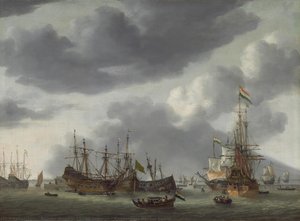
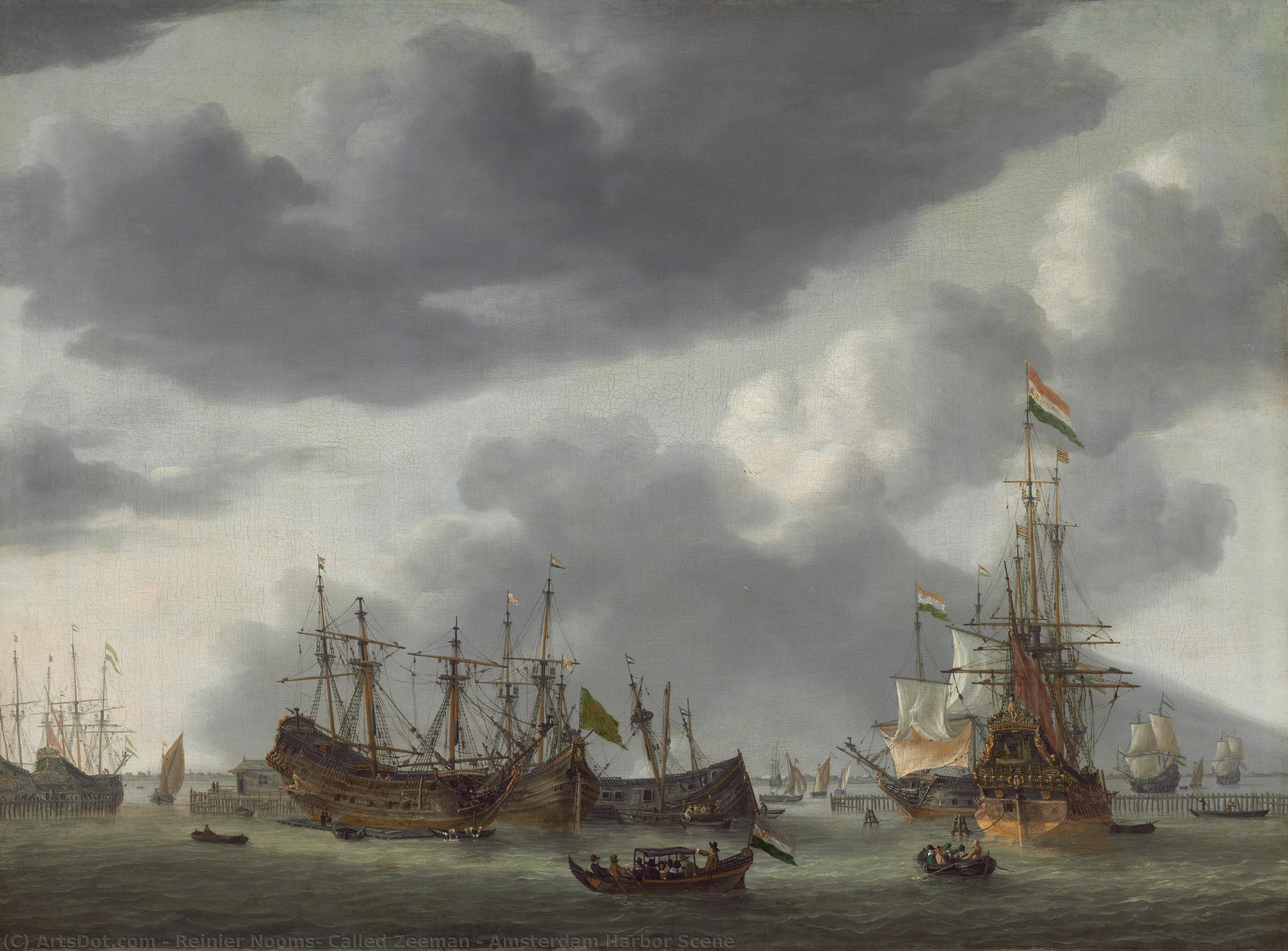
Amsterdam Harbor Scene
 1655
1655 82.0 x 102.0 cm
 Read More
Hand Made Oil Reproduction
Hand-painted oil on canvas in your size and frame, made to order by our artists. ( Buy Print Buy Image)




































Pick from our preset sizes that match the artwork's original proportions.

You may enter your own dimensions to fit a specific frame or space. If your selected size does not match the original image's proportions, we will either crop the artwork or extend the painting with additional hand-painted elements. A digital mockup will be sent for your approval before production begins.
Please note that the on-screen preview does not reflect the actual cropping or extension. Only the mockup will accurately show the final composition.
While custom sizes are available, we recommend selecting a dimension from the predefined list to preserve the original proportions.
After order, ArtsDot.com team will email client for instructions and provide a mockup preview
Worldwide Delivery () in 3/4 weeks instead of standard 5 weeks. (25 August). No compromise on quality.

Free Worldwide Express Shipping

High-Quality Linen Canvas

Full Shipping Insurance

Customs Tax Refund Guarantee

True Color Matching Guarantee

60-Day Return Policy (Defects Only)

100% Money-Back Guarantee

Bulk Discount Offer
 Glass option is only available in size under 110 CM

Amsterdam Harbor Scene
Reproduction Medium
Reproduction Size
-


Total Price
$ 388
Related Artworks









Artist Biography
A Sailor’s Eye: The Life and Art of Reinier Nooms
Reinier Nooms, more familiarly known as Zeeman – a Dutch word meaning “sailor” – occupies a fascinating niche in the pantheon of 17th-century maritime painters. Born around 1623 in Amsterdam, his life story is one shrouded in some mystery, yet vividly illuminated by the meticulous detail and undeniable skill present in his artwork. Unlike many artists who benefited from formal training within established guilds or studios, Nooms’s path to becoming a celebrated painter was unconventional, born not of academic instruction but of direct experience – a rough-and-tumble existence at sea followed by a self-taught dedication to capturing the world he knew so intimately. Records of his early life are scarce; we know he began painting around 1643, seemingly after abandoning a life as a sailor, and that his artistic prowess blossomed from an innate understanding of ships, rigging, and the ever-changing moods of the ocean. This lack of formal education perhaps contributed to the unique freshness and authenticity that characterizes his work, setting him apart from contemporaries who relied more heavily on established conventions.From Etchings to Expansive Canvases
Nooms initially gained recognition not for oil paintings but for his remarkably refined etchings. Beginning in the 1650s, he embarked on a series of these works depicting ships and topographical views, quickly establishing a reputation for precision and accuracy. These weren’t merely technical exercises; they were imbued with a keen observational eye and a sensitivity to light and atmosphere. Crucially, his etchings served as invaluable resources for other artists – models of how to realistically portray the complex structures of sailing vessels and the nuances of maritime life. They circulated widely, influencing a generation of painters seeking to capture the drama and beauty of the sea. This early success allowed him to transition into larger-scale oil paintings, expanding his artistic scope while retaining the meticulous detail that had become his hallmark. He wasn’t simply *depicting* ships; he was documenting them with the precision of an engineer and the passion of a seasoned sailor.A Traveler's Palette: Influences and Artistic Development
While Amsterdam remained his base, Nooms was far from a stationary artist. His travels throughout Europe broadened his artistic horizons and enriched his palette. He spent time in Paris between 1650 and 1652, returning to Amsterdam before another visit in 1656. There is speculation of a sojourn to Venice, though concrete evidence remains elusive. Perhaps most significantly, he accompanied Admiral Michiel de Ruyter on voyages along the North African coast from 1661 to 1663, providing him with firsthand access to exotic locales and further honing his skills in capturing diverse maritime scenes. These journeys undoubtedly influenced his compositions, introducing new elements of light, color, and subject matter into his work. His paintings began to reflect a wider world, moving beyond purely Dutch naval themes to encompass broader Mediterranean vistas and the bustling ports of foreign lands.Capturing National Pride: Major Achievements and Themes
Nooms’s art resonated deeply with the burgeoning national pride of the Dutch Republic during the Anglo-Dutch Wars. He frequently depicted scenes celebrating Dutch naval victories, immortalizing ships like the *Amalia*, flagship of Admiral Maarten Tromp, before the pivotal Battle of the Downs in 1639. These paintings weren't simply historical records; they were powerful statements of national identity and maritime prowess. His depiction of the Battle of Leghorn in 1653, now housed in the Rijksmuseum, exemplifies his ability to capture both the grandeur and the chaos of naval warfare. Beyond these dramatic battle scenes, Nooms also excelled at portraying serene harbor views, such as his final work from 1664 – a captivating depiction of Amsterdam’s IJ bay and the 's Lands Zeemagazijn naval arsenal (now the Netherlands Maritime Museum). This painting is particularly poignant, serving as a fitting tribute to both his adopted city and his lifelong connection to the sea.A Lasting Legacy: Historical Significance
Reinier Nooms died around 1664, leaving behind a body of work that continues to captivate audiences today. His influence extended beyond his immediate contemporaries; the 19th-century French etcher Charles Meryon was profoundly inspired by Nooms’s detailed cityscapes, dedicating works in poetic homage to the Dutch master. Nooms's legacy lies not only in the technical brilliance of his paintings and etchings but also in his ability to capture the spirit of a nation at sea. He wasn’t merely an artist; he was a chronicler of a golden age, documenting the ships, battles, and harbors that defined Dutch maritime power. His work offers a unique window into the 17th century, providing invaluable insights into naval technology, trade routes, and the cultural values of a seafaring nation. His paintings remain testaments to his skill, his dedication, and the enduring allure of the ocean he so passionately portrayed.
reinier nooms, called zeeman
1664 , Netherlands
Quick Facts
- Artistic Movement Or Style: Maritime painting
- Artists Or Movements Influenced By This Artist: ['Charles Meryon']
- Date Of Birth: c. 1623
- Date Of Death: 1664
- Full Name: Reinier Nooms
- Nationality: Dutch
- Notable Artworks:
- Before the Battle of Downs
- Battle of Leghorn
- Amalia flagship painting
- Place Of Birth: Amsterdam, Netherlands