 Preview
 Send
Send Share
Share
 Details

 Download
 Similars
 X-Ray
X-Ray Diaporama
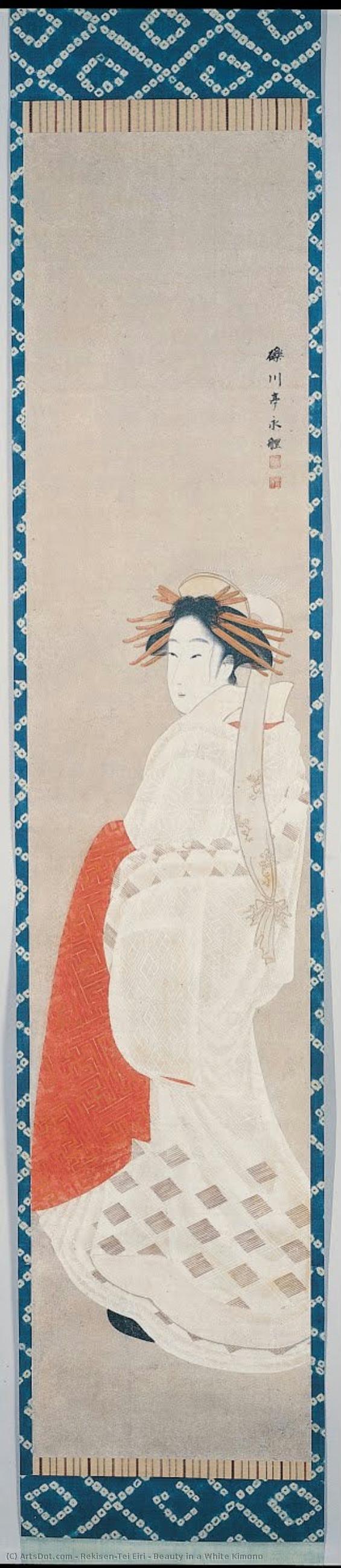
Beauty in a White Kimono
 1800
1800 124.0 x 26.0 cm
 Kimbell Art Museum
 Read More
Hand Made Oil Reproduction
Hand-painted oil on canvas in your size and frame, made to order by our artists. ( Buy Print Buy Image)




































Pick from our preset sizes that match the artwork's original proportions.

You may enter your own dimensions to fit a specific frame or space. If your selected size does not match the original image's proportions, we will either crop the artwork or extend the painting with additional hand-painted elements. A digital mockup will be sent for your approval before production begins.
Please note that the on-screen preview does not reflect the actual cropping or extension. Only the mockup will accurately show the final composition.
While custom sizes are available, we recommend selecting a dimension from the predefined list to preserve the original proportions.
After order, ArtsDot.com team will email client for instructions and provide a mockup preview
Worldwide Delivery () in 3/4 weeks instead of standard 5 weeks. (28 August). No compromise on quality.

Free Worldwide Express Shipping

High-Quality Linen Canvas

Full Shipping Insurance

Customs Tax Refund Guarantee

True Color Matching Guarantee

60-Day Return Policy (Defects Only)

100% Money-Back Guarantee

Bulk Discount Offer
 Glass option is only available in size under 110 CM

Beauty in a White Kimono
Reproduction Medium
Reproduction Size
-


Total Price
$ 263
Related Artworks









Artist Biography
Giovanni Paolo Panini: The Architect of Italian Dreams
Giovanni Paolo Panini (1691–1765) stands as a singular figure in the history of art, a master whose unique vision transformed the way landscapes were conceived and rendered. Born in Piacenza, Italy, his early training focused on the meticulous craft of *quadraturista*, a specialist in architectural decoration – a skill that would profoundly influence his later work. However, Panini’s true legacy lies not in grand palaces or intricate frescoes, but in his astonishing series of meticulously detailed paintings depicting imaginary and real views of Rome and other Italian cities. These weren't mere scenic representations; they were carefully constructed illusions, architectural fantasies built upon a deep understanding of perspective, geometry, and the historical fabric of Italy.- Early Influences: Panini’s formative years in Piacenza instilled in him a rigorous attention to detail and an appreciation for classical design principles. His exposure to stage design further honed his skills in creating convincing illusions – a crucial element in his later landscape paintings.
- Rome and the Grand Tour: In 1711, Panini settled in Rome, becoming part of the vibrant artistic community that flourished during the era of the *Grand Tour*. He initially worked as a fresco decorator, but it was his fascination with ruins, classical architecture, and the idealized landscapes depicted by Venetian artists like Canaletto that truly defined his career.
- A Revolutionary Approach: Unlike earlier landscape painters who primarily focused on capturing natural beauty, Panini created meticulously rendered “architectural fantasies.” He combined elements of real locations with imagined structures, creating a world where ancient ruins coexisted with grand palaces and bustling cityscapes—a deliberate departure from the conventions of his time.
The Architect of Illusion: Technique and Process
Panini’s technique was remarkably sophisticated for its time. He didn't simply paint what he saw; he *engineered* it. His paintings were built upon a foundation of mathematical precision, utilizing complex perspective systems to create the illusion of depth and space. He meticulously studied Roman ruins, architectural plans, and even contemporary accounts to ensure accuracy in his reconstructions. This wasn’t haphazard creation; each element—a crumbling column, a distant villa, a winding road—was carefully calculated to contribute to the overall illusion.- Perspective Mastery: Panini was a pioneer in applying linear perspective to landscape painting, creating incredibly convincing spatial relationships within his imaginary scenes.
- Detailed Observation: He spent countless hours observing Roman ruins and architectural details, translating these observations into precise renderings on canvas.
- The Use of Light and Shadow: Panini masterfully employed light and shadow to enhance the illusion of depth and volume, further immersing the viewer in his meticulously crafted worlds.
Influence and Legacy: A Bridge Between Eras
Panini’s work exerted a profound influence on subsequent generations of artists, particularly in France. His innovative approach to landscape painting—combining observation with imagination—challenged traditional conventions and paved the way for later developments in Romanticism and Impressionism. The Académie Royale de Peinture et de Sculpture in Paris recognized his genius by making him an honorary member in 1732 – a rare honor bestowed upon foreign artists.- French Admiration: Panini’s work was highly regarded in France, where it inspired artists like Jean-Honoré Fragonard and influenced the development of picturesque landscape painting.
- Piranesi and Robert: His fascination with ruins connected him to other artists who explored similar themes, such as Piranesi (known for his architectural drawings) and Hubert Robert (who painted romantic ruins).
- A Foundation for Future Movements: Panini’s emphasis on illusion and the manipulation of space laid a crucial foundation for later artistic movements that prioritized subjective experience and imaginative representation.
The Enduring Appeal: A Visionary's Dream
Giovanni Paolo Panini died in Rome in 1765, leaving behind a remarkable body of work—over 130 paintings—that continues to captivate viewers today. His “architectural fantasies” are not merely beautiful images; they are windows into a world where the past and present converge, where classical ideals meet imaginative invention. Panini’s legacy lies in his ability to transform observation into illusion, creating a timeless vision of Italy that transcends the boundaries of time and place. His paintings remain a testament to the power of artistic ingenuity and the enduring allure of dreams.
rekisen-tei eiri
1765 - 1829 , Japan
Quick Facts
- Artistic Movement Or Style: Real views of Rome
- Artists Or Movements Influenced By This Artist: ['Canaletto']
- Artists Who Influenced This Artist: ['Hubert Robert']
- Date Of Birth: 1691
- Date Of Death: 1765
- Full Name: Giovanni Paolo Panini
- Nationality: Italian
- Notable Artworks:
- The Lottery Draw
- Views of Rome
- Place Of Birth: Piacenza, Italy