 Preview
 Send
Send Share
Share
 Details

 Download
 Similars
 X-Ray
X-Ray Diaporama
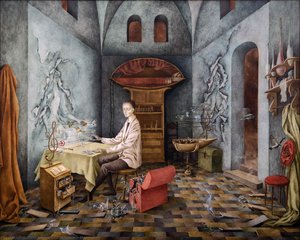
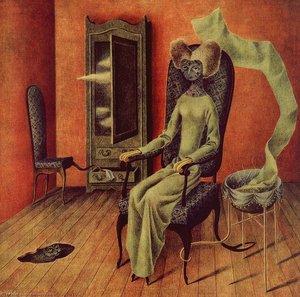
Seated Woman

 Read More
Hand Made Oil Reproduction
Hand-painted oil on canvas in your size and frame, made to order by our artists. ( Buy Print Buy Image)




































Pick from our preset sizes that match the artwork's original proportions.

You may enter your own dimensions to fit a specific frame or space. If your selected size does not match the original image's proportions, we will either crop the artwork or extend the painting with additional hand-painted elements. A digital mockup will be sent for your approval before production begins.
Please note that the on-screen preview does not reflect the actual cropping or extension. Only the mockup will accurately show the final composition.
While custom sizes are available, we recommend selecting a dimension from the predefined list to preserve the original proportions.
After order, ArtsDot.com team will email client for instructions and provide a mockup preview
Worldwide Delivery () in 3/4 weeks instead of standard 5 weeks. (17 August). No compromise on quality.

Free Worldwide Express Shipping

High-Quality Linen Canvas

Full Shipping Insurance

Customs Tax Refund Guarantee

True Color Matching Guarantee

60-Day Return Policy (Defects Only)

100% Money-Back Guarantee

Bulk Discount Offer
 Glass option is only available in size under 110 CM

Seated Woman
Reproduction Medium
Reproduction Size
-


Total Price
$ 263
Artwork Description
A Glimpse into the Mystical World of Remedios Varo's "Seated Woman"
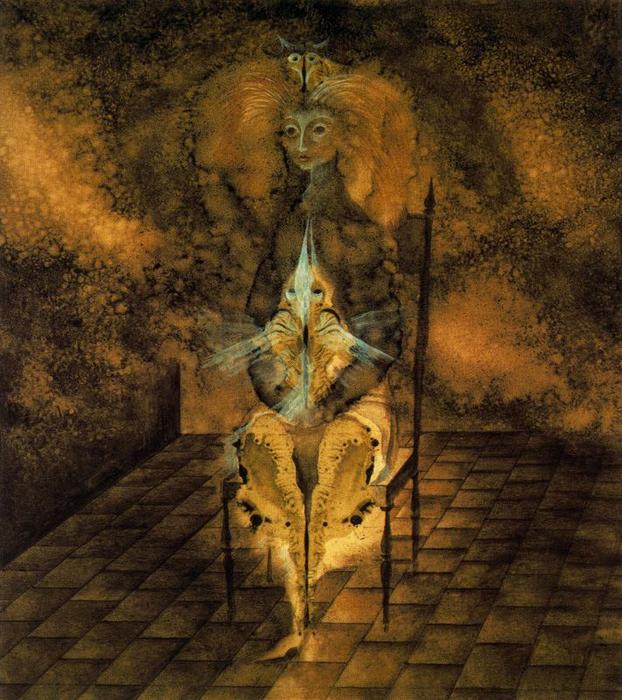
Remedios Varo’s “Seated Woman,” painted circa 1958, offers a captivating portal into the artist’s unique and deeply personal surrealist universe. This work exemplifies her signature style – a blend of meticulous technical drawing, alchemical symbolism, and philosophical inquiry – creating an image that is both visually striking and intellectually stimulating. The painting invites viewers to contemplate themes of knowledge, transformation, and the inner workings of consciousness.
Subject & Style: Para-Surrealism and Scientific Precision
The central figure, a serene woman seated on an elaborate chair, immediately draws the eye. Varo’s style is often categorized as “para-surrealist,” distinguishing it from the more overtly Freudian or dreamlike imagery of some Surrealists. Instead, her work combines fantastical elements with a remarkable precision and detail reminiscent of scientific illustration. The woman's attire, the intricate design of the chair (which appears to be constructed from both metal and wood), and the tiled floor all demonstrate this meticulous approach. The overall aesthetic leans towards a dreamlike interior space, yet grounded in tangible textures and forms.
Symbolism & Interpretation: Alchemy and Inner Transformation
- The Seated Woman: Represents an alchemist or scholar engaged in deep contemplation and study. Her upward gaze suggests a quest for higher knowledge or spiritual enlightenment.
- The Object in her Hands: The small, luminous object she holds is open to interpretation. It could be a mechanical bird, a miniature sun, or a device emitting energy – symbolizing the power of creation, innovation, or perhaps even a source of inner light and wisdom.
- The Chair: Its complex design might represent the structure of knowledge itself—a framework upon which understanding is built.
- The Background Wall & Tiled Floor: These elements create an enclosed space, suggesting introspection and a journey inward rather than outward exploration. The warm tones evoke a sense of comfort and stability within this internal world.
Varo was deeply influenced by alchemy, Hermeticism, and Eastern philosophies, all of which permeate her work. "Seated Woman" can be seen as an allegory for the alchemical process of transformation—the journey from ignorance to enlightenment through study, experimentation, and inner reflection.
Emotional Impact & Historical Context
“Seated Woman” evokes a sense of quiet contemplation and mystery. The painting’s subdued color palette and balanced composition create a calming atmosphere, while the surreal elements spark curiosity and invite multiple interpretations. Created in the late 1950s, during a period of increasing Cold War anxieties, Varo's work offers an escape into a world of personal meaning and intellectual exploration—a refuge from external turmoil. Her unique artistic vision, developed largely in Mexico after fleeing Spain, continues to resonate with audiences today for its profound insights into the human condition and the power of imagination.
Related Artworks
Artist Biography
A Life Bridging Science, Mysticism, and Surrealism
Remedios Varo (1908-1963) stands as a singular figure in 20th-century art, an artist whose work defies easy categorization. Though often associated with the Surrealist movement, her vision extended far beyond its boundaries, weaving together scientific precision, alchemical symbolism, and a deeply personal mythology. Born María de los Remedios Alicia Rodriga Varo y Uranga in Anglès, Spain, her early life was shaped by a fascinating duality: a pragmatic father, a hydraulic engineer who instilled in her a love for technical drawing and meticulous observation, and a devoutly Catholic mother whose influence sparked a lifelong questioning of established norms. This tension between reason and faith, science and spirituality, would become a defining characteristic of her art. Her childhood was marked by frequent relocations following her father’s work, exposing her to diverse landscapes and cultures, while her formal education at the Real Academia de Bellas Artes de San Fernando in Madrid provided a solid foundation in traditional artistic techniques. It was there she encountered fellow artists like Salvador Dalí, though her path would diverge into more introspective and uniquely symbolic territory.
From Madrid to Mexico: A Journey of Artistic Discovery
Varo’s early work reflected the prevailing styles of the time—sensitive portraits and realistic depictions of her surroundings. However, a growing fascination with the esoteric began to permeate her artistic explorations. In Madrid, she became involved with a group known as the Logicophobists, who sought to reconcile art and metaphysics, delving into realms beyond rational understanding. This period marked a crucial shift in her thinking, laying the groundwork for the intensely personal iconography that would define her mature style. The outbreak of the Spanish Civil War forced Varo to flee Europe, eventually finding refuge in Mexico City in 1938. This relocation proved transformative. Freed from the constraints and political turmoil of wartime Europe, she discovered a vibrant artistic community and an environment conducive to fully realizing her unique vision. Mexico offered not just safety but also a fertile ground for exploring her interests in alchemy, astrology, and indigenous philosophies—influences that would become inextricably linked to her art.
The Language of Symbols: Alchemy, Technology, and the Feminine Mystique
Varo’s artistic style is instantly recognizable – a meticulous blend of technical draftsmanship and dreamlike imagery. Her paintings are populated by fantastical machines, hybrid creatures, and enigmatic female figures engaged in mysterious activities. These aren't merely whimsical creations; they are carefully constructed allegories, laden with symbolic meaning. Alchemy serves as a central theme, not simply as a historical practice but as a metaphor for transformation—the process of refining the self through knowledge and experience. Her depictions of intricate apparatuses suggest a desire to understand and manipulate the forces of nature, while also hinting at the limitations of human control. Perhaps most compelling is her portrayal of women: not as passive muses or objects of desire, but as active agents of change—inventors, scientists, alchemists, and seekers of knowledge. She challenges traditional gender roles, presenting a vision of feminine power rooted in intellect, intuition, and spiritual exploration. Creation of the World or Microcosm, for example, showcases her early fascination with creation myths and scientific principles, while works like Star Catcher exemplify her ability to merge mysticism with technical skill.
A Legacy of Para-Surrealism and Enduring Influence
Remedios Varo’s contribution to art history lies in her development of what has been termed “para-surrealism”—an expansion upon traditional Surrealism that incorporates elements of alchemy, mysticism, and esoteric knowledge. She wasn't interested in simply accessing the subconscious, as many Surrealists were; she sought to create a visual language for exploring deeper truths about the universe and humanity’s place within it. Her work resonates with contemporary audiences because it speaks to our enduring fascination with the mysteries of existence, the power of transformation, and the search for meaning in an increasingly complex world. Though her career was relatively short—she died prematurely at the age of 54—her impact on subsequent generations of artists is undeniable. She paved the way for a more inclusive and multifaceted understanding of Surrealism, inspiring those who seek to bridge the gap between science, spirituality, and artistic expression. Her paintings continue to captivate viewers with their intricate detail, enigmatic symbolism, and profound sense of wonder.
Exploring Varo’s World Today
- Her works can be found in numerous private collections worldwide.
- Significant examples of her art are held at the Real Academia de San Fernando (Madrid).
- The Munnings Art Museum offers a glimpse into British artistry that influenced her early work.
- Museums like MoMA have featured her works, solidifying her place in art history.
Today, Remedios Varo’s legacy continues to grow. Her paintings invite us to embark on our own journeys of discovery—to question assumptions, embrace the unknown, and explore the hidden dimensions of reality. Through her unique artistic vision, she reminds us that true knowledge lies not in finding definitive answers but in embracing the endless possibilities of imagination and inquiry.
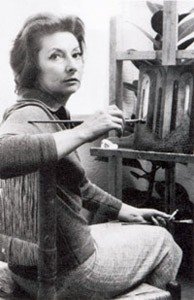
Remedios Varo
1865 - 1911 , Spain
Quick Facts
- Artistic Movement Or Style: Para-Surrealism
- Artists Or Movements Influenced By This Artist: ['Future generations of artists']
- Artists Who Influenced This Artist:
- Hieronymus Bosch
- Francisco Goya
- El Greco
- Date Of Birth: 1908
- Date Of Death: 1963
- Full Name: Remedios Varo
- Nationality: Spanish-Mexican
- Notable Artworks:
- Star Catcher
- Icon
- Face
- Dead Leaves
- Scorpions
- Place Of Birth: Girona, Spain
Related Articles
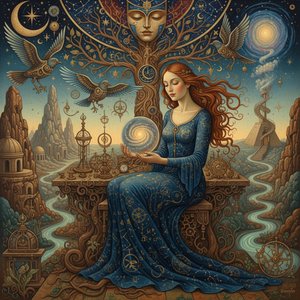
Remedios Varo: A Surrealist Vision of Science, Mysticism & the Female Psyche
Explore the captivating world of Remedios Varo, a pioneering Surrealist painter blending science, mysticism & feminist themes. Discover her unique style and enduring legacy with ArtsDot.

The Allure of Mystical Art: Exploring Emotional Resonance & Symbolic Depth
Explore the captivating world of mystical art with ArtsDot. Discover the emotional resonance & hidden symbolism in masterpieces by De Chirico, Chagall & more. Expert insights for discerning collectors.
René Magritte's Masterpieces: 25 Surrealist Paintings for Art Lovers | ArtsDot
Explore 25 iconic René Magritte paintings & delve into the world of surrealism. Discover the stories behind 'The Son of Man', 'Golconda' & more. Find museum-quality art reproductions and elevate your home decor with ArtsDot.com.
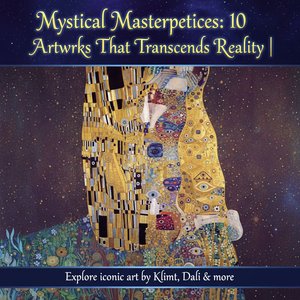
Mystical Masterpieces: 10 Artworks That Transcends Reality |
Journey into the ethereal with our Top 10 mystical artworks! Explore iconic paintings by Klimt, Dali & more. Discover symbolic art, dreamlike landscapes, and evocative colors – find museum-quality reproductions to transform your home on .

Dreamscapes & Disrupted Realities: Exploring Surrealism's Enduring Influence
Explore the fascinating world of Surrealism! Discover its origins, key artists like Dalí & Magritte, and enduring influence on art & culture. Expert insights & high-quality reproductions at ArtsDot.