 Preview
 Send
Send Share
Share
 Details

 Download
 Similars
 X-Ray
X-Ray Diaporama
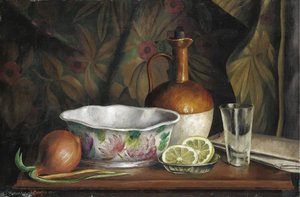
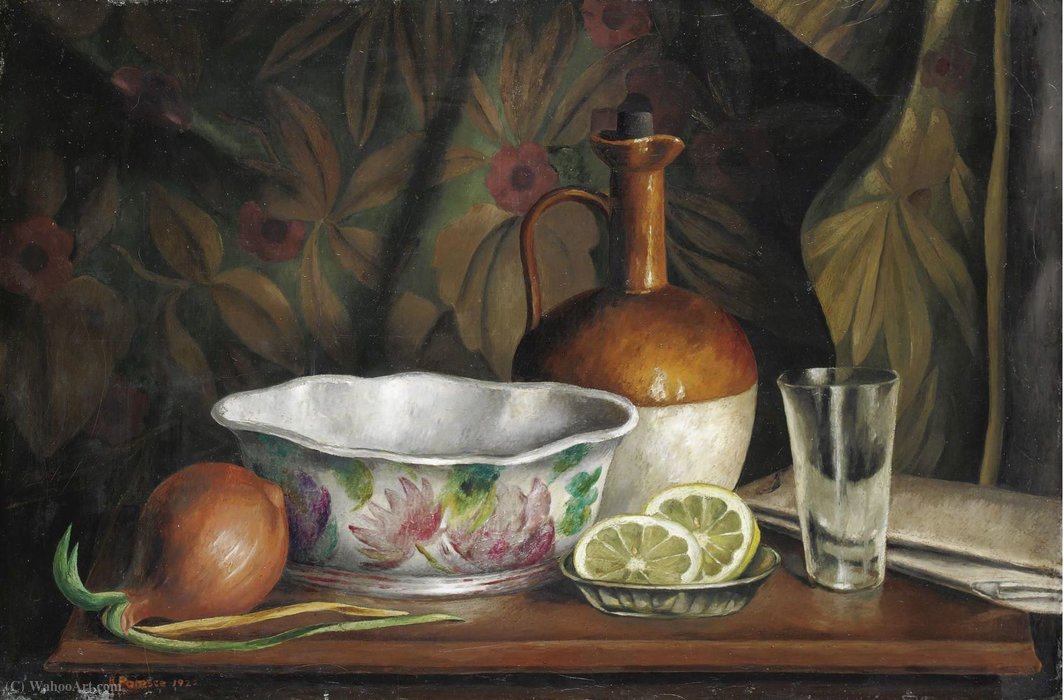
Untitled (190)
 Read More
Hand Made Oil Reproduction
Hand-painted oil on canvas in your size and frame, made to order by our artists. ( Buy Print Buy Image)




































Pick from our preset sizes that match the artwork's original proportions.

You may enter your own dimensions to fit a specific frame or space. If your selected size does not match the original image's proportions, we will either crop the artwork or extend the painting with additional hand-painted elements. A digital mockup will be sent for your approval before production begins.
Please note that the on-screen preview does not reflect the actual cropping or extension. Only the mockup will accurately show the final composition.
While custom sizes are available, we recommend selecting a dimension from the predefined list to preserve the original proportions.
After order, ArtsDot.com team will email client for instructions and provide a mockup preview
Worldwide Delivery () in 3/4 weeks instead of standard 5 weeks. (26 August). No compromise on quality.

Free Worldwide Express Shipping

High-Quality Linen Canvas

Full Shipping Insurance

Customs Tax Refund Guarantee

True Color Matching Guarantee

60-Day Return Policy (Defects Only)

100% Money-Back Guarantee

Bulk Discount Offer
 Glass option is only available in size under 110 CM

Untitled (190)
Reproduction Medium
Reproduction Size
-


Total Price
$ 263
Related Artworks






Artist Biography
Renato Paresce: A Life Woven Through Art and Exile
Renato Paresce, a name perhaps less familiar than some of his contemporaries, nevertheless represents a fascinating and quietly powerful voice within the early 20th-century art world. Born in Carouge, Switzerland, in 1886, into a family steeped in intellectual and political currents – his father a socialist activist from Palermo and his mother a Russian businesswoman’s daughter – Paresce's life was one of constant movement and adaptation, profoundly shaping the trajectory of his artistic vision. His early years were spent primarily in Florence, where he pursued studies at the Istituto Tecnico Industriale Leonardo da Vinci and briefly enrolled in physics at the University of Bologna before completing his thesis in Palermo. This grounding in scientific observation would subtly inform his later work, particularly his meticulous attention to detail and a fascination with light and texture. Paresce’s artistic journey began modestly, influenced by the burgeoning movements of the time. He developed a close friendship with Baccio Maria Bacci, a fellow Florentine painter, and experimented with various styles before finding a distinctive voice rooted in impressionism and a growing interest in the evocative power of landscape. His marriage to Ella Klatschko, a pianist and daughter of the revolutionary Samuel Klatschko, brought him to Paris in 1912, a city that would become central to his artistic development. It was there he immersed himself in the vibrant Parisian art scene, encountering and forging connections with some of the most influential figures of the era – Cézanne, Redon, Picasso, Diaghilev, and numerous other artists who shaped his aesthetic sensibilities. The period between the wars saw him traveling extensively as a journalist for Italian newspapers like *Il Giornale d'Italia* and *La Stampa*, covering events such as the Versailles Conference, and continuing to cultivate his artistic practice.A Palette of Shadows and Symbolism
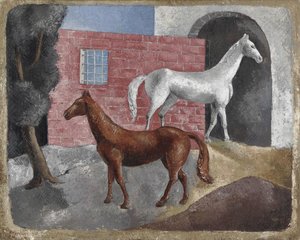
Paresce’s work is characterized by a remarkable sensitivity to light, color, and texture. He rarely employed bold, declarative brushstrokes; instead, he favored a more subtle, almost hesitant approach, building up layers of paint to create an atmosphere of quiet contemplation. His subjects often included landscapes – particularly those of the Italian countryside – but imbued with a sense of melancholy and mystery. Horses, frequently depicted in solitary or small groups, became a recurring motif, symbolizing both vulnerability and resilience. The use of earthy tones—ochres, browns, grays—dominates his palette, lending his paintings a timeless quality and a connection to the natural world. He was particularly drawn to the evocative power of brick walls, which he rendered with an almost obsessive attention to detail, capturing their weathered surfaces and the play of light and shadow upon them. His work is not simply representational; it’s deeply symbolic, inviting viewers to contemplate themes of solitude, memory, and the passage of time.Connections and Influences
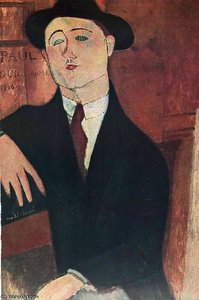
Paresce's artistic development was profoundly influenced by his encounters with a diverse group of artists. His friendship with Cézanne, in particular, instilled in him a deep appreciation for the artist’s ability to capture the essence of form and light. The influence of Post-Impressionism is undeniable, but Paresce also absorbed elements from Futurism, though he never fully embraced its radical aesthetic. His time in Paris exposed him to the avant-garde movements of the period, including Cubism and Fauvism, which informed his approach to composition and color. Notably, he was a recipient of a dedication painting by Modigliani in 1917, a testament to his growing recognition within artistic circles. His association with Margherita Sarfatti, a prominent patron of the arts, provided him with valuable opportunities for exhibition and support during a challenging period.Later Years and Legacy
Following World War I, Paresce spent time in London, contributing to marine research at the National Physical Laboratory – an experience that further honed his observational skills. He continued to exhibit his work throughout Europe, including Milan, Venice, Zurich, and Paris, establishing a modest but consistent presence within the Italian art scene. Despite facing financial difficulties and professional setbacks, Paresce remained committed to his artistic practice until his death in 1937. While he never achieved widespread fame during his lifetime, his paintings are now recognized for their quiet beauty, evocative symbolism, and subtle mastery of technique. Works like “Untitled (336)” offer a glimpse into the depth and complexity of his vision – a testament to an artist who quietly persisted in exploring the profound connections between art, life, and memory. His legacy lies not in grand pronouncements or revolutionary gestures, but in the enduring power of his evocative landscapes and the poignant beauty of his carefully rendered details.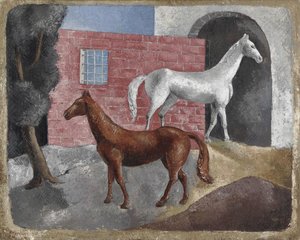
renato paresce
1886 - 1937
Quick Facts
- Artistic Movement Or Style: Modern Italian
- Artists Or Movements Influenced By This Artist: ['Futurist art']
- Artists Who Influenced This Artist: ['Baccio Maria Bacci']
- Date Of Birth: 1886
- Date Of Death: 1937
- Full Name: Renato Paresce
- Nationality: Swiss-Italian
- Notable Artworks: ['Untitled (336)']
- Place Of Birth: Carouge, Switzerland