 Preview
 Send
Send Share
Share
 Details

 Download
 Similars
 X-Ray
X-Ray Diaporama
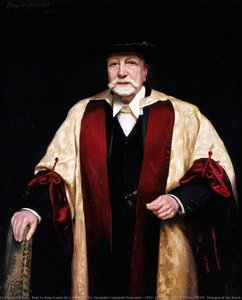
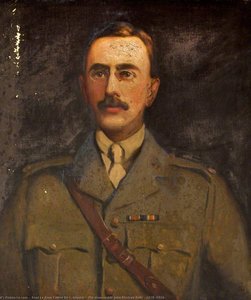
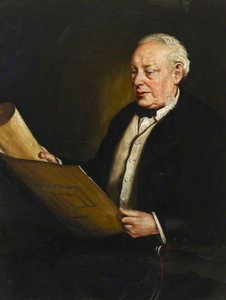
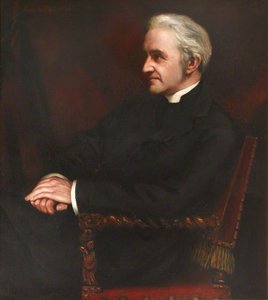
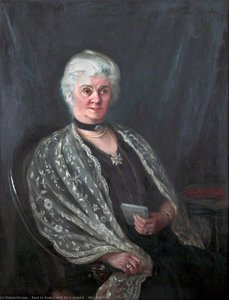
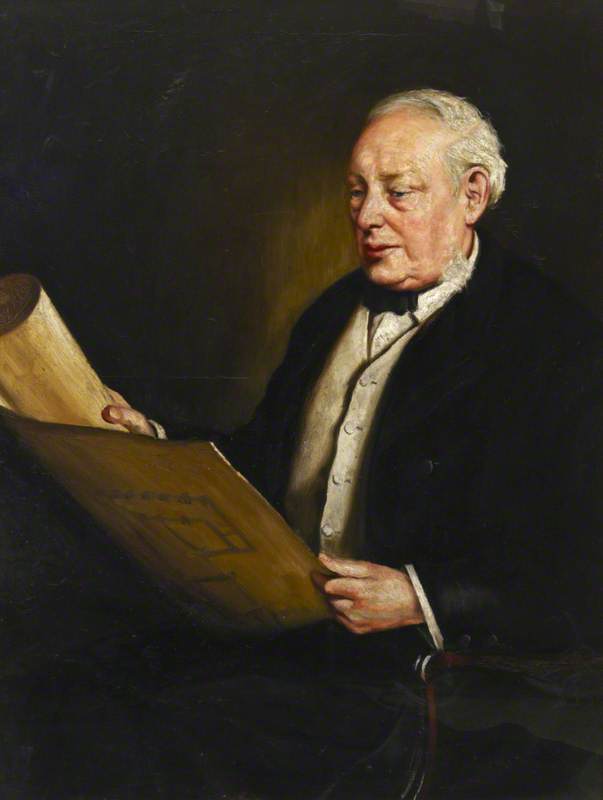
George Aitchison (1825–1910), PRIBA
 104.0 x 80.0 cm
 Read More
Hand Made Oil Reproduction
Hand-painted oil on canvas in your size and frame, made to order by our artists. ( Buy Print Buy Image)




































Pick from our preset sizes that match the artwork's original proportions.

You may enter your own dimensions to fit a specific frame or space. If your selected size does not match the original image's proportions, we will either crop the artwork or extend the painting with additional hand-painted elements. A digital mockup will be sent for your approval before production begins.
Please note that the on-screen preview does not reflect the actual cropping or extension. Only the mockup will accurately show the final composition.
While custom sizes are available, we recommend selecting a dimension from the predefined list to preserve the original proportions.
After order, ArtsDot.com team will email client for instructions and provide a mockup preview
Worldwide Delivery () in 3/4 weeks instead of standard 5 weeks. (28 August). No compromise on quality.

Free Worldwide Express Shipping

High-Quality Linen Canvas

Full Shipping Insurance

Customs Tax Refund Guarantee

True Color Matching Guarantee

60-Day Return Policy (Defects Only)

100% Money-Back Guarantee

Bulk Discount Offer
 Glass option is only available in size under 110 CM

George Aitchison (1825–1910), PRIBA
Reproduction Medium
Reproduction Size
-


Total Price
$ 263
Related Artworks






Artist Biography
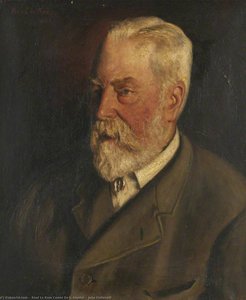
The Soul of the Canvas: The Life and Legacy of René Le Brun
To encounter the work of René Le Brun, Comte de L'Hôpital is to step into a world where the boundaries between reality and symbolism dissolve. An artist whose life spanned the transformative decades of the late nineteenth and early twentieth centuries, Le Brun occupied a unique position in the art world, bridging the gap between classical academic rigor and the burgeoning introspective movements of his era. Born into a lineage of nobility, his upbringing was steeped in tradition, yet his artistic spirit was fundamentally restless, seeking to capture not just the visible surface of the world, but the profound emotional currents that lie beneath it.
While some historical accounts link his early training to the prestigious École Supérieure des Beaux-Arts in Paris—suggesting a mastery of French landscape traditions and Romantic fervor—his documented journey also reveals a deep connection to the English art scene. Having studied at the Royal Academy in London, Le Brun developed a versatile technique that allowed him to move seamlessly between the delicate precision required for scientific illustration and the dramatic weight of portraiture. This duality defined his career; he was an artist capable of both the meticulous observation of a naturalist and the soulful depth of a Symbolist.
A Mastery of Form and Narrative
Le Brun’s technical prowess was most notably displayed in his ability to breathe life into his subjects through the medium of oil on canvas. His portraits, such as the striking John Fothergill, demonstrate an extraordinary attention to detail, where every texture of fabric and every nuance of facial expression serves to reveal the character of the sitter. He possessed a rare gift for capturing the "essence" of a person—a quality that earned him commissions for prestigious portraits of figures such as Pope Leo XIII and Prince Arthur of Connaught.
Beyond the human face, Le Brun found a profound language in the natural world. His landscapes were never mere topographical records; instead, they functioned as psychological spaces. Through the use of light, mist, and carefully composed vistas, he explored themes of solitude and the sublime. In his hands, a solitary tree or a quiet lake became symbols of contemplation, echoing the philosophical shifts of his time. This approach allowed him to transcend simple representation, turning the landscape into a mirror for the human condition.
Illustrative Brilliance and Historical Significance
One of Le Brun’s most enduring contributions to the visual culture of his age was his work as an illustrator. His talent for precise, narrative-driven imagery found its greatest platform in the Encyclopædia Britannica Eleventh Edition (1911). In this capacity, he acted as a vital conduit of knowledge, translating complex information into accessible, beautiful visual art. This period of his life highlights his role not just as a creator of fine art, but as an educator and a chronicler of the era's intellectual landscape.
The historical significance of René Le Brun lies in his ability to synthesize disparate movements. He stood at the crossroads of:
- Academic Tradition: Maintaining the high standards of anatomical accuracy and classical composition learned in the great academies.
- Romanticism: Embracing the emotional intensity and dramatic narratives that define the Romantic spirit.
- Symbolism: Utilizing natural motifs to convey deeper, often spiritual, philosophical truths.
Though he passed away in 1929, leaving behind a legacy etched into both museum collections and historical texts, Le Brun’s work continues to resonate. He remains a testament to the power of art to serve as both a window to the physical world and a doorway to the infinite reaches of the human imagination.
Quick Facts
- Artistic Movement Or Style: Realism
- Artists Or Movements Influenced By This Artist: ['École de Barbizon']
- Artists Who Influenced This Artist:
- Jean-Auguste Dominique Ingres
- Gustave Courbet
- Date Of Death: Living
- Full Name: René Le Brun Comte de L'hôpital
- Nationality: French
- Notable Artworks:
- The Shepherdess
- Landscape with Figures
- Place Of Birth: Paris, France