

 Preview
 Send
Send Share
Share
 Details

 Download
 Similars
 X-Ray
X-Ray Diaporama
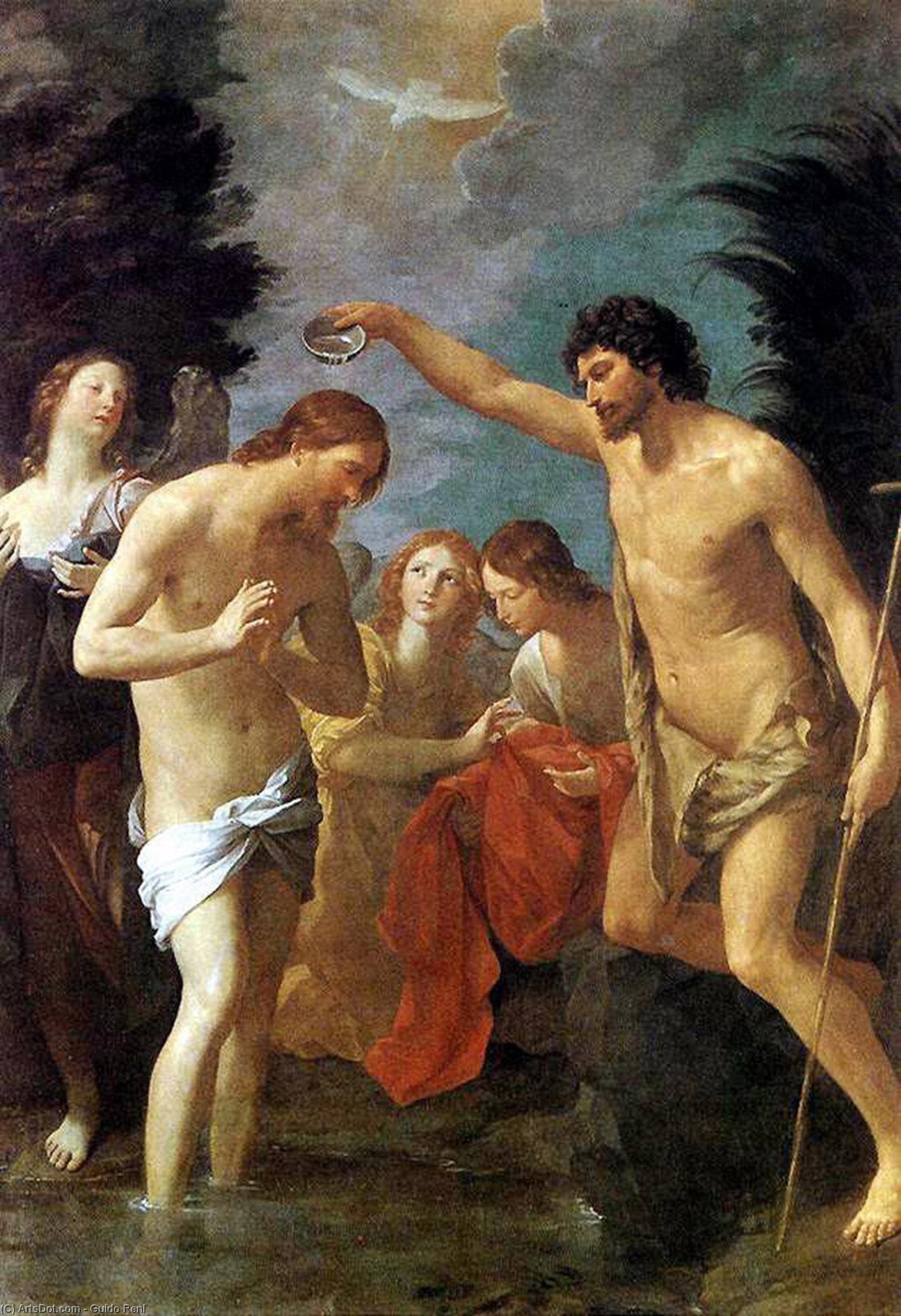
Baptism of Christ
 Oil On Canvas
- WallArt
- Baroque Classicism
 1623
1623 263.0 x 186.0 cm
 Kunsthistorisches Museum
 Read More
Purchase a high-resolution, enhanced digital image, far superior to the online preview.
Each file is meticulously prepared by our in-house specialists using advanced tools and expert manual retouching. We ensure every image has exceptional clarity, precise color accuracy, and fine detail.
The final file is delivered via email within 72 hours, optimized for immediate use in professional, editorial, and print environments. This is the same quality trusted by top-tier design studios, publishers, and galleries.
Digital Image
Download a high-resolution file for personal display, printing, and creative projects. ( Buy Print Buy Hand Made Painting)
Included in Every Digital Image Order
Expert Digital Delivery, Guaranteed
When you choose ArtsDot.com, you're not just getting an image - you're receiving a professionally enhanced digital artwork, crafted with precision and backed by a satisfaction guarantee. Here's everything that comes with your order, automatically:

Fast Email Delivery
Your high-resolution digital image file will be emailed to you within 72 hours of ordering - ready for immediate use.

AI-Enhanced Digital File
Your artwork is professionally optimized using advanced AI tools and manual editing, ensuring maximum detail, clarity, and color accuracy.

Free Lifetime Re-Delivery
Accidentally deleted or lost your file? No worries - we'll resend it to you anytime, free of charge.

No Import Fees - Ever
Enjoy your artwork instantly with zero customs, duties, or delivery fees - digital downloads are always tax-free.

Color Accuracy Guarantee
We ensure your digital image reflects the original colors as closely as possible using professional tools and color management.

60-Day Satisfaction Guarantee
If you're not satisfied with your digital image, we'll revise it or refund 100% within 60 days - no questions asked.

100% Money-Back Guarantee
Not satisfied? Get a full refund within 60 days of receiving your digital file - no questions asked.

Bulk Order Discounts
Buy 3 images, save 10% - Buy 5, save 15% - Buy 10+, save 20%. Great for creative projects, galleries, and agencies.
Collectible Description
Baptism of Christ – A Renaissance Masterpiece
Guido Reni’s “Baptism of Christ,” painted in 1623, is more than just a depiction of a biblical scene; it's a profound meditation on humility, divine grace, and the nascent promise of Christianity. This monumental work, now housed within the Kunsthistorisches Museum in Vienna, stands as a testament to Reni’s mastery of Baroque classicism – a style characterized by its elegant restraint, luminous colors, and deeply felt emotional resonance. The painting immediately draws the viewer into a world of serene contemplation, inviting us to witness a pivotal moment in Jesus's life.
Reni, born Guido Reni (Le Guide) in Bologna in 1575, was steeped in the artistic traditions of his city. Trained initially under Denis Calvaert, he quickly absorbed the influence of the Carracci brothers, inheriting their commitment to anatomical accuracy and dramatic composition. However, Reni swiftly forged a distinctive style – one defined by its refined elegance, meticulous technique, and an ability to imbue even the most sacred subjects with palpable emotion. “Baptism of Christ” exemplifies this evolution; it’s not merely a faithful rendering of scripture but a carefully constructed visual poem.
Composition and Technique: A Symphony of Light and Form
The painting's composition is remarkably balanced, built upon three distinct planes that converge towards the central figure of Jesus. At the forefront, bathed in a soft, diffused light, stands Jesus, kneeling humbly before John the Baptist, who pours water over his head. The gesture is one of profound submission and acceptance – a visual representation of Christ’s willingness to embrace his destiny. Below this intimate tableau unfolds a carefully orchestrated scene: two angels, positioned on either side, assist in gathering Christ's robes, while a third figure stands slightly further back, adding depth and dynamism to the composition. The background, rendered with atmospheric perspective, recedes into a hazy blue expanse, creating a sense of distance and spiritual transcendence.
Reni’s masterful use of color is equally compelling. He employs a restrained palette – primarily reds, yellows, and blues – that evokes a feeling of solemnity and purity. The flesh tones are rendered with exquisite delicacy, capturing the subtle nuances of light and shadow. Notice how the red garment at the center of the composition seems to radiate warmth and vitality, drawing the viewer’s eye towards the central figure. The artist's meticulous attention to detail is evident in every brushstroke, from the folds of the robes to the delicate features of the figures.
Symbolism and Spiritual Depth
Beyond its formal beauty, “Baptism of Christ” is rich in symbolic meaning. The act of baptism itself represents purification, renewal, and entry into the Christian community. John the Baptist’s role as a herald of repentance and preparation underscores the significance of this ritual. The dove descending from heaven – a potent symbol of the Holy Spirit – signifies divine grace and the promise of salvation. The cross held by John in his left hand is a subtle but powerful reminder of Christ's sacrifice, anchoring the scene within the broader context of Christian theology.
Furthermore, the painting’s overall mood conveys a sense of profound humility and reverence. Jesus’s posture, his gaze directed downwards, speaks to his willingness to submit to God’s will. The entire composition invites contemplation on themes of faith, sacrifice, and redemption – offering viewers a moment of spiritual reflection.
A Legacy of Baroque Elegance
“Baptism of Christ” stands as one of Guido Reni's most celebrated works, embodying the ideals of Renaissance and early Baroque art. Its harmonious composition, luminous colors, and profound symbolism continue to captivate viewers centuries after its creation. Reproductions of this masterpiece offer a remarkable opportunity to bring the beauty and spiritual depth of Reni’s vision into any setting, serving as a timeless reminder of the enduring power of faith and artistic expression.
Related Artworks







Artist Biography
Guido Reni (Le Guide): Life and Legacy
Early Life and Training
Guido Reni, also known as Le Guide, was born in Bologna, Italy, in 1575. He was the only child of Daniele Reni, a musician, and Ginevra Pozzi, also from a musical family. This upbringing instilled in him an appreciation for harmony and form that would later influence his artistic style. At the young age of nine, Guido began his apprenticeship under Denis Calvaert, a Flemish painter working in Bologna. He studied alongside fellow aspiring artists Albani and Domenichino, forming a strong foundation in classical principles.
Artistic Career and Development
Reni’s artistic career spanned several Italian cities, including Rome, Naples, and his native Bologna. His early work showed the influence of Calvaert and the Carracci brothers, emphasizing anatomical accuracy and dramatic composition. However, Reni quickly developed a distinctive style characterized by its elegant classicism, refined technique, and emotional intensity. He became a dominant figure in the Bolognese School, known for its emphasis on academic training and idealized forms.
Key Influences
- Denis Calvaert: Reni’s initial teacher provided him with a strong foundation in Flemish painting techniques.
- The Carracci Family (Annibale, Agostino, Ludovico): Their emphasis on classical art and anatomical study profoundly impacted his artistic development.
- Raphael: Reni greatly admired Raphael’s gracefulness and harmonious compositions, which are evident in many of his works.
Major Works and Artistic Style
Reni's oeuvre encompasses a wide range of subjects, including religious scenes, mythological narratives, and allegorical representations. Some of his most celebrated works include:
- Apollo on the Sun Chariot (Albertina, Vienna): A dynamic drawing showcasing Reni’s mastery of Baroque style.
- Saint James the Greater: Demonstrates his skill in capturing religious fervor and human emotion.
- Atalanta and Hippomenes (Palace of Capodimonte, Naples): An example of his mythological paintings, characterized by graceful figures and dramatic storytelling.
- Saint Jerome: A testament to Reni’s ability to balance composition with emotional depth.
- Tarantella (Palace of Capodimonte, Naples): Illustrates his influence on Italian folk dance culture.
Reni's style is often described as eclectic classicism. He blended the precision of classical art with the dynamism and emotion of the Baroque period. His figures are typically idealized, possessing a serene beauty and graceful movement.
Historical Significance and Legacy
Guido Reni played a crucial role in shaping the development of High Baroque style in Italy. He influenced generations of artists with his refined technique, elegant compositions, and emotional depth. His work can be found in prominent museums worldwide, including the Palace of Capodimonte in Naples. Reni’s legacy extends beyond painting; he was also a poet and a respected intellectual figure in his time.
His art continues to inspire artists and art enthusiasts today, solidifying his place as one of the most important painters of the 17th century. His influence can be seen in subsequent Baroque artists who sought to emulate his gracefulness and emotional power.
Death
Guido Reni died in Bologna in 1642, leaving behind a rich artistic legacy that continues to captivate audiences centuries later.

reni guido (le guide)
1575 - 1642 , Italy
Quick Facts
- Birth Date: 1575
- Birth Place: Bologna, Italy
- Death Date: 1642
- Influenced By: Denis Calvaert
- Movement: High Baroque, Bolognese School
- Name: Guido Reni (Le Guide)
- Nationality: Italian
- Notable Works:
- Apollo on the Sun Chariot
- Saint James the Greater
- Atalanta and Hippomenes
- Saint Jerome
- Tarantella

