 Preview
 Send
Send Share
Share
 Details

 Download
 Similars
 X-Ray
X-Ray Diaporama
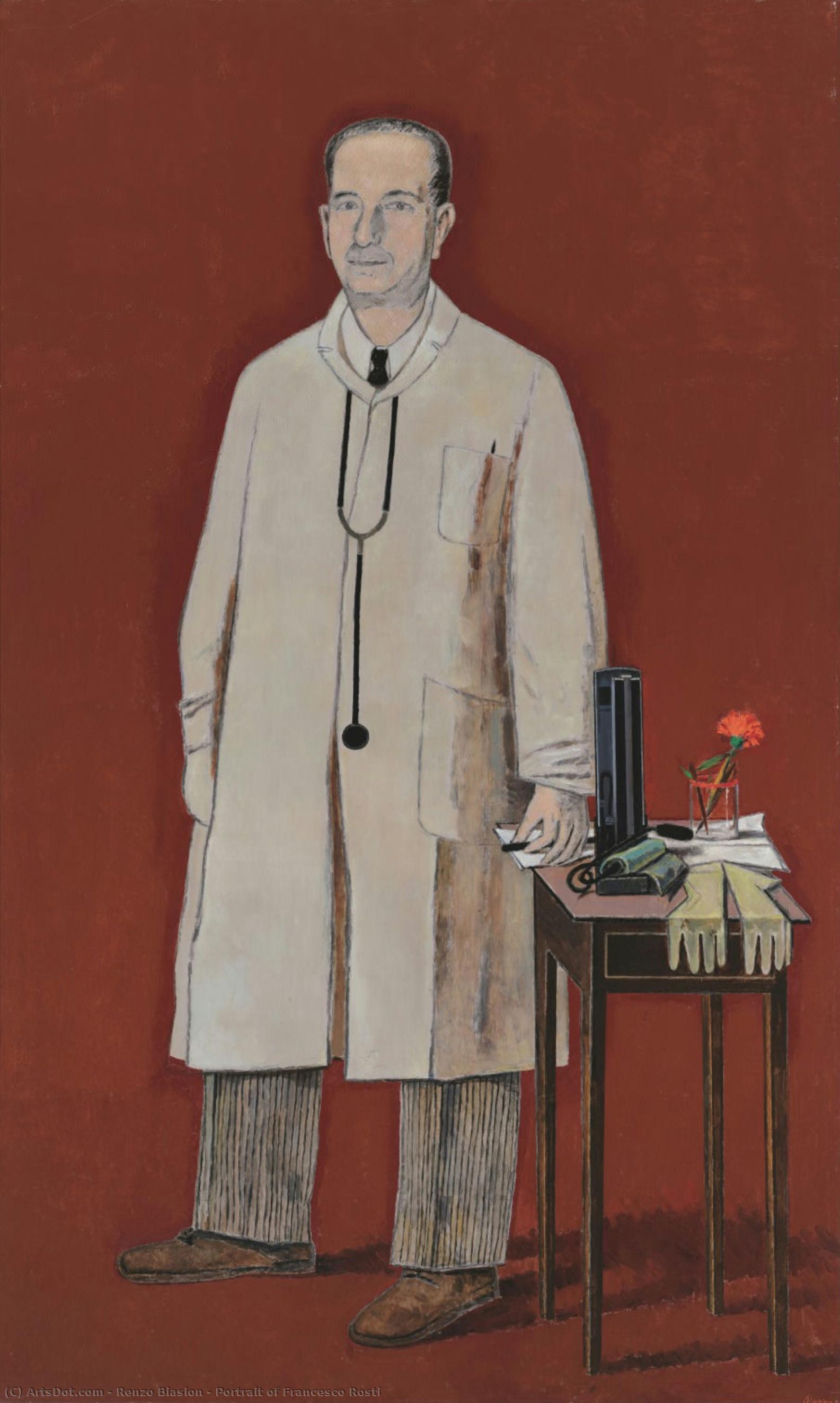
Portrait of Francesco Rosti
 1988
1988 200.0 x 120.0 cm
 Ca’ Granda – Ospedale Maggiore Policlinico
 Read More
Giclée / Art Print
Museum-quality giclée or canvas print with fast production and flexible finish options. ( Buy Hand Made Painting Buy Image)




































Pick from our preset sizes that match the artwork's original proportions.

You may enter your own dimensions to fit a specific frame or space. If your selected size does not match the original image's proportions, we will either crop the artwork or extend the image with a mirrored or solid-fill edge. A digital mockup will be sent for your approval before production begins.
Please note that the on-screen preview does not reflect the actual cropping or extension. Only the mockup will accurately show the final composition.
While custom sizes are available, we recommend selecting a dimension from the predefined list to preserve the original proportions.
Worldwide Delivery () in 2 weeks instead of standard 4/5 weeks. (27 August)

Free Worldwide Express Shipping

High-Quality Linen Canvas

Full Shipping Insurance

Customs Tax Refund Guarantee

True Color Matching Guarantee

60-Day Return Policy (Defects Only)

100% Money-Back Guarantee

Bulk Discount Offer
 Glass option is only available in size under 110 CM

Portrait of Francesco Rosti
Giclée / Art Print
Reproduction Size
-


Total Price
$ 63
Related Artworks









Artist Biography
Marc Chagall: A Life Painted in Dreams
Born Moishe Chagall in Vitebsk, Belarus, on July 7, 1887, Marc Chagall’s life was a vibrant tapestry woven from the threads of Jewish heritage, Russian folklore, and the revolutionary fervor of early 20th-century Europe. His childhood, marked by poverty and displacement – his family moved several times due to political upheaval – instilled in him a deep sense of longing and a profound connection to memory. This foundational experience would profoundly shape his artistic vision, informing his distinctive style characterized by dreamlike imagery, bold colors, and a joyous celebration of life’s simple pleasures.
Early influences were diverse. Initially, Chagall received rudimentary art training at a local school, but it was the mentorship of Jehuda Pen, a local painter, that ignited his passion for visual expression. Later, he studied at the Academy of Arts in St. Petersburg, though he found the rigid academic approach stifling. It was during this period that he encountered the groundbreaking works of the Parisian avant-garde – Fauvism and Cubism – which irrevocably altered his artistic trajectory. These encounters exposed him to new techniques and a radical departure from traditional representation, paving the way for his own unique style.
His time in Paris (1911-1914) proved transformative. He immersed himself in the vibrant artistic community of Montparnasse, forging friendships with fellow artists like Pablo Picasso, Henri Matisse, and André Derain. This period witnessed a dramatic evolution in his work; he embraced brighter colors, simplified forms, and incorporated elements of Russian folk art – particularly Jewish religious imagery – into his compositions. Key works from this era include Golgotha (1912) and Homage to Apollinaire (1912-1913), both testaments to his burgeoning artistic voice.
The Russian Years: War, Exile, and Artistic Flourishing
World War I dramatically disrupted Chagall’s life. With the outbreak of hostilities in 1914, he returned to Vitebsk, only to find it occupied by German forces. This period was marked by hardship and uncertainty, but also by a surge of creative output. He married Bella Rosenfeld in 1916, and their daughter, Ida, was born the following year. Despite facing political turmoil and restrictions imposed by the Bolshevik government, Chagall continued to exhibit his work and maintain connections with prominent artists like Marc Seefeld and Isaac Brodsky.
Following the Russian Revolution of 1917, Chagall briefly held positions in the newly formed Soviet government, hoping to use art as a tool for social change. However, his attempts were met with resistance from conservative elements within the party, leading to his dismissal and exile in 1920. This period of displacement fueled his artistic exploration, resulting in powerful works like *Promenade* (1917-18) and *Over the Town* (1914-18), which capture the emotional intensity of a nation undergoing profound transformation.
Despite facing material difficulties, Chagall’s productivity flourished during this time. He experimented with new techniques, incorporating elements of Futurism, Cubism, and Suprematism into his distinctive style. His work became increasingly expressive, reflecting both personal experiences and the turbulent political landscape of Europe. The decoration of the Jewish Theatre in Moscow (1927-1930) stands as a monumental achievement, showcasing his mastery of color, composition, and narrative storytelling.
A Return to Paris and Beyond: Late Works and Legacy
In 1922, Chagall returned to Paris with Bella and Ida, seeking stability and artistic recognition. He established himself in Montparnasse, continuing to exhibit his work and develop new series of paintings. This period saw a shift towards more intimate subjects – portraits of Bella, scenes from his childhood, and symbolic representations of Jewish folklore.
During the 1930s, Chagall’s style evolved further, incorporating elements of Surrealism and exploring themes of faith, memory, and displacement. His paintings became increasingly dreamlike and emotionally charged, reflecting the anxieties of a world on the brink of war. Notable works from this period include *Sketches From I Moitia* (1937-1940), a series of evocative images inspired by his travels in Palestine.
Chagall’s artistic output continued throughout World War II, with much of his work being hidden during the Nazi occupation. After the war, he became an American citizen and spent the remainder of his life teaching at Black Mountain College in North Carolina. He remained a prolific artist until his death on March 28, 1983, leaving behind a vast and influential body of work that continues to captivate audiences worldwide.
Key Characteristics and Artistic Influences
Chagall’s artistic style is instantly recognizable for its vibrant colors, dreamlike imagery, and incorporation of Russian folk art motifs. He frequently employed flattened perspectives, distorted figures, and symbolic elements – such as stars, birds, and musical instruments – to convey emotions and ideas. His work draws heavily from his Jewish heritage, incorporating biblical stories, religious symbols, and traditional folklore.
Influences on Chagall’s art are diverse and complex. He was deeply inspired by the Fauvist movement, particularly its use of bold colors; Cubism, which challenged traditional notions of perspective and representation; and Russian folk art, which provided a rich source of imagery and symbolism. Furthermore, his exposure to the works of Vincent van Gogh, Paul Gauguin, and Henri Matisse profoundly shaped his artistic sensibilities.
Ultimately, Marc Chagall’s legacy lies in his ability to transform personal experiences and cultural influences into a uniquely expressive and emotionally resonant body of work. His paintings continue to evoke wonder, mystery, and a profound sense of humanity, solidifying his place as one of the most important artists of the 20th century.
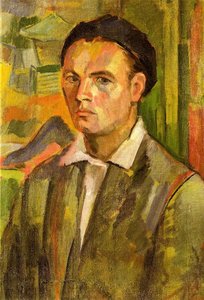
renzo biasion
1914 - 1996 , Italy
Quick Facts
- Artistic Movement Or Style: Fauvism, Cubism
- Artists Or Movements Influenced By This Artist:
- Expressionism
- Surrealism
- Artists Who Influenced This Artist:
- Picasso
- Matisse
- Date Of Birth: July 7, 1887
- Date Of Death: 1983
- Full Name: Marc Chagall
- Nationality: French/Russian
- Notable Artworks:
- I and the Village
- Maternity
- The Four Seasons
- Place Of Birth: Witebsk (Belarus)