 Preview
 Send
Send Share
Share
 Details

 Download
 Similars
 X-Ray
X-Ray Diaporama
 Stats
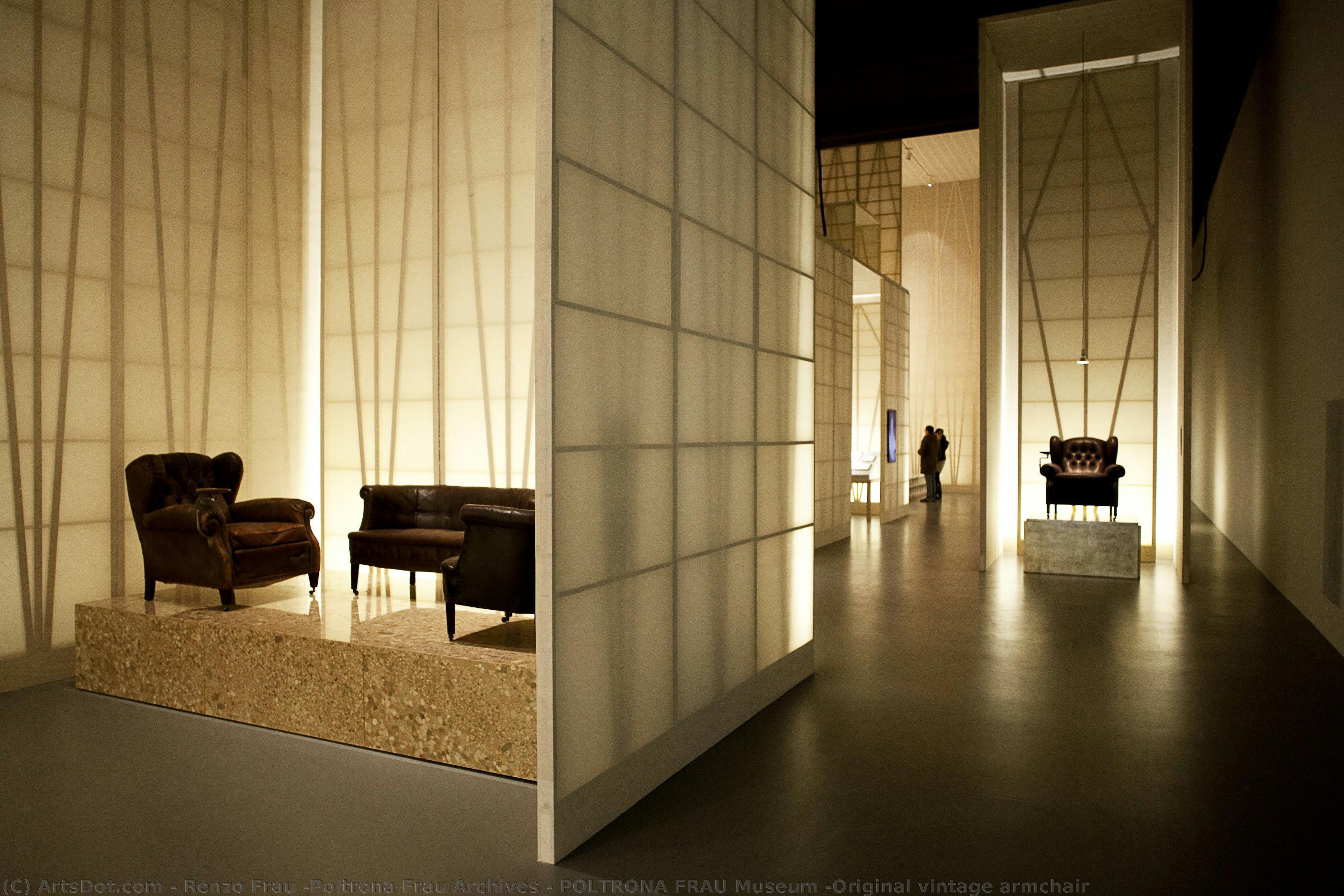
StatsPOLTRONA FRAU Museum -Original vintage armchair

 Read More
Hand Made Oil Reproduction
Hand-painted oil on canvas in your size and frame, made to order by our artists. ( Switch to Print Switch to Digital Image)




































Pick from our preset sizes that match the artwork's original proportions.

You may enter your own dimensions to fit a specific frame or space. If your selected size does not match the original image's proportions, we will either crop the artwork or extend the painting with additional hand-painted elements. A digital mockup will be sent for your approval before production begins.
Please note that the on-screen preview does not reflect the actual cropping or extension. Only the mockup will accurately show the final composition.
While custom sizes are available, we recommend selecting a dimension from the predefined list to preserve the original proportions.
After order, ArtsDot.com team will email client for instructions and provide a mockup preview
Worldwide Delivery () in 3/4 weeks instead of standard 5 weeks. (9 September). No compromise on quality.

Free Worldwide Express Shipping

High-Quality Linen Canvas

Full Shipping Insurance

Customs Tax Refund Guarantee

True Color Matching Guarantee

100-Day Return Policy (Defects Only)

100% Money-Back Guarantee

Bulk Discount Offer
 Glass option is only available in size under 110 CM

POLTRONA FRAU Museum -Original vintage armchair
Reproduction Medium
Reproduction Size
-


Total Price
$ 263
Related Artworks










Artist Biography
Pablo Picasso: A Revolutionary Life in Color and Form
Pablo Picasso, a name synonymous with artistic innovation and boundless creativity, remains one of the most recognizable figures in the history of art. Born in Málaga, Spain, on October 25, 1881, into a family steeped in artistic tradition – his father, José Ruiz y Blasco, was a respected art teacher and curator – Picasso’s journey from a precocious child sketching pigeons to a globally celebrated master is a testament to an extraordinary talent and relentless experimentation. His life wasn't simply about painting; it was a vibrant tapestry woven with love, loss, political upheaval, and a constant pursuit of new ways to see and represent the world.
Picasso’s early years were marked by a deep connection to his family and a burgeoning passion for art. Growing up in Málaga, he spent countless hours observing his father's drawing lessons and exploring the city’s museum. This foundation was supplemented by private tutoring, allowing him to develop his skills rapidly. However, it was a traumatic event at the age of nine – the death of his younger sister, Conchita – that profoundly shaped his artistic trajectory. As he later recounted, he vowed never to paint again, a promise he ultimately broke, channeling his grief and emotions into a series of hauntingly beautiful works during what became known as his “Blue Period.” This period, characterized by somber tones and depictions of poverty and loneliness, offered an early glimpse into Picasso’s ability to imbue his art with profound emotional depth.
The Rise of Cubism
Following a brief stint at the La Coruña School of Fine Arts in Spain, Picasso moved to Paris in 1904, a pivotal moment that propelled him onto the international stage. It was here, amidst the vibrant artistic community of Montmartre, that he began to develop his revolutionary style – Cubism. Collaborating closely with Georges Braque, Picasso shattered traditional notions of perspective and representation, dismantling objects into fragmented geometric forms and reassembling them on the canvas in a radically new way.
Cubism wasn’t merely an aesthetic innovation; it was a philosophical statement about how we perceive reality. Picasso and Braque explored multiple viewpoints simultaneously, presenting a fractured yet complete image of their subjects. This approach challenged viewers to actively engage with the artwork, reconstructing the scene in their minds. The Analytical Cubist phase (1908-1912) involved breaking down objects into smaller and smaller components, often using monochromatic palettes. Later, Synthetic Cubism (1912-1914) introduced collage elements – newspaper clippings, fabric scraps, and other found materials – further disrupting the traditional boundaries of painting. Works like *Les Demoiselles d’Avignon* (1907), with its distorted figures and angular forms, are considered foundational to this revolutionary movement.
A Life Shaped by Love and Conflict
Picasso's personal life was as dynamic and complex as his artistic output. He experienced a series of intense relationships, each leaving an indelible mark on his work. His early love affair with Fernande Olivier (1905-1912) influenced works like *Portrait of Fernande Olivier*, while his subsequent partnerships with Dora Maar (1935-1944) and Françoise Gilot (1943-1945) produced a wealth of emotionally charged paintings. His relationship with Marie-Thérèse Walter, a young dancer he met in 1927, provided him with a muse for many years, culminating in the iconic *Girl Before a Mirror* (1932).
The tumultuous events of the 20th century profoundly impacted Picasso’s art. The Spanish Civil War ignited his political consciousness, leading to powerful and often politically charged works such as *Guernica* (1937), a monumental mural depicting the horrors of aerial bombardment on the Basque town of Guernica during the war. This painting stands as one of the most potent anti-war statements in art history, capturing the chaos, suffering, and devastation of conflict.
Legacy and Influence
Pablo Picasso died on April 8, 1973, at the age of 91, leaving behind an unparalleled legacy. His influence on the course of modern art is immeasurable. He not only pioneered Cubism but also experimented with a vast range of styles and techniques throughout his long career – Surrealism, Neoclassicism, Expressionism, and beyond. His innovative approach to form, color, and subject matter continues to inspire artists today.
Picasso’s work is held in major museums around the world, including the Museum of Modern Art (MoMA) in New York, the Tate Gallery in London, and the Picasso Museums in Paris and Málaga. His paintings command staggering prices at auction, solidifying his position as one of the most valuable artists in history. More than just a painter, Picasso was a visionary who fundamentally altered our understanding of art and its potential to reflect and shape human experience.

renzo frau -poltrona frau archives
1881 - 1926 , Italy
Quick Facts
- Artistic Movement Or Style:
- Cubism
- Surrealism
- Artists Or Movements Influenced By This Artist:
- Braque
- Modernism
- Artists Who Influenced This Artist:
- Cézanne
- El Greco
- African art
- Date Of Birth: October 25, 1881
- Date Of Death: April 8, 1973
- Full Name: Pablo Diego José Francisco de Paula Juan Nepomuceno María de los Remedios Cipriano de la Santísima Trinidad Ruiz y Picasso
- Nationality: Spanish
- Notable Artworks:
- Guernica
- Les Demoiselles d’Avignon
- The Weeping Woman
- Place Of Birth: Málaga, Spain