 Preview
 Send
Send Share
Share
 Details

 Download
 Similars
 X-Ray
X-Ray Diaporama
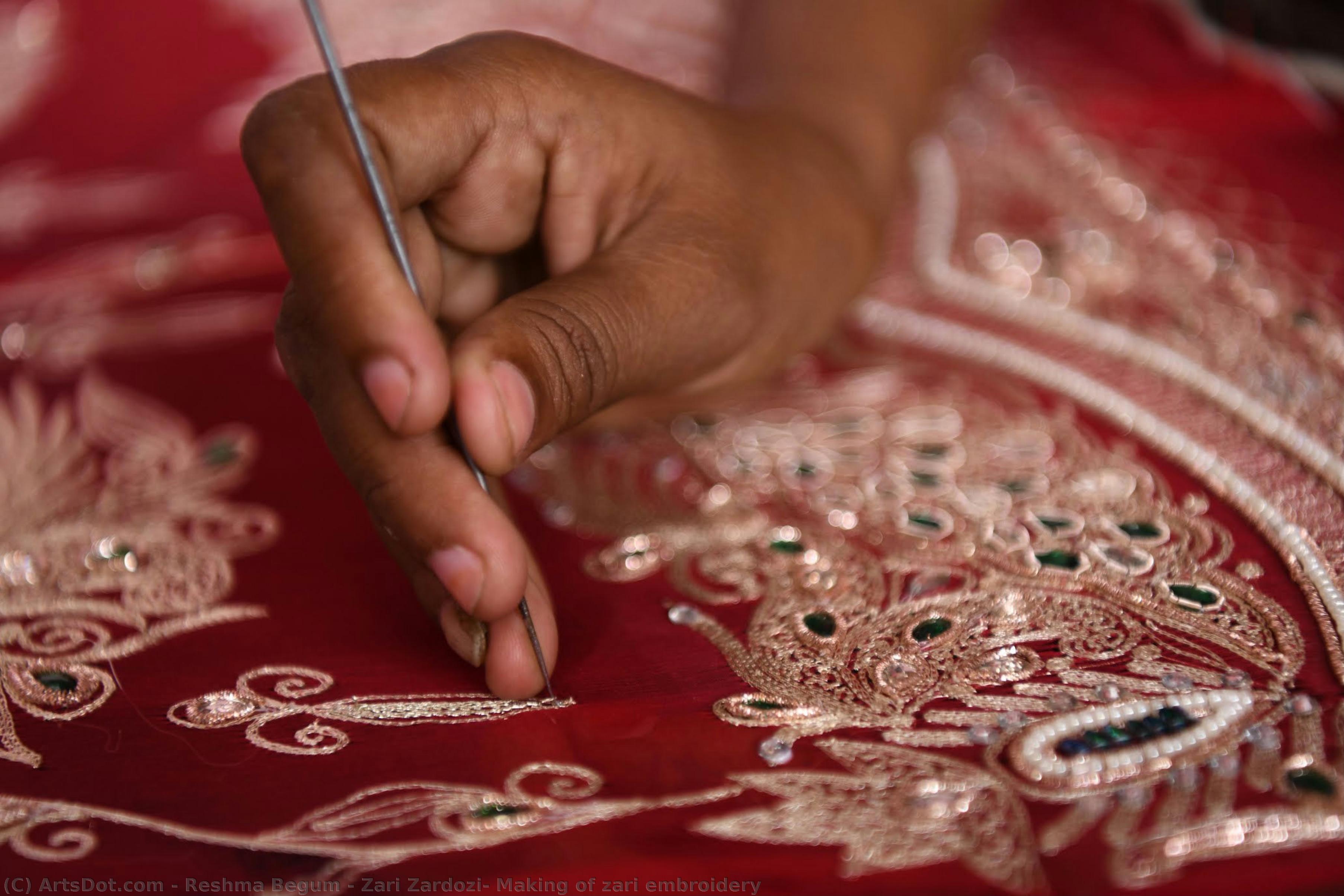
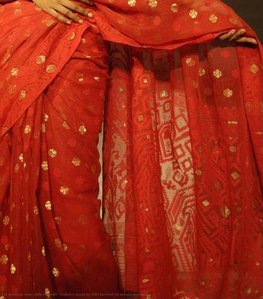
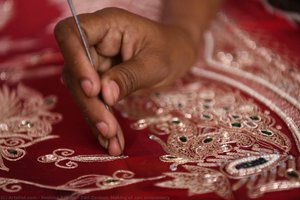
Zari Zardozi: Making of zari embroidery


 Read More
Giclée / Art Print
Museum-quality giclée or canvas print with fast production and flexible finish options. ( Buy Hand Made Painting Buy Image)




































Pick from our preset sizes that match the artwork's original proportions.

You may enter your own dimensions to fit a specific frame or space. If your selected size does not match the original image's proportions, we will either crop the artwork or extend the image with a mirrored or solid-fill edge. A digital mockup will be sent for your approval before production begins.
Please note that the on-screen preview does not reflect the actual cropping or extension. Only the mockup will accurately show the final composition.
While custom sizes are available, we recommend selecting a dimension from the predefined list to preserve the original proportions.
Worldwide Delivery () in 2 weeks instead of standard 4/5 weeks. (28 August)

Free Worldwide Express Shipping

High-Quality Linen Canvas

Full Shipping Insurance

Customs Tax Refund Guarantee

True Color Matching Guarantee

60-Day Return Policy (Defects Only)

100% Money-Back Guarantee

Bulk Discount Offer
 Glass option is only available in size under 110 CM

Zari Zardozi: Making of zari embroidery
Giclée / Art Print
Reproduction Size
-


Total Price
$ 63
Related Artworks



Artist Biography
The Soul of the Banjara: The Life and Legacy of Reshma Begum
In the vast, sun-drenched landscapes of Rajasthan and the mystical shrines of Sindh, a voice emerged that would forever alter the landscape of South Asian folk music. Reshma Begum, born in 1947 near Bikaner, India, was not merely a singer but a vessel for the ancient, nomadic traditions of the Banjara people. Her life began amidst the itinerant rhythms of her tribe, a childhood steeped in the oral histories and melodic tapestries of a wandering existence. Though she would later find fame across borders, her essence remained rooted in the dust and devotion of the desert, carrying with her a raw, unadorned authenticity that no formal conservatory could ever replicate.
The trajectory of her life was irrevocably changed by the winds of history and the serendipity of discovery. Following the Partition of India, her family relocated to Karachi, yet the musical spirit of her heritage traveled with them. At the tender age of twelve, while performing at the revered shrine of Lal Shahbaz Qalandar in Sehwan, her talent was caught by the ears of a producer. This moment of recognition acted as a bridge between the sacred, localized traditions of Sufi mysticism and the broader world of mass media. Without formal musical training, Reshma relied on an innate mastery of vocal ornamentation, utilizing melisma and a hauntingly precise vibrato to weave stories of longing, faith, and social reality.
A Master of Melodic Emotion
Reshma’s artistry was defined by a unique vocal timbre—a powerful, resonant instrument capable of conveying the deepest nuances of human emotion. Her technique was characterized by a seamless blend of strength and delicacy, allowing her to navigate complex folk melodies with effortless grace. She possessed the rare ability to transform simple folk tunes into profound spiritual experiences, imbuing every note with the weight of her people's history. Her repertoire served as a cultural archive, encompassing:
- Sufi Poetry: Bringing the mystical verses of saints to life through devotional fervor.
- Sindhi Folklore: Preserving the legends and oral traditions of the Indus Valley.
- Social Commentary: Using her platform to reflect the joys and struggles of the common folk.
The year 1968 marked a pivotal milestone in her career when she recorded the iconic “Laal Meri Pat Rakhio” for Pakistan Radio. The song became an instant national sensation, catapulting her into the spotlight and establishing her as a household name. This breakthrough paved the way for legendary collaborations with composers such as Saleem Gilani and led to her presence in both Pakistani and Indian film industries, where she brought a sense of earthy realism to the cinematic screen.
Cultural Icon and Enduring Resonance
Beyond the accolades and the recordings, Reshma’s significance lies in her role as a cultural custodian. She was a recipient of the Sitara-i-Imtiaz, one of Pakistan's highest civilian honors, a testament to her contribution to the nation's artistic fabric. Her music bridged the gap between the nomadic fringes and the urban mainstream, ensuring that the melodies of the Banjara were not lost to the passage of time. Even as she faced the physical toll of illness in her later years, her voice remained a symbol of resilience.
Her passing in Lahore in 2013 marked the end of an era, yet her influence continues to ripple through generations of musicians. To listen to Reshma is to encounter the very heartbeat of Sindh and Rajasthan—a landscape of devotion, struggle, and unyielding beauty. Her most celebrated works, including “Dama Dam Mast Kalandar” and “Lambi Judai,” remain timeless anthems that continue to resonate in the hearts of those who seek the truth in a single, soulful note.
reshma begum
1947 - 2013 , India
Quick Facts
- Artistic Movement Or Style: Folk Music
- Artists Or Movements Influenced By This Artist: ['None Known']
- Artists Who Influenced This Artist: ['None Known']
- Date Of Birth: 1947
- Full Name: Reshma Begum
- Nationality: Indian
- Notable Artworks: ['Laal Meri']
- Place Of Birth: Bikaner, India