 Preview
 Send
Send Share
Share
 Details

 Download
 Similars
 X-Ray
X-Ray Diaporama
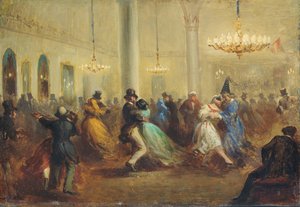
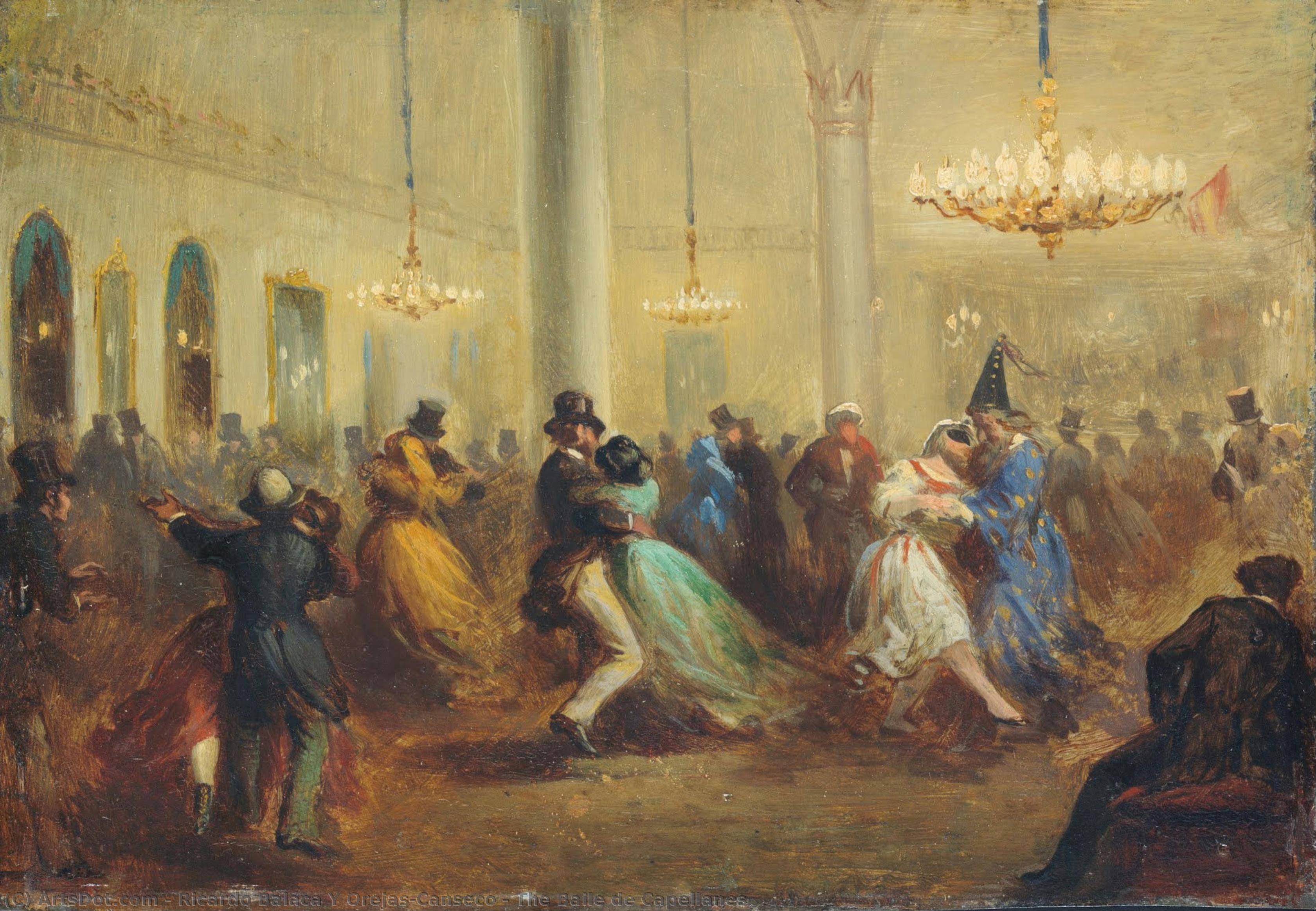
The Baile de Capellanes

 Read More
Hand Made Oil Reproduction
Hand-painted oil on canvas in your size and frame, made to order by our artists. ( Buy Print Buy Image)




































Pick from our preset sizes that match the artwork's original proportions.

You may enter your own dimensions to fit a specific frame or space. If your selected size does not match the original image's proportions, we will either crop the artwork or extend the painting with additional hand-painted elements. A digital mockup will be sent for your approval before production begins.
Please note that the on-screen preview does not reflect the actual cropping or extension. Only the mockup will accurately show the final composition.
While custom sizes are available, we recommend selecting a dimension from the predefined list to preserve the original proportions.
After order, ArtsDot.com team will email client for instructions and provide a mockup preview
Worldwide Delivery () in 3/4 weeks instead of standard 5 weeks. (26 August). No compromise on quality.

Free Worldwide Express Shipping

High-Quality Linen Canvas

Full Shipping Insurance

Customs Tax Refund Guarantee

True Color Matching Guarantee

60-Day Return Policy (Defects Only)

100% Money-Back Guarantee

Bulk Discount Offer
 Glass option is only available in size under 110 CM

The Baile de Capellanes
Reproduction Medium
Reproduction Size
-


Total Price
$ 263
Related Artworks










Artist Biography
Ricardo Balaca y Orejas-Canseco: A Romantic Vision of Spanish Warfare
Born in Lisbon in 1844, Ricardo Balaca y Orejas-Canseco emerged from a lineage steeped in artistic tradition. His father, José Balaca, was himself a painter who found exile in Portugal, creating an early atmosphere of both artistic pursuit and familial displacement that profoundly shaped the young Ricardo’s life and career. This unique background—a Portuguese birthplace coupled with a Spanish heritage—contributed to a distinctly nuanced perspective on his art, particularly evident in his masterful portrayals of battle scenes.
Balaca's formal training commenced within the family workshop, providing him with an invaluable foundation in artistic principles and techniques. This early immersion was subsequently supplemented by studies at the prestigious Real Academia de Bellas Artes de San Fernando in Madrid, where he honed his skills under the tutelage of Federico de Madrazo, a respected figure in the Spanish art world. This academic grounding, combined with his familial influence, allowed him to develop a sophisticated understanding of composition, color theory, and anatomical accuracy – elements that would later define his distinctive style.
The Romantic Battlefield
Balaca’s artistic reputation rests primarily on his evocative depictions of military conflicts. He wasn't merely interested in documenting battles; he sought to capture the drama, emotion, and heroism inherent within them. His work firmly aligns with the tenets of Romanticism – a movement characterized by an emphasis on intense feeling, individualism, and the sublime power of nature (and in this case, war). Unlike earlier depictions of warfare that often focused on cold, clinical detail, Balaca’s scenes are infused with a palpable sense of urgency, chaos, and human suffering. He frequently employed dramatic lighting, dynamic compositions, and expressive brushwork to convey the intensity of the moment.
His most celebrated works include meticulous renderings of pivotal battles such as the Battle of Almansa and the Battle of Bailén, both significant events during the Third Carlist War. Serving as a correspondent for the northern front under King Alfonso XII, Balaca’s artistic engagement with these conflicts provided him with unparalleled access to the realities of war – an experience that undoubtedly informed his powerful visual narratives. These paintings aren't simply historical records; they are intensely personal interpretations of human courage and sacrifice.
Illustrations for Cervantes
Beyond his battle scenes, Balaca’s artistic versatility extended to illustration. He was commissioned to create nearly three hundred illustrations for a deluxe edition of Miguel de Cervantes’ *Don Quixote*, a project that showcased his ability to adapt his style and techniques to diverse subjects. While the full extent of his contribution remains debated – with some attributing only a portion of the illustrations to him – this undertaking demonstrates his artistic range and commitment to preserving literary masterpieces.
A Tragic Early End
Tragically, Ricardo Balaca y Orejas-Canseco’s career was cut short at the age of 35. The cause of his untimely death in Madrid remains shrouded in mystery, with no definitive explanation offered by contemporary sources. Despite this premature end, his artistic legacy endured, and his paintings continue to be admired for their dramatic intensity, technical skill, and poignant portrayal of human experience within the context of war.
Legacy and Influence
Balaca’s work represents a significant contribution to 19th-century Spanish art. His romanticized depictions of battle scenes offer a compelling counterpoint to more austere historical representations, while his illustrations for *Don Quixote* demonstrate his artistic versatility and commitment to preserving literary heritage. His brother, Eduardo Balaca, also established himself as a notable painter, further solidifying the family’s impact on the Spanish art scene. Today, Ricardo Balaca y Orejas-Canseco's paintings are housed in museums across Spain and beyond, ensuring that his dramatic vision of warfare continues to captivate audiences.
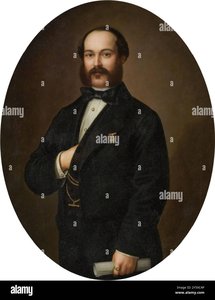
ricardo balaca y orejas-canseco
1844 - 1880 , Portugal
Quick Facts
- Artistic Movement Or Style: Romantic Battle Art
- Artists Or Movements Influenced By This Artist: ['None known']
- Artists Who Influenced This Artist: ['Federico de Madrazo']
- Date Of Birth: 1844 Lisbon, Portugal
- Date Of Death: 1880 Madrid, Spain
- Full Name: Ricardo Balaca y Orejas-Canseco
- Nationality: Spanish
- Notable Artworks: ['The Baile de Capellanes']
- Place Of Birth: Lisbon, Portugal