 Preview
 Send
Send Share
Share
 Details

 Download
 Similars
 X-Ray
X-Ray Diaporama
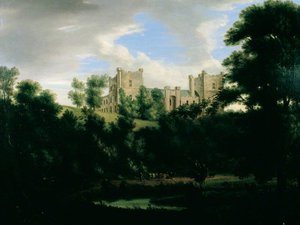
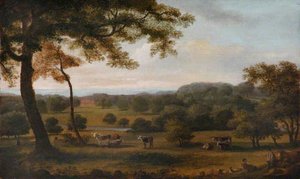
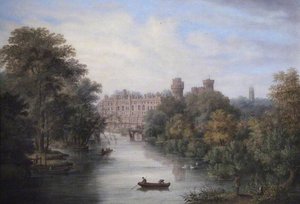
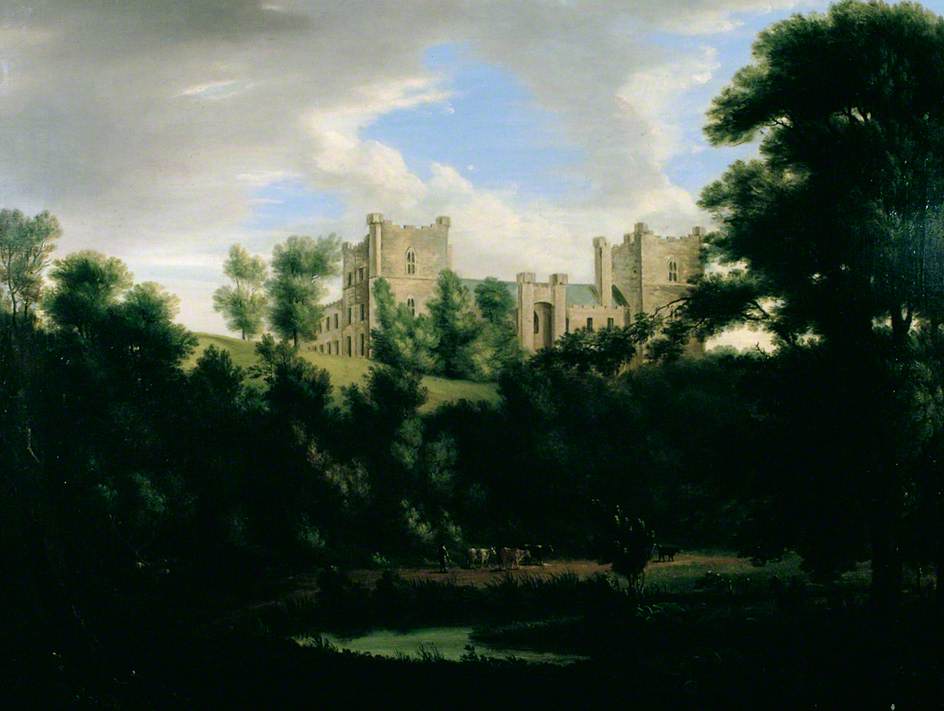
Lumley Castle, County Durham
 1850
1850 66.0 x 87.0 cm
 Government Art Collection
 Read More
Hand Made Oil Reproduction
Hand-painted oil on canvas in your size and frame, made to order by our artists. ( Buy Print Buy Image)




































Pick from our preset sizes that match the artwork's original proportions.

You may enter your own dimensions to fit a specific frame or space. If your selected size does not match the original image's proportions, we will either crop the artwork or extend the painting with additional hand-painted elements. A digital mockup will be sent for your approval before production begins.
Please note that the on-screen preview does not reflect the actual cropping or extension. Only the mockup will accurately show the final composition.
While custom sizes are available, we recommend selecting a dimension from the predefined list to preserve the original proportions.
After order, ArtsDot.com team will email client for instructions and provide a mockup preview
Worldwide Delivery () in 3/4 weeks instead of standard 5 weeks. (23 August). No compromise on quality.

Free Worldwide Express Shipping

High-Quality Linen Canvas

Full Shipping Insurance

Customs Tax Refund Guarantee

True Color Matching Guarantee

60-Day Return Policy (Defects Only)

100% Money-Back Guarantee

Bulk Discount Offer
 Glass option is only available in size under 110 CM

Lumley Castle, County Durham
Reproduction Medium
Reproduction Size
-


Total Price
$ 263
Related Artworks








Artist Biography
Richard Bankes Harraden: A Visionary Landscape Painter of Cambridge
Richard Bankes Harraden (1778 – 1862) stands as a pivotal figure in British watercolor painting, particularly renowned for his evocative depictions of Cambridge University and its surrounding landscapes. Born into a wealthy Norfolk family, Harraden’s artistic inclinations were nurtured by tutors who recognized his talent early on, shaping him into one of the most celebrated landscape artists of his era. His meticulous observation and masterful technique cemented his legacy as a chronicler of the English countryside during the Victorian period.Early Life and Artistic Training
Harraden's formative years instilled in him a deep appreciation for classical scholarship and artistic refinement. Educated at Eton College and subsequently pursued studies at Trinity College, Cambridge – where he would later become Warden – he absorbed the intellectual currents of his time while simultaneously honing his artistic skills. Unlike many artists of his generation who favored grand historical narratives or mythological subjects, Harraden’s focus remained steadfast on capturing the beauty and tranquility of the British landscape. This dedication stemmed partly from a personal desire for solace amidst the anxieties of industrialization and societal change.Cambridge Landscapes: A Celebration of Light and Detail
Harraden's artistic output is overwhelmingly dominated by his Cambridge landscapes, specifically those portraying Trinity Hall and its environs. These paintings are characterized by an unparalleled level of detail—from meticulously rendered architectural facades to painstakingly recreated foliage—reflecting Harraden’s unwavering commitment to accuracy and realism. However, mere replication wasn’t his aim; he sought to convey a profound sense of atmosphere and emotion. He skillfully employed light and shadow to imbue his canvases with warmth and luminosity, capturing the subtle nuances of Cambridge’s seasons and creating images that resonate with timeless beauty. His depictions of Chapel Hill and Parker's Piece are particularly iconic, embodying the spirit of intellectual curiosity and pastoral serenity that defined Cambridge life during Harraden’s lifetime.Technique and Influences
Harraden’s artistic style evolved over time, influenced by luminaries such as Claude Lorrain and Gaspard Dughet—artists who championed the principles of atmospheric perspective and idealized landscapes. He embraced a layered watercolor technique, applying thin washes of color to build up tonal gradations and creating textures that mimicked the natural world with remarkable fidelity. Unlike some contemporaries who favored looser brushstrokes, Harraden’s meticulous approach demanded patience and precision, resulting in paintings that possess an astonishing level of detail. His use of glazing—applying translucent layers of pigment over underlying washes—further enhanced the luminosity and depth of his compositions.Major Achievements and Legacy
Harraden's contribution to British watercolor art is undeniable. He produced a prolific oeuvre comprising hundreds of canvases, many of which are housed in prestigious institutions across Britain and beyond. His landscapes not only documented the visual splendor of Cambridge but also served as embodiments of Victorian ideals—a reverence for nature alongside an appreciation for intellectual pursuits. Harraden’s paintings continue to inspire admiration for their artistic excellence and offer a poignant glimpse into a bygone era. He is remembered as a master craftsman who elevated watercolor painting to new heights, establishing himself as one of the foremost landscape artists of his time and securing his place in the annals of British art history. His legacy persists today through reproductions of his works and scholarly studies that illuminate the artistic principles and cultural context of his oeuvre.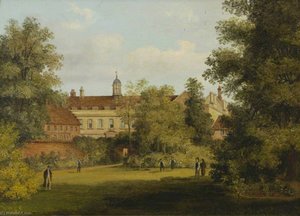
richard bankes harraden
1778 - 1862
Quick Facts
- Artistic Movement Or Style: Romantic Landscape Painting
- Artists Who Influenced This Artist:
- John Constable
- William Turner
- Date Of Birth: 1778
- Date Of Death: 1862
- Full Name: Richard Bankes Harraden
- Nationality: British
- Notable Artworks:
- The Chapel Hill, Trinity College Cambridge
- The Quadrangle, Trinity Hall Cambridge
- Place Of Birth: Cambridge, England