 Preview
 Send
Send Share
Share
 Details

 Download
 Similars
 X-Ray
X-Ray Diaporama
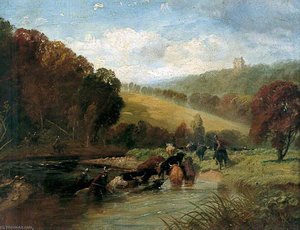
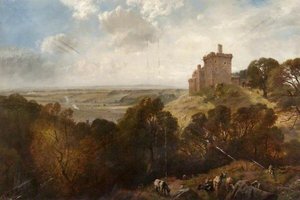
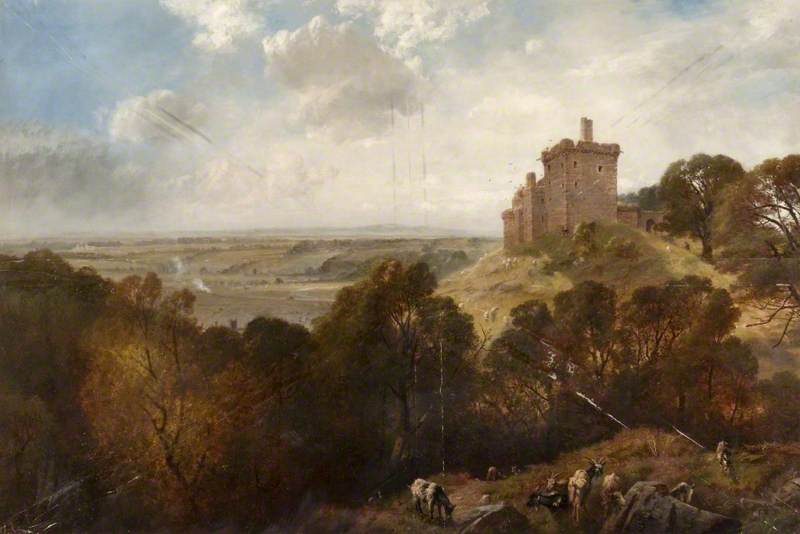
Castle Campbell, near Dollar
 102.0 x 155.0 cm
 Read More
Hand Made Oil Reproduction
Hand-painted oil on canvas in your size and frame, made to order by our artists. ( Buy Print Buy Image)




































Pick from our preset sizes that match the artwork's original proportions.

You may enter your own dimensions to fit a specific frame or space. If your selected size does not match the original image's proportions, we will either crop the artwork or extend the painting with additional hand-painted elements. A digital mockup will be sent for your approval before production begins.
Please note that the on-screen preview does not reflect the actual cropping or extension. Only the mockup will accurately show the final composition.
While custom sizes are available, we recommend selecting a dimension from the predefined list to preserve the original proportions.
After order, ArtsDot.com team will email client for instructions and provide a mockup preview
Worldwide Delivery () in 3/4 weeks instead of standard 5 weeks. (20 August). No compromise on quality.

Free Worldwide Express Shipping

High-Quality Linen Canvas

Full Shipping Insurance

Customs Tax Refund Guarantee

True Color Matching Guarantee

60-Day Return Policy (Defects Only)

100% Money-Back Guarantee

Bulk Discount Offer
 Glass option is only available in size under 110 CM

Castle Campbell, near Dollar
Reproduction Medium
Reproduction Size
-


Total Price
$ 263
Related Artworks

Artist Biography
A Life Painted in Light: The Evocative Landscapes of Richard Beavis
Richard Beavis (1824-1896) remains a somewhat enigmatic figure within the pantheon of 19th-century British landscape painters, yet his work possesses a quiet power and atmospheric sensitivity that continues to captivate. Born in England, Beavis dedicated his artistic life to capturing the beauty of both his native land and the alluring landscapes of Brittany and France. While not achieving the widespread renown of some of his contemporaries, his consistent exhibition at the Royal Academy – spanning several decades – testifies to a recognized talent and a dedication to plein-air painting that foreshadowed the Impressionist movement. Beavis’s artistic journey was one of subtle refinement, moving from detailed topographical studies towards a more emotive and atmospheric rendering of light and color. He wasn't merely recording scenes; he was translating feeling onto canvas.Early Years and Artistic Formation
Details regarding Beavis’s early life are scarce, adding to the mystique surrounding his career. However, it is known that he received formal artistic training, likely in London, during a period when landscape painting enjoyed immense popularity. The influence of earlier masters such as John Constable and J.M.W. Turner is subtly present in his early works – a reverence for natural light and an attempt to capture the transient effects of weather are hallmarks of this formative period. He quickly established himself as a skilled watercolourist, a medium particularly suited to capturing the delicate nuances of the British countryside. His initial focus was on detailed depictions of rural scenes, often featuring picturesque villages and idyllic river landscapes. These early paintings demonstrate a meticulous attention to detail and a strong understanding of perspective, but they lack the emotional depth that would characterize his later work. It’s believed he travelled extensively throughout England during this time, honing his observational skills and developing a keen eye for composition.Brittany and the Barbizon Influence
A pivotal moment in Beavis's artistic development came with his repeated visits to Brittany, France, beginning in the mid-19th century. The rugged coastline, dramatic skies, and unique quality of light in this region profoundly impacted his style. He became increasingly drawn to the landscapes around Fontainebleau, a location favored by artists associated with the Barbizon School. The Barbizons – Théodore Rousseau, Jean-François Millet, and Camille Corot among them – championed a realistic approach to landscape painting, emphasizing direct observation of nature and a rejection of academic conventions. While Beavis never fully embraced the social realism of some Barbizon painters, he absorbed their commitment to plein-air painting and their focus on capturing the atmospheric effects of light and shadow. His Brittany scenes are characterized by a looser brushstroke, a more muted palette, and a greater emphasis on conveying mood and atmosphere than precise topographical accuracy.Royal Academy Recognition and Mature Style
Beavis’s consistent exhibition at the Royal Academy from 1849 until his death in 1896 underscores his standing within the British art establishment. His submissions typically featured landscapes of Brittany, Fontainebleau, and England, showcasing a growing mastery of watercolour and oil painting.- He skillfully depicted coastal scenes with crashing waves and windswept cliffs.
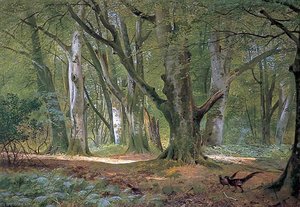
- His paintings of Fontainebleau forests are imbued with a sense of tranquility and mystery.
- Even his English landscapes gained a new depth and emotional resonance, reflecting the influence of his French experiences.
Legacy and Historical Significance
Richard Beavis’s work occupies an interesting position within 19th-century British art history. He wasn't a revolutionary figure like Turner or Constable, but he was a dedicated and skilled painter who consistently produced high-quality landscapes that captured the beauty of both England and France. His embrace of plein-air painting and his focus on atmospheric effects foreshadowed the Impressionist movement. While often categorized as part of the British landscape tradition, his time in Brittany and his exposure to the Barbizon School infused his work with a distinctly European sensibility. Today, Beavis’s paintings are appreciated for their quiet beauty, their evocative atmosphere, and their subtle mastery of light and color. He represents a bridge between the Romantic traditions of earlier generations and the more modern approaches that would define the art of the late 19th and early 20th centuries – a painter who quietly observed and beautifully translated the world around him onto canvas.
richard beavis
1824 - 1896
Quick Facts
- Artistic Movement Or Style: Royal Academy Art
- Artists Who Influenced This Artist:
- Jean-Baptiste Camille Corot
- William Turner
- Date Of Birth: 1824
- Date Of Death: 1896
- Full Name: Richard Beavis
- Nationality: British
- Notable Artworks:
- The Cliffs of Brittany
- Fontainebleau Landscape
- Place Of Birth: London, England