 Preview
 Send
Send Share
Share
 Details

 Download
 Similars
 X-Ray
X-Ray Diaporama
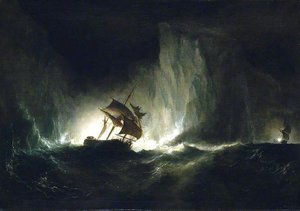
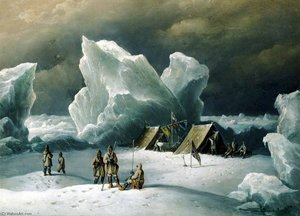
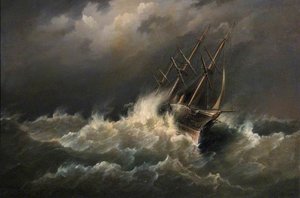
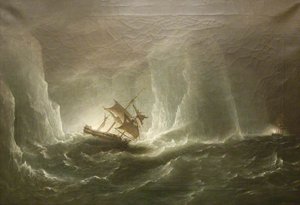
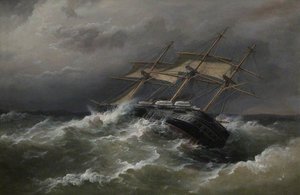
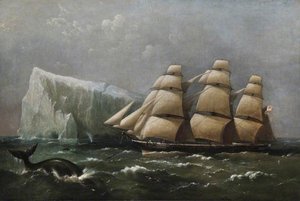
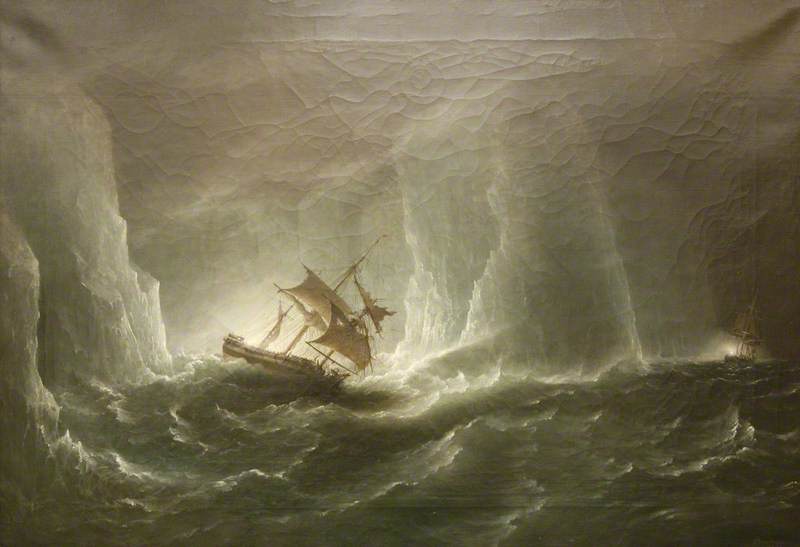
Antarctic Expedition Escape from the Bergs, 1842
 1863
1863 62.0 x 90.0 cm
 Scott Polar Research Institute
 Read More
Giclée / Art Print
Museum-quality giclée or canvas print with fast production and flexible finish options. ( Buy Hand Made Painting Buy Image)




































Pick from our preset sizes that match the artwork's original proportions.

You may enter your own dimensions to fit a specific frame or space. If your selected size does not match the original image's proportions, we will either crop the artwork or extend the image with a mirrored or solid-fill edge. A digital mockup will be sent for your approval before production begins.
Please note that the on-screen preview does not reflect the actual cropping or extension. Only the mockup will accurately show the final composition.
While custom sizes are available, we recommend selecting a dimension from the predefined list to preserve the original proportions.
Worldwide Delivery () in 2 weeks instead of standard 4/5 weeks. (23 August)

Free Worldwide Express Shipping

High-Quality Linen Canvas

Full Shipping Insurance

Customs Tax Refund Guarantee

True Color Matching Guarantee

60-Day Return Policy (Defects Only)

100% Money-Back Guarantee

Bulk Discount Offer
 Glass option is only available in size under 110 CM

Antarctic Expedition Escape from the Bergs, 1842
Giclée / Art Print
Reproduction Size
-


Total Price
$ 63
Related Artworks










Artist Biography
A Mariner’s Brushstroke: The Life and Legacy of Richard Brydges Beechey
Richard Brydges Beechey (1808 – 1895) stands as a fascinating figure in Victorian art and naval history, blending scientific observation with artistic sensitivity. Born into a family steeped in artistic tradition—his father, Sir William Beechely, was a celebrated portrait painter—Beechey inherited an innate talent for capturing the grandeur of the sea and the human spirit within it. His upbringing fostered connections to both the visual arts and exploration, shaping his life’s trajectory as much as his artistic pursuits. Growing up amidst a prolific artistic household instilled in Beechey a deep appreciation for painting from a young age. He studied at Rugby School before embarking on his formal education at Trinity College Dublin, where he excelled in mathematics and science alongside his artistic inclinations. This dual focus would prove invaluable throughout his life, informing not only his scientific endeavors but also underpinning the meticulous detail and realism that characterize many of his paintings.
The intersection of art and adventure became the defining theme of Beechey's existence when he joined the Royal Navy at the age of fourteen. His naval career spanned decades, punctuated by voyages to diverse locations including the Mediterranean and the Pacific Ocean. These expeditions provided him with unparalleled opportunities to observe natural landscapes and maritime life—subjects that would become central to his artistic output. Notably, Beechey’s brother Frederick William Beechey was himself a seafaring artist, creating an environment where artistic inspiration intersected with practical experience. As he rose through the ranks to eventually achieve the prestigious rank of Admiral, his eyes remained as much on the horizon of discovery as they were on the canvas.
The Majesty of the Sea: Artistic Vision and Technique
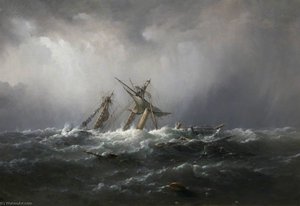
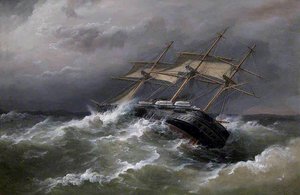
Beechey’s work is characterized by a profound ability to document the raw power of nature through a lens of maritime realism. His experiences in the most remote corners of the globe, including his participation in the Antarctic Expedition led by James Clark Ross, profoundly impacted his artistic vision. He meticulously documented the icy wilderness and its inhabitants, creating works that served as both art and historical record. One can feel the chilling atmosphere and the immense scale of the frozen world in compositions such as “Antarctic Expedition Gale,” a dramatic depiction of a ship battling the elements. His ability to translate the scientific precision learned at Trinity College into the fluid, emotive language of oil painting allowed him to capture the turbulent relationship between man and the ocean.
His repertoire includes several notable maritime scenes that showcase his mastery of light, shadow, and movement:
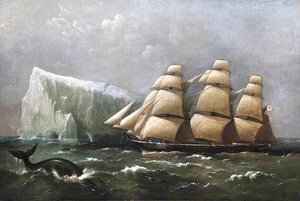
- HMS Scout Passing an Iceberg, 4 March 1875: A breathtaking display of nature's power, featuring a dramatic encounter between a vessel, a whale, and a towering iceberg.
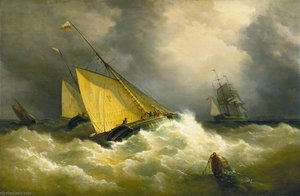
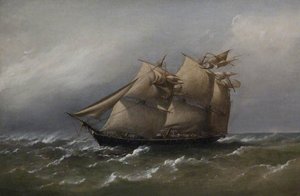
- First Come, First Served: An evocative 1873 oil on canvas that depicts three sailboats navigating through rough waters, capturing the inherent challenges faced by sailors in the late 19th century.
- HMS Defence off Vigo, Spain: A powerful study of a ship struggling against heavy seas, demonstrating his skill in rendering the weight and texture of churning water.
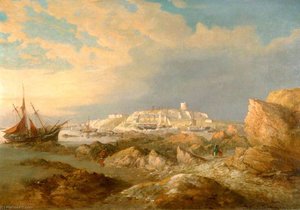
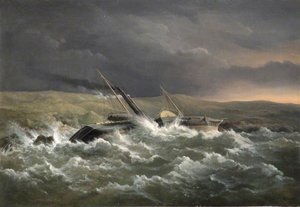
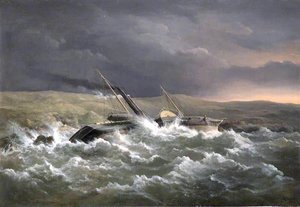
- HMS Danube Blown on Shore: A hauntingly realistic depiction of a shipwreck in Sevastopol, showcasing the tragic vulnerability of even the strongest vessels against the forces of nature.
Historical Significance and Artistic Heritage
Beyond his individual achievements, Richard Brydges Beechey represents a unique era where the boundaries between the explorer and the artist were beautifully blurred. His life was a testament to the Victorian era's passion for expansion, discovery, and the documentation of the natural world. As an Anglo-Irish painter and Admiral, he bridged the gap between the rigid discipline of naval command and the expressive freedom of the Royal Academy tradition. His legacy is not merely found in the museums that house his works, but in the way he helped shape the genre of maritime art by infusing it with the authentic, lived experience of a man who had truly traversed the world's most dangerous waters.
The Beechey name remains synonymous with British artistic and naval excellence. With a lineage that included renowned portraitists like his father Sir William and his brothers Henry and George Duncan, Richard’s contribution to the maritime genre stands as a distinct and vital chapter in the history of 19th-century painting. His works continue to offer modern viewers a window into a vanished age of sail, where every wave and every gust of wind was recorded with the reverence of an artist and the precision of a navigator.
richard brydges beechey
1808 - 1895
Quick Facts
- Artistic Movement Or Style: Romanticism
- Artists Or Movements Influenced By This Artist: ['Romanticism']
- Artists Who Influenced This Artist:
- William Beechey
- Frederick William Beechey
- Henry William Beechey
- Date Of Birth: 1808
- Date Of Death: 1895
- Full Name: Richard Brydges Beechey
- Nationality: Anglo-Irish
- Notable Artworks:
- Antarctic Expedition Gale
- First Come, First Served
- HMS Scout Passing an Iceberg
- Place Of Birth: London, England