 Preview
 Send
Send Share
Share
 Details

 Download
 Similars
 X-Ray
X-Ray Diaporama
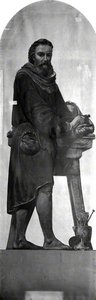
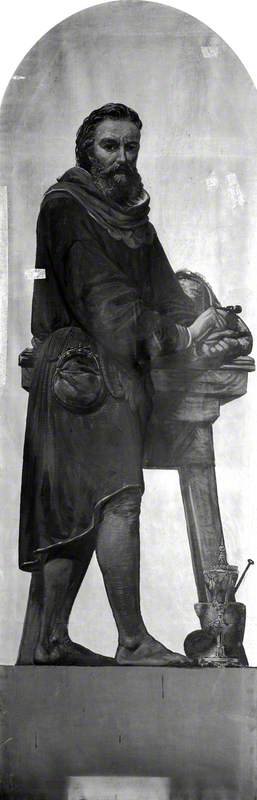
William Torrel (1291–1303) (design for a mosaic in the Victoria and Albert Museum)
 1869
1869 265.0 x 88.0 cm
 Read More
Giclée / Art Print
Museum-quality giclée or canvas print with fast production and flexible finish options. ( Buy Hand Made Painting Buy Image)




































Pick from our preset sizes that match the artwork's original proportions.

You may enter your own dimensions to fit a specific frame or space. If your selected size does not match the original image's proportions, we will either crop the artwork or extend the image with a mirrored or solid-fill edge. A digital mockup will be sent for your approval before production begins.
Please note that the on-screen preview does not reflect the actual cropping or extension. Only the mockup will accurately show the final composition.
While custom sizes are available, we recommend selecting a dimension from the predefined list to preserve the original proportions.
Worldwide Delivery () in 2 weeks instead of standard 4/5 weeks. (25 August)

Free Worldwide Express Shipping

High-Quality Linen Canvas

Full Shipping Insurance

Customs Tax Refund Guarantee

True Color Matching Guarantee

60-Day Return Policy (Defects Only)

100% Money-Back Guarantee

Bulk Discount Offer
 Glass option is only available in size under 110 CM

William Torrel (1291–1303) (design for a mosaic in the Victoria and Albert Museum)
Giclée / Art Print
Reproduction Size
-


Total Price
$ 63
Related Artworks




Artist Biography
Richard Burchett: A Pioneer of Victorian Art Education and Landscape Vision
Richard Burchett (1815 – 1875) stands as a pivotal figure in the landscape painting tradition of Victorian Britain, simultaneously recognized for his artistic prowess and his transformative role in shaping the curriculum of the Royal College of Art. Born in Brighton, he embarked on an academic journey that would ultimately define him as both a painter and an educator—a dual vocation that cemented his legacy within the art world. His formative years were marked by attendance at the London Mechanics Institute, fostering early engagement with scientific observation and technical skill – qualities which would prove invaluable to his artistic pursuits. Crucially, Burchett’s involvement with the Government School of Design (later Royal College of Art) initiated a revolution in art instruction. Established in 1837, this institution championed a humanist approach prioritizing direct experience and meticulous study of nature as foundational elements for artistic development. Burchett spearheaded this movement, advocating for a curriculum that emphasized detailed draughtsmanship alongside broader intellectual engagement—a stance that profoundly impacted subsequent generations of artists. The controversy surrounding teaching methods in 1845-46, fueled by student protests and parliamentary inquiry, solidified his reputation as a champion of progressive ideals within the art schools. Burchett’s artistic output encompassed monumental history paintings commissioned for public buildings like Westminster Abbey and the Victoria & Albert Museum, demonstrating considerable ambition and technical mastery. However, it is arguably “View Across Sandown Bay,” Isle of Wight (circa 1867), that secures his enduring fame. This landscape masterpiece exemplifies Burchett's distinctive style—characterized by luminous tonal harmonies, precise observation of light and atmosphere, and a profound sensitivity to the sublime beauty of the natural world. It represents not merely a depiction of scenery but an embodiment of Romantic ideals, prioritizing emotional resonance alongside scientific accuracy. Critics lauded it for its masterful execution and its ability to convey a sense of awe and contemplation—a testament to Burchett’s artistic vision. Burchett's influence extended beyond his own paintings; he authored influential textbooks that disseminated his pedagogical philosophy across Britain. These texts championed the importance of direct observation and meticulous drawing as pathways to artistic understanding, shaping the training of countless students who would go on to become prominent figures in British art and literature. Notable pupils included Kate Greenaway, Christopher Dresser, Elizabeth Thompson (Lady Butler), George Clausen, Luke Fildes, Gertrude Jekyll, Hubert von Herkomer, William Harbutt, and Helen Allingham—artists whose careers were undeniably shaped by Burchett’s teachings. Even Princess Louise, Queen Victoria's daughter, benefited from his instruction, demonstrating the breadth of his impact on Victorian artistic culture. Burchett’s legacy resides not only in his paintings but also in his contribution to establishing a new paradigm for art education—a legacy that continues to resonate within institutions dedicated to fostering creativity and intellectual curiosity. He remains an exemplar of Victorian scholarship and artistic achievement, securing his place as one of the most important figures in shaping British landscape painting and the future of art instruction.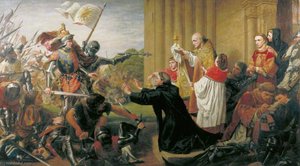
Quick Facts
- Artistic Movement Or Style: Pre-Raphaelite influence
- Artists Or Movements Influenced By This Artist: ['Victorian Art']
- Artists Who Influenced This Artist: ['John Ruskin']
- Date Of Birth: January 30, 1815
- Date Of Death: Living
- Full Name: Richard Burchett
- Nationality: British
- Notable Artworks:
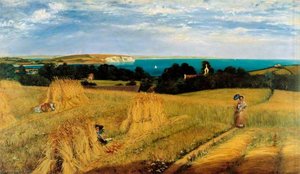
- View across Sandown Bay
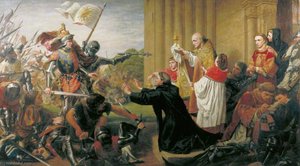
- Sanctuary
- William Torrel
- Place Of Birth: Brighton, England