

 Preview
 Send
Send Share
Share
 Details

 Download
 Similars
 X-Ray
X-Ray Diaporama
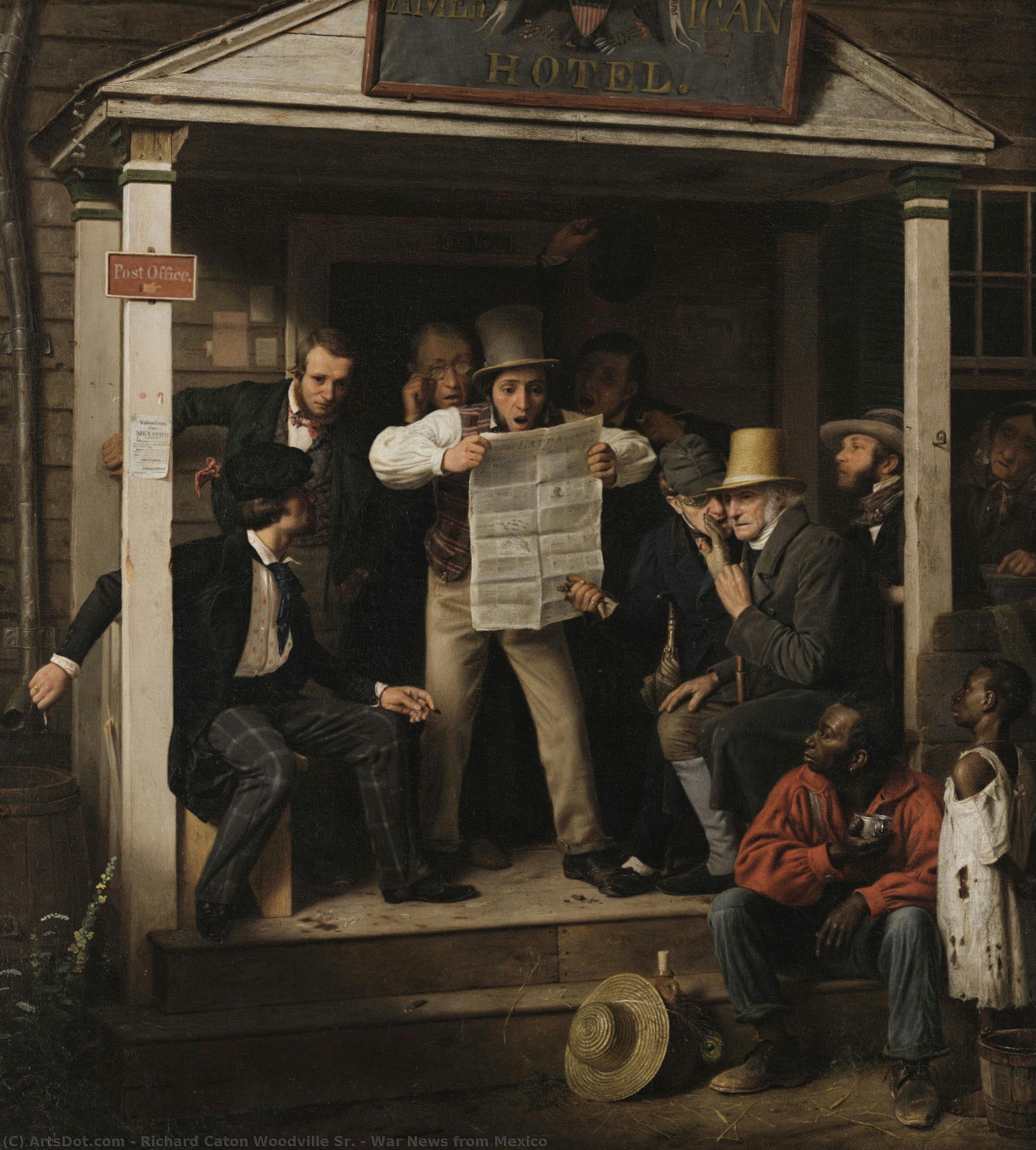
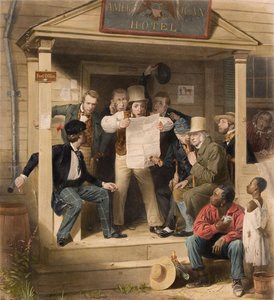
War News from Mexico
 Oil On Canvas
- WallArt
- Contemporary Realism
 1848
1848 68.0 x 63.0 cm
 Crystal Bridges Museum of American Art
 Read More
Purchase a high-resolution, enhanced digital image, far superior to the online preview.
Each file is meticulously prepared by our in-house specialists using advanced tools and expert manual retouching. We ensure every image has exceptional clarity, precise color accuracy, and fine detail.
The final file is delivered via email within 72 hours, optimized for immediate use in professional, editorial, and print environments. This is the same quality trusted by top-tier design studios, publishers, and galleries.
Digital Image
Download a high-resolution file for personal display, printing, and creative projects. ( Buy Print Buy Hand Made Painting)
Included in Every Digital Image Order
Expert Digital Delivery, Guaranteed
When you choose ArtsDot.com, you're not just getting an image - you're receiving a professionally enhanced digital artwork, crafted with precision and backed by a satisfaction guarantee. Here's everything that comes with your order, automatically:

Fast Email Delivery
Your high-resolution digital image file will be emailed to you within 72 hours of ordering - ready for immediate use.

AI-Enhanced Digital File
Your artwork is professionally optimized using advanced AI tools and manual editing, ensuring maximum detail, clarity, and color accuracy.

Free Lifetime Re-Delivery
Accidentally deleted or lost your file? No worries - we'll resend it to you anytime, free of charge.

No Import Fees - Ever
Enjoy your artwork instantly with zero customs, duties, or delivery fees - digital downloads are always tax-free.

Color Accuracy Guarantee
We ensure your digital image reflects the original colors as closely as possible using professional tools and color management.

60-Day Satisfaction Guarantee
If you're not satisfied with your digital image, we'll revise it or refund 100% within 60 days - no questions asked.

100% Money-Back Guarantee
Not satisfied? Get a full refund within 60 days of receiving your digital file - no questions asked.

Bulk Order Discounts
Buy 3 images, save 10% - Buy 5, save 15% - Buy 10+, save 20%. Great for creative projects, galleries, and agencies.
Collectible Description
A Window on Conflict: Richard Caton Woodville’s “War News from Mexico”
Richard Caton Woodville Jr.’s 1848 painting, "War News from Mexico," isn't merely a depiction of a historical event; it’s a meticulously crafted tableau of societal anxieties and simmering tensions within the United States on the cusp of civil war. Far removed from the romanticized battlefield scenes often associated with his name, this work offers a surprisingly intimate and unsettling glimpse into the domestic repercussions of conflict – a quiet drama unfolding within the confines of an American hotel porch.
The scene immediately draws the eye to a central figure, a man deeply engrossed in reading a newspaper. His posture, the furrow of his brow, and the intensity with which he holds the paper suggest a profound engagement with the news – news that carries the weight of war, political division, and uncertain futures. Around him, a diverse group of men and women are positioned with varying degrees of attention and reaction. Some observe intently, their faces reflecting concern or anticipation; others seem lost in thought, perhaps grappling with the implications of the unfolding events. A woman leans out a window, her gaze fixed on the scene below, subtly highlighting the limitations placed upon women’s roles during this period – relegated to a secondary position, yet undeniably affected by the drama unfolding outside.
A Realist's Palette and Precise Detail
Woodville’s masterful technique is immediately apparent in the painting’s rich realism. Executed in oil on canvas, the work showcases his remarkable ability to capture texture and light with painstaking detail. The rough-hewn wooden porch, the worn clothing of the figures, and the subtle variations in skin tones are rendered with a precision that lends an almost photographic quality to the scene. The artist’s use of color is deliberately restrained – primarily browns, blacks, and muted reds – reflecting the somber mood of the subject matter. This palette contributes to the painting's overall sense of gravity and seriousness, emphasizing the weighty implications of the war.
Noticeably, Woodville employs a flattened perspective, characteristic of historical paintings of the era. This technique prioritizes clarity and narrative focus over strict spatial accuracy, creating a sense of immediacy and drawing the viewer directly into the scene. The brushstrokes are generally controlled and deliberate, contributing to the painting’s overall solidity and depth – despite the somewhat compressed composition.
Historical Context: A Nation Divided
“War News from Mexico” was created during a period of intense political and social upheaval in the United States. The Mexican-American War (1846-1848) had just concluded, resulting in significant territorial expansion for the nation – Texas, California, Nevada, Utah, Arizona, and parts of Colorado and New Mexico were added to the Union. However, this victory was shadowed by deep divisions over the issue of slavery, a fundamental question that threatened to tear the country apart.
The painting’s subject matter—the dissemination of news about the war—directly reflects this national division. The newspaper becomes a potent symbol, representing both information and potential conflict. It's a visual representation of how the war was shaping public opinion and fueling anxieties about the future. The inclusion of an African American figure on the periphery further underscores the painting’s commentary on social hierarchies and the exclusion of marginalized groups from the political discourse.
Symbolism and Emotional Resonance
Beyond its historical context, “War News from Mexico” resonates with a powerful emotional depth. The scene evokes a sense of unease and uncertainty – a feeling that hangs heavy in the air despite the seemingly mundane setting. The figures’ expressions, their postures, and their interactions all contribute to this atmosphere of tension. The child's ragged clothing serves as a poignant reminder of the human cost of war, highlighting the vulnerability of those most affected by conflict.
Woodville masterfully captures the feeling that this is not just a news report; it’s a moment of reckoning – a time when the nation is forced to confront its own contradictions and grapple with the consequences of its actions. The painting serves as a haunting reminder of how war can disrupt ordinary lives, exacerbate social divisions, and leave an indelible mark on the collective psyche.
Related Artworks
Artist Biography
A Life Etched in Battle: The World of Richard Caton Woodville Jr.
Richard Caton Woodville Jr., a name synonymous with dramatic battle scenes and meticulous historical illustration, occupied a unique position within the Victorian and Edwardian art worlds. Born in London on January 7th, 1856, his life was one dedicated to capturing the intensity of conflict, not merely as spectacle, but as a deeply human experience etched onto canvas. The son of Richard Caton Woodville Sr., an American artist who also found success depicting genre scenes, young Richard inherited both a lineage of artistic talent and a keen eye for narrative detail. His early training laid a solid foundation, initially under his father’s guidance before he embarked on formal studies at the prestigious Kunstakademie Düsseldorf. There, immersed in the Prussian tradition of military painting under Wilhelm Camphausen and Eduard von Gebhardt, Woodville honed his skills in draftsmanship and realism – qualities that would define his career. Brief sojourns to Russia and Paris, where he absorbed techniques from Jean-Léon Gérôme, further broadened his artistic horizons, shaping a style characterized by precision and dramatic flair.From Battlefield Reporter to Master of the Canvas
Woodville’s ascent wasn't confined to the studio; it was forged on the front lines. His long association with the *Illustrated London News* proved pivotal, transforming him from an artist into a visual reporter of his age. He didn’t simply recreate battles; he witnessed them firsthand. The Russo-Turkish War of 1877-1878 became his initial proving ground, providing invaluable experience and shaping his artistic focus. This was followed by the Anglo-Egyptian War in 1882, where Woodville's sketches and photographic documentation proved crucial to fellow artist Alphonse-Marie-Adolphe de Neuville. He wasn’t merely an observer; he actively contributed to the visual record of these conflicts, offering a level of authenticity rarely seen at the time. This commitment to realism extended beyond military engagements, encompassing scenes from the Second Anglo-Afghan War, the Zulu War, and the First Boer War – each conflict providing fodder for his increasingly detailed and compelling canvases. His work also graced the pages of other prominent magazines like *Cornhill Magazine*, *Strand Magazine*, and *The Tatler*, solidifying his reputation as a leading illustrator and battle painter.A Style Defined by Detail and Drama
Woodville’s artistic style was instantly recognizable, marked by an unwavering commitment to detail and a dramatic sensibility. He didn't shy away from the chaos of battle, instead embracing it, meticulously rendering every uniform, weapon, and facial expression with astonishing accuracy. His paintings weren’t simply depictions of warfare; they were immersive experiences, drawing viewers into the heart of the action. *Before Leuthen, 3 December 1757*, an early work, immediately established his reputation for historical realism. Later masterpieces like *The Charge of the Light Brigade* and *The Charge of the 21st Lancers at Omdurman* showcased his ability to capture both the bravery and the brutality of combat. Even in scenes depicting quieter moments – preparations before battle or the aftermath of conflict – Woodville’s attention to detail remained paramount, creating a sense of palpable tension and emotional weight. He excelled at portraying not just the grand sweep of military maneuvers but also the individual stories unfolding within them, imbuing his work with a profound humanism.Tragedy and Legacy: A Life Cut Short
Despite achieving widespread popularity and critical acclaim during his lifetime, Woodville’s later years were marred by personal tragedy and financial hardship. His marriage to Annie Elizabeth Hill in 1877 brought him twin sons – actor Anthony Caton Woodville and painter William Passenham Caton Woodville – but ended in divorce in 1892. Financial difficulties culminated in bankruptcy in 1905, casting a shadow over his final years. The tragic culmination came on August 17th, 1927, when he was found dead at his studio in St John's Wood, an inquest ruling the death a suicide due to unsound mind. He died effectively destitute, and for many years, his grave remained unmarked – a poignant testament to the vagaries of fate. It wasn’t until 2013, thanks to the efforts of his great-grandson, that a headstone was finally placed on his resting place in Kensal Green Cemetery.Enduring Impact and Artistic Remembrance
Despite the hardships he faced, Richard Caton Woodville Jr.’s legacy endures as one of the foremost battle painters of his era. His works continue to captivate audiences with their dramatic realism and historical significance, exhibited in prestigious institutions such as the National Army Museum, the Tate, Walker Art Gallery, and the Royal Academy. He wasn’t merely a painter of battles; he was a chronicler of an age defined by conflict, offering a unique window into the experiences of soldiers and the realities of war. His ability to blend artistic skill with journalistic integrity cemented his place in art history, ensuring that his depictions of courage, sacrifice, and the human cost of conflict will continue to resonate for generations to come. His paintings serve as powerful reminders of the past, urging us to remember those who fought – and those whose stories were forever altered by the tides of war.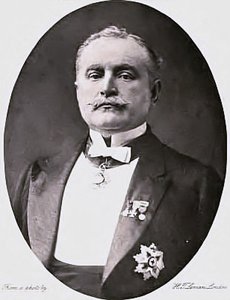
Richard Caton Woodville
1856 - 1927 , United States of America
Quick Facts
- Artistic Movement Or Style: Battle painting, Realism
- Artists Who Influenced This Artist:
- Wilhelm Camphausen
- Eduard von Gebhardt
- Jean-Léon Gérôme
- Date Of Birth: January 7, 1856
- Date Of Death: August 17, 1927
- Full Name: Richard Caton Woodville Jr.
- Nationality: English
- Notable Artworks:
- Before Leuthen
- Charge of Light Brigade
- Omdurman Charge
- Defeat at Tweebosch
- Halloween, 1914
- Place Of Birth: Baltimore, USA

