

 Preview
 Send
Send Share
Share
 Details

 Download
 Similars
 X-Ray
X-Ray Diaporama
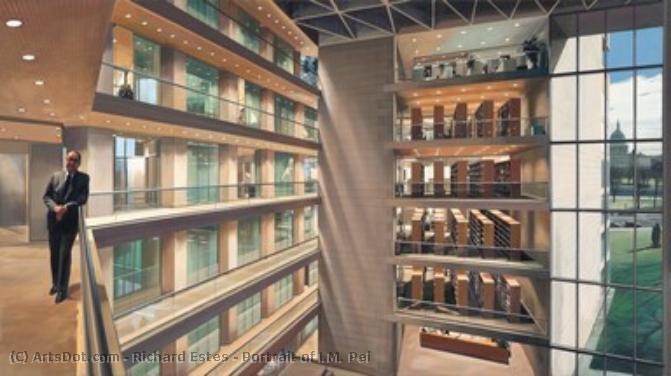
Portrait of I.M. Pei
 1996
1996 81.0 x 145.0 cm
 Read More
Purchase a high-resolution, enhanced digital image, far superior to the online preview.
Each file is meticulously prepared by our in-house specialists using advanced tools and expert manual retouching. We ensure every image has exceptional clarity, precise color accuracy, and fine detail.
The final file is delivered via email within 72 hours, optimized for immediate use in professional, editorial, and print environments. This is the same quality trusted by top-tier design studios, publishers, and galleries.
Digital Image
Download a high-resolution file for personal display, printing, and creative projects. ( Buy Print Buy Hand Made Painting)
Included in Every Digital Image Order
Expert Digital Delivery, Guaranteed
When you choose ArtsDot.com, you're not just getting an image - you're receiving a professionally enhanced digital artwork, crafted with precision and backed by a satisfaction guarantee. Here's everything that comes with your order, automatically:

Fast Email Delivery
Your high-resolution digital image file will be emailed to you within 72 hours of ordering - ready for immediate use.

AI-Enhanced Digital File
Your artwork is professionally optimized using advanced AI tools and manual editing, ensuring maximum detail, clarity, and color accuracy.

Free Lifetime Re-Delivery
Accidentally deleted or lost your file? No worries - we'll resend it to you anytime, free of charge.

No Import Fees - Ever
Enjoy your artwork instantly with zero customs, duties, or delivery fees - digital downloads are always tax-free.

Color Accuracy Guarantee
We ensure your digital image reflects the original colors as closely as possible using professional tools and color management.

60-Day Satisfaction Guarantee
If you're not satisfied with your digital image, we'll revise it or refund 100% within 60 days - no questions asked.

100% Money-Back Guarantee
Not satisfied? Get a full refund within 60 days of receiving your digital file - no questions asked.

Bulk Order Discounts
Buy 3 images, save 10% - Buy 5, save 15% - Buy 10+, save 20%. Great for creative projects, galleries, and agencies.
Related Artworks










Artist Biography
A Master of Reflections: The World of Richard Estes
Richard Estes, born in 1932 in Kewanee, Illinois, stands as a pivotal figure in the evolution of contemporary realism. He is celebrated for his meticulously detailed paintings that capture the essence of urban life, particularly through the lens of reflective surfaces and geometric landscapes. More than simply depicting what he sees, Estes transforms the mundane into the mesmerizing, inviting viewers to contemplate the beauty hidden within everyday cityscapes. His journey began with a formal education at the Art Institute of Chicago from 1952 to 1956, where he immersed himself in the works of masters like Edgar Degas, Edward Hopper, and Thomas Eakins – artists who profoundly influenced his appreciation for realism and its capacity to convey narrative depth. This foundation proved crucial as Estes navigated a decade spent working as a graphic artist in both Chicago and New York, supplementing his income while honing his artistic vision during his spare time. A transformative period followed with a move to Spain in 1962, allowing him the financial freedom by 1966 to dedicate himself fully to painting.The Birth of Super-Realism
Estes emerged as a leading force within the burgeoning Photo-Realist movement of the late 1960s, alongside artists such as John Baeder, Chuck Close, Ralph Goings, Audrey Flack, and Duane Hanson. This artistic shift coincided with photography’s increasing influence on the art world, prompting painters to explore new levels of precision and detail previously unattainable. As author Graham Thompson notes, “One demonstration of the way photography became assimilated into the art world is the success of photorealist painting in the late 1960s and early 1970s.” Estes’ approach was distinct; he didn't merely copy photographs but used them as a springboard for artistic interpretation. His canvases, often depicting storefronts with glass windows, became captivating studies of reflection, capturing fleeting moments and ephemeral images that would otherwise vanish. He deliberately retained the backwards depiction of signs and stickers within reflections, staying true to the photographic source material and emphasizing the inherent distortions of mirrored surfaces. This commitment to authenticity extended to his avoidance of clutter or snow in his scenes, believing such elements detracted from the architectural integrity of the buildings themselves.Technique and Vision
Estes’ paintings are characterized by a remarkable clarity and precision, achieved through painstaking attention to detail and a masterful command of oil paint. He rarely depicted famous landmarks, instead focusing on ordinary urban settings – diners, storefronts, telephone booths – elevating these commonplace scenes to subjects worthy of artistic scrutiny. His work often evokes a sense of quietude, as if capturing a city paused in time, bathed in the soft light of a Sunday morning. This deliberate choice contributes to the paintings’ contemplative mood, inviting viewers to linger and explore the intricate details within each composition. He wasn't simply recreating reality; he was offering a heightened perception of it, revealing nuances invisible to the naked eye and imbuing his subjects with an almost uncanny sense of presence. The use of multiple photographs as source material allowed him to synthesize different perspectives and capture the evanescent nature of reflections, which constantly shift with light and time. While aesthetic composition played a role in his process, Estes prioritized the recognizability of key elements within the reflections while preserving their fleeting quality.Recognition and Legacy
Throughout his career, Richard Estes has received widespread acclaim and recognition for his groundbreaking contributions to contemporary art. He had his first one-man show in 1968 at the Allan Stone Gallery, marking a pivotal moment in his artistic trajectory. His works have since been exhibited in prestigious institutions worldwide, including the Metropolitan Museum of Art, the Whitney Museum, the Thyssen-Bornemisza Museum, and the Solomon R. Guggenheim Museum. In 1971, he was honored with a National Council for the Arts fellowship and elected as an Associate member of the National Academy of Design, later becoming a full Academician in 1984. His influence extends beyond the realm of painting; his work has inspired countless artists and continues to captivate audiences with its unique blend of realism, reflection, and urban sensibility. The documentary *Actually Iconic: Richard Estes* (2019) further cemented his legacy, offering a deeper insight into his artistic process and personal journey. Today, Richard Estes remains an active artist, continuing to explore the captivating world of reflections and redefine our perception of the urban landscape. His paintings stand as enduring testaments to the power of observation, the beauty of detail, and the transformative potential of art.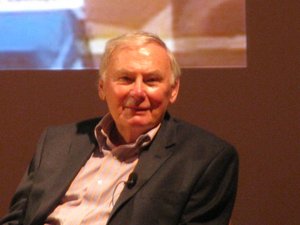
Richard Estes
1932 - , United States of America
Quick Facts
- Artistic Movement Or Style: Photorealism
- Artists Or Movements Influenced By This Artist: ['Photo-Realism movement']
- Artists Who Influenced This Artist:
- Edgar Degas
- Edward Hopper
- Thomas Eakins
- Date Of Birth: 1932
- Full Name: Richard Estes
- Nationality: American
- Notable Artworks:
- Telephone Booths
- Portrait of I.M. Pei
- Untitled (782)
- Place Of Birth: Kewanee, USA

