 Preview
 Send
Send Share
Share
 Details

 Download
 Similars
 X-Ray
X-Ray Diaporama
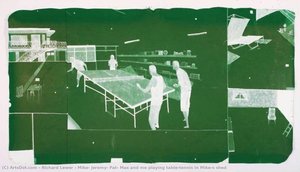
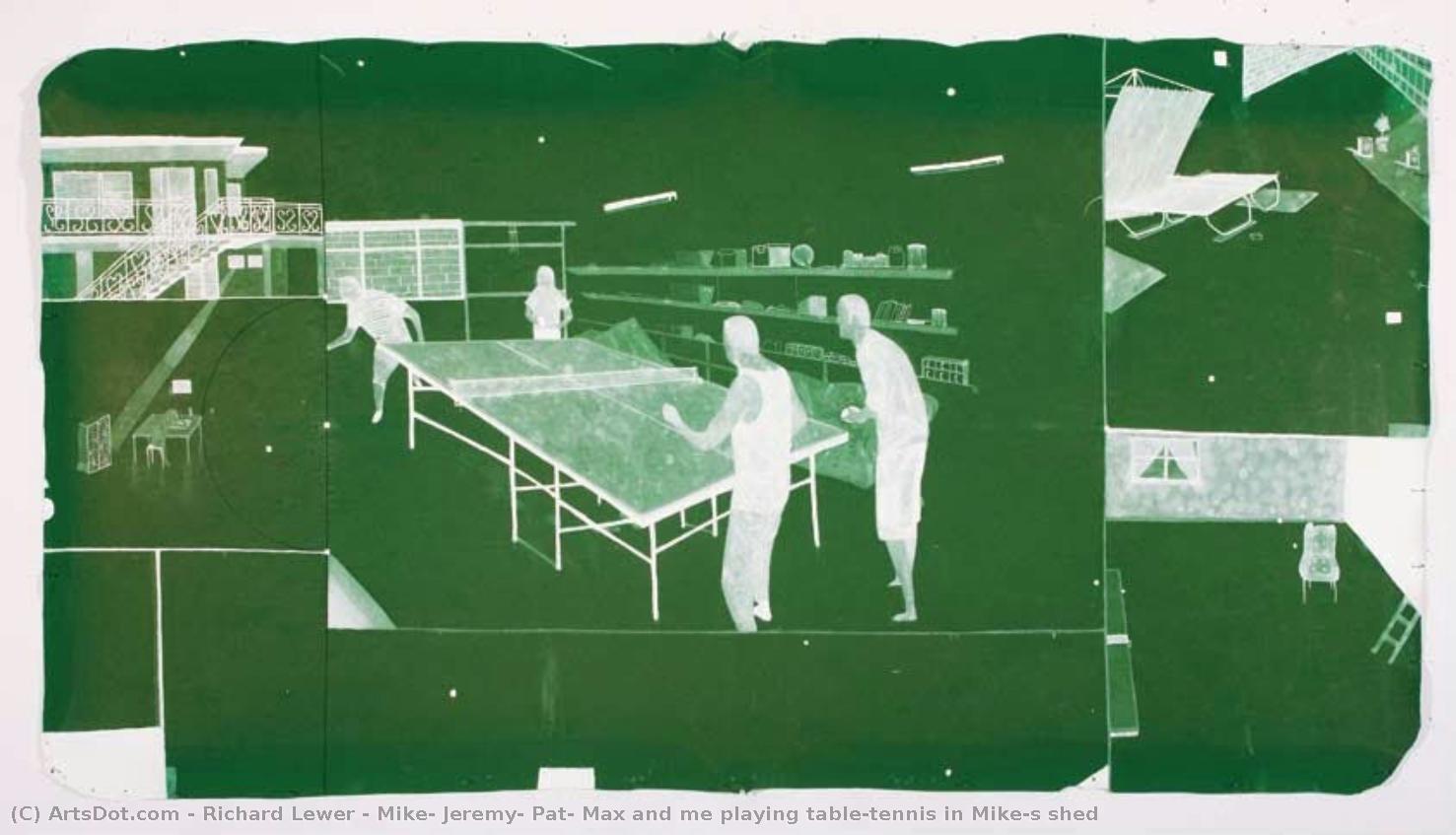
Mike, Jeremy, Pat, Max and me playing table-tennis in Mike’s shed
 2008
2008 100.0 x 200.0 cm
 Ian Potter Museum of Art
 Read More
Giclée / Art Print
Museum-quality giclée or canvas print with fast production and flexible finish options. ( Buy Hand Made Painting Buy Image)




































Pick from our preset sizes that match the artwork's original proportions.

You may enter your own dimensions to fit a specific frame or space. If your selected size does not match the original image's proportions, we will either crop the artwork or extend the image with a mirrored or solid-fill edge. A digital mockup will be sent for your approval before production begins.
Please note that the on-screen preview does not reflect the actual cropping or extension. Only the mockup will accurately show the final composition.
While custom sizes are available, we recommend selecting a dimension from the predefined list to preserve the original proportions.
Worldwide Delivery () in 2 weeks instead of standard 4/5 weeks. (22 August)

Free Worldwide Express Shipping

High-Quality Linen Canvas

Full Shipping Insurance

Customs Tax Refund Guarantee

True Color Matching Guarantee

60-Day Return Policy (Defects Only)

100% Money-Back Guarantee

Bulk Discount Offer
 Glass option is only available in size under 110 CM

Mike, Jeremy, Pat, Max and me playing table-tennis in Mike’s shed
Giclée / Art Print
Reproduction Size
-


Total Price
$ 63
Collectible Description
Related Artworks



Artist Biography
The Tapestry of Human Connection: The Art of Richard Lewer
In the vast, often fragmented landscape of contemporary visual art, few creators navigate the intersections of social reality and profound symbolism as deftly as Richard Lewer. A Melbourne-based artist whose practice breathes through a multitude of mediums—ranging from the tactile depth of painting to the temporal flow of animation and video—Lewer possesses a singular ability to illuminate the invisible threads that bind us. His work operates as a form of contemporary social realism, meticulously crafted not merely to depict the world, but to provoke deep contemplation regarding the human condition. By exploring the intricate patterns found within seemingly disparate domains such as crime, sport, and religion, Lewer invites his audience into a dialogue about community, identity, and the shared structures of our existence.
Born in Hamilton, New Zealand, in 1970, Lewer’s artistic journey began with a rigorous academic foundation that would later support his expansive multidisciplinary explorations. His formative years at Auckland University's Elam School of Fine Arts, where he earned a Bachelor of Fine Art between 1989 and 1992, provided the technical scaffolding for his burgeoning vision. This pursuit of excellence continued at the Victorian College of the Arts, where he secured a Master of Visual Arts in 2000. These academic milestones were more than mere credentials; they were periods of intense inquiry that allowed him to refine a technique capable of rendering both the physical world and abstract societal narratives with remarkable precision and emotional resonance.
A Synthesis of Mediums and Narratives
Lewer’s artistic practice is characterized by a refusal to be confined by the boundaries of a single discipline. He moves seamlessly between painting, drawing, animation, and performance, often integrating text into his visual compositions to create what has been described as "word art." This synthesis allows him to tackle complex themes with a layered complexity. For instance, his work frequently delves into the psychological landscapes of sport—a domain where he finds profound human scale and local meaning amidst global fragmentation. In pieces such as "Mike, Jeremy, Pat, Max and me playing table-tennis in Mike’s shed," Lewer captures the essence of community bonds forged through shared physical endeavor.
Beyond the athletic arena, the shadows of crime and the spiritual weight of religion serve as significant pillars in his oeuvre. Having been raised within the Catholic tradition, the influence of religious iconography and morality is woven into the fabric of his work, often manifesting in series that grapple with sacred commandments or the complexities of faith. His ability to translate these heavy, often intangible concepts into visual installations—such as his 2010 New York-inspired installation featuring NYPD police radio recordings—demonstrates a mastery of atmosphere and sound. Even in the realm of digital storytelling, Lewer continues to push boundaries; his animated film "Steve," acquired by the National Gallery of Australia, utilizes thousands of individual paintings to tell a poignant story of family and the progression of dementia, showcasing his ability to use animation as a vessel for profound empathy.
Recognition and Lasting Impact
The significance of Richard Lewer’s contribution to the Australian and New Zealand art landscapes is reflected in the prestigious accolades he has received throughout his career. His work has been recognized by some of the most esteemed institutions and awards in the region, marking him as a pivotal figure in contemporary realism. Notable achievements include:
- The Wallace Art Award (2008): Granted for his evocative piece “Skill, Discipline, Training,” which exemplifies his commitment to portraying subjects with technical mastery.
- The Blake Prize for Religious Art (2014): A testament to his ability to navigate and interpret the complexities of spiritual themes within a modern context.
- The Basil Sellers Art Prize (2016): Highlighting his unique ability to bridge the gap between the world of sport and fine art.
- The Archibald Prize (2026): A crowning achievement that solidified his standing in the upper echelons of portraiture, following several previous appearances as a finalist.
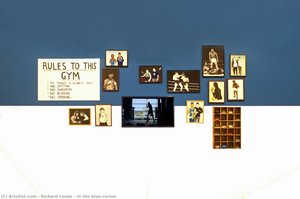
Through his relentless pursuit of connection—whether through the grit of a boxing gym or the sanctity of a religious text—Richard Lewer continues to challenge the viewer to look closer at the patterns of our lives. His legacy lies in his ability to transform the mundane and the monumental into a unified, moving narrative that speaks to the very heart of what it means to belong to a society.
Richard Lewer
1970 - , New Zealand
Quick Facts
- Artistic Movement Or Style: Contemporary Realism
- Date Of Birth: 1970
- Full Name: Richard Lewer
- Nationality: Australian
- Notable Artworks:
- Skill, Discipline, Training
- Mike, Jeremy, Pat, Max and me playing table-tennis in Mike’s shed
- Place Of Birth: Hamilton, New Zealand