


 Send
Send Share
Share
 Details

 Download
 Similars
 Diaporama
Boys and Girls (come out to play)
 Sculpture Bronze
- Contemporary Sculpture
 1982
1982 915.0 x 1522.0 cm
 British Council
 Read More
Purchase a high-resolution, enhanced digital image, far superior to the online preview.
Each file is meticulously prepared by our in-house specialists using advanced tools and expert manual retouching. We ensure every image has exceptional clarity, precise color accuracy, and fine detail.
The final file is delivered via email within 72 hours, optimized for immediate use in professional, editorial, and print environments. This is the same quality trusted by top-tier design studios, publishers, and galleries.
Digital Image
Download a high-resolution file for personal display, printing, and creative projects. ( Buy Print Buy Hand Made Painting)
Included in Every Digital Image Order
Expert Digital Delivery, Guaranteed
When you choose ArtsDot.com, you're not just getting an image - you're receiving a professionally enhanced digital artwork, crafted with precision and backed by a satisfaction guarantee. Here's everything that comes with your order, automatically:

Fast Email Delivery
Your high-resolution digital image file will be emailed to you within 72 hours of ordering - ready for immediate use.

AI-Enhanced Digital File
Your artwork is professionally optimized using advanced AI tools and manual editing, ensuring maximum detail, clarity, and color accuracy.

Free Lifetime Re-Delivery
Accidentally deleted or lost your file? No worries - we'll resend it to you anytime, free of charge.

No Import Fees - Ever
Enjoy your artwork instantly with zero customs, duties, or delivery fees - digital downloads are always tax-free.

Color Accuracy Guarantee
We ensure your digital image reflects the original colors as closely as possible using professional tools and color management.

60-Day Satisfaction Guarantee
If you're not satisfied with your digital image, we'll revise it or refund 100% within 60 days - no questions asked.

100% Money-Back Guarantee
Not satisfied? Get a full refund within 60 days of receiving your digital file - no questions asked.

Bulk Order Discounts
Buy 3 images, save 10% - Buy 5, save 15% - Buy 10+, save 20%. Great for creative projects, galleries, and agencies.
A Symphony of Everyday Objects: Unpacking Richard Lewis Deacon's 'Boys and Girls (come out to play)'
Richard Lewis Deacon’s “Boys and Girls (come out to play),” created in 1982, isn’t merely a sculpture; it’s an invitation. An invitation into a world constructed from the detritus of domesticity, transformed by the artist's deliberate hand and imbued with a quiet, almost melancholic beauty. Born in New York City in 1922, Deacon was a sculptor who eschewed traditional methods, rejecting carving or modeling in favor of a process he described as “fabrication.” He treated found materials – bowls, cups, spoons, and other commonplace objects – not as raw potential but as building blocks for an entirely new language. This piece, housed within a substantial 915 x 1522 cm canvas, exemplifies this approach perfectly, presenting a seemingly chaotic arrangement that reveals itself to be meticulously considered.
The sculpture’s foundation lies in Deacon's fascination with industrial processes and the inherent beauty of their byproducts. He deliberately incorporated elements like rivets, bolts, and rough surfaces – evidence of the materials’ previous lives – into the final form, reinforcing a sense of manipulation and transformation. This isn’t an attempt to mimic nature; rather, it’s a deliberate engagement with the mechanics of creation, mirroring the rhythms of factories and workshops. The undulating forms, reminiscent of pencil shavings or even DNA double helixes, suggest both organic growth and engineered precision – a captivating tension that defines much of Deacon's work.
The Language of Assemblage: Technique and Materiality
Deacon’s technique is remarkably understated. He didn’t sculpt; he constructed. Each bowl, cup, and spoon was carefully positioned, sometimes stacked, sometimes leaning against one another, creating a dynamic equilibrium that defies gravity. The sheer number – six bowls in varying sizes – contributes to the sculpture's overwhelming presence, drawing the viewer into its intricate details. The use of galvanized steel, likely employed for structural support or decorative elements, adds a cool, industrial counterpoint to the softer textures of the ceramic and metal tableware. The deliberate roughness of these materials, combined with the seemingly random arrangement, speaks to a process driven by intuition and a deep understanding of material behavior – a testament to Deacon’s skill as a fabricator.
Echoes of Childhood and Domesticity
The title itself, “Boys and Girls (come out to play),” immediately evokes childhood imagery. The scattered bowls and cups suggest a playful gathering, a scene of simple joy and interaction. Yet, there’s also an underlying sense of wistfulness. Deacon's work often explores themes of memory and the passage of time, hinting at lost innocence and the bittersweet beauty of everyday moments. The sculpture can be interpreted as a meditation on domesticity – not in a sentimental way, but with a critical eye, examining the objects that shape our lives and the rituals we perform within them. The arrangement feels almost like a miniature stage set, frozen in a perpetual moment of potential play.
A Legacy of Subtle Grace
Richard Lewis Deacon’s life was tragically cut short in 1984 at the age of 62, but his work continues to resonate with collectors and art enthusiasts. His sculptures are characterized by their quiet dignity, their subtle complexities, and their profound engagement with material culture. “Boys and Girls (come out to play)” stands as a powerful example of this artistic vision – a testament to Deacon’s ability to transform the mundane into something extraordinary, inviting us to reconsider our relationship with the objects that surround us and to find beauty in the unexpected.
Related Artworks




Artist Biography
Richard Lewis Deacon: A Portrait of Subtle Grace
Richard Lewis Deacon (May 14, 1922 – August 8, 1984) was an American actor whose career spanned decades and encompassed a remarkable range of roles, from supporting characters in classic Hollywood films to memorable performances on television. While often typecast as the fussy butler, the pompous businessman, or the imperious authority figure, Deacon’s talent lay in his ability to imbue these seemingly minor parts with a quiet dignity and understated charm that resonated deeply with audiences. His work wasn't about grand gestures; it was about capturing the nuances of human interaction, revealing hidden depths beneath carefully constructed facades. He left an indelible mark on American cinema and television, quietly shaping the landscape of mid-century entertainment.Early Life and Theatrical Beginnings
Born in Philadelphia, Pennsylvania, to Joseph Gill and Ethel Laughlin Deacon, Richard Lewis Deacon’s early life remains relatively obscure. However, it's known that he began his career not on the silver screen but on the stage. He honed his craft in regional theater productions throughout the late 1940s and early 1950s, developing a keen understanding of character development and vocal projection – skills that would prove invaluable to his future film and television work. This theatrical foundation instilled in him a meticulous attention to detail and a commitment to portraying believable characters, even those with limited screen time. His initial foray into acting was marked by a dedication to mastering the art of performance, laying the groundwork for his later success.Television Breakthroughs: Cooley and Rutherford
Deacon’s television career truly took off in the early 1960s, largely due to two iconic roles: Mel Cooley, the perpetually exasperated producer on *The Dick Van Dyke Show*, and Fred Rutherford, the fussy and demanding patriarch of *Leave It to Beaver*. These parts showcased his ability to convey a wealth of emotion through subtle facial expressions and carefully modulated delivery. Cooley, with his obsessive need for control and his often-absurd demands, became a comedic staple, while Rutherford’s rigid adherence to tradition and his disdain for modern conveniences provided endless opportunities for gentle satire. These roles weren't merely comedic; they explored themes of family dynamics, societal expectations, and the clash between generations – all rendered with remarkable sensitivity by Deacon. His performances in these shows solidified his position as a respected character actor on television.Film Appearances: A Supporting Role Master
While he gained considerable recognition on television, Deacon’s film career was characterized by supporting roles in a diverse range of films, from Alfred Hitchcock thrillers like *The Birds* to Westerns and musicals. He appeared in classics such as *Invasion of the Body Snatchers*, *Carousel*, and *That Touch of Mink*. Notably, he played Morton Stearnes’ butler, George Archibald, in *The Young Philadelphians*, a pivotal role that highlighted his ability to deliver poignant dialogue with understated elegance. In Hitchcock's *The Birds*, Deacon’s portrayal of a physician observing the unsettling events was particularly memorable, adding a layer of quiet dread to the film’s mounting suspense. His versatility as an actor allowed him to seamlessly transition between genres and roles, demonstrating his adaptability and range.Legacy and Influence
Richard Lewis Deacon's career spanned over 140 films and television productions, leaving a significant impact on American entertainment history. He wasn’t a leading man; he was a master of the supporting role, providing depth and nuance to countless stories. His work served as an inspiration for generations of character actors, demonstrating that subtlety and restraint could be just as effective as grand displays of emotion. Deacon's contributions extended beyond his individual performances; he helped establish standards for character acting in Hollywood, shaping the way actors approached their roles and contributing to the richness and complexity of American cinema and television. His legacy continues to resonate today, reminding us that even the smallest roles can be imbued with profound meaning and lasting impact. He is remembered not just for his appearances but for the quiet dignity and understated brilliance he brought to every performance.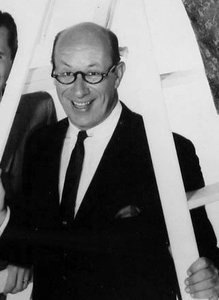
richard lewis deacon
1922 - 1984 , United States of America
Quick Facts
- Artistic Movement Or Style: Character actor
- Date Of Birth: May 14, 1922
- Date Of Death: August 8, 1984
- Full Name: Richard Lewis Deacon
- Nationality: American
- Notable Artworks:
- Boys and Girls
- Bounds of Sense
- Place Of Birth: New York City, USA

