

 Preview
 Send
Send Share
Share
 Details

 Download
 Similars
 X-Ray
X-Ray Diaporama
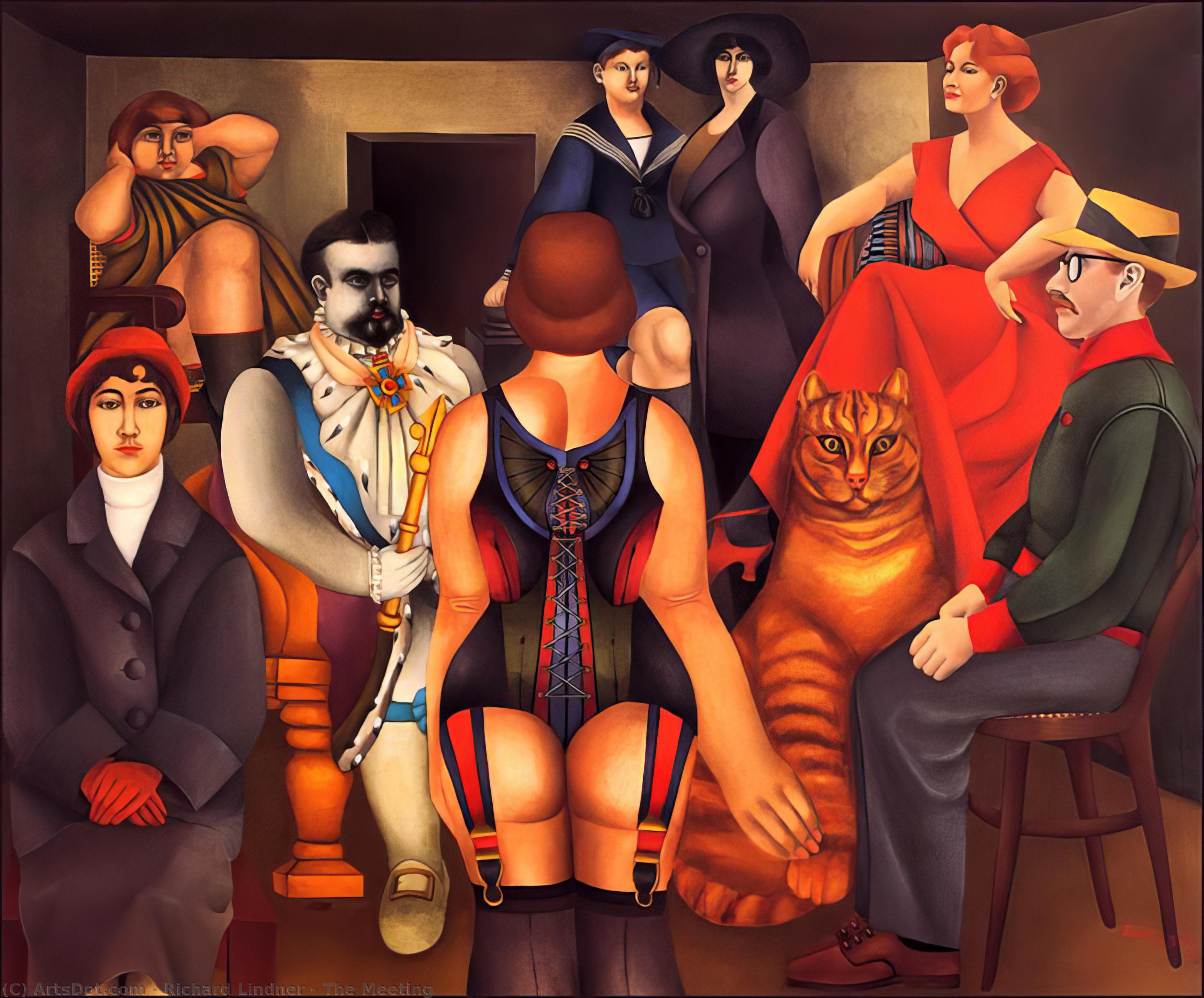
The Meeting


 Read More
Purchase a high-resolution, enhanced digital image, far superior to the online preview.
Each file is meticulously prepared by our in-house specialists using advanced tools and expert manual retouching. We ensure every image has exceptional clarity, precise color accuracy, and fine detail.
The final file is delivered via email within 72 hours, optimized for immediate use in professional, editorial, and print environments. This is the same quality trusted by top-tier design studios, publishers, and galleries.
Digital Image
Download a high-resolution file for personal display, printing, and creative projects. ( Buy Print Buy Hand Made Painting)
Included in Every Digital Image Order
Expert Digital Delivery, Guaranteed
When you choose ArtsDot.com, you're not just getting an image - you're receiving a professionally enhanced digital artwork, crafted with precision and backed by a satisfaction guarantee. Here's everything that comes with your order, automatically:

Fast Email Delivery
Your high-resolution digital image file will be emailed to you within 72 hours of ordering - ready for immediate use.

AI-Enhanced Digital File
Your artwork is professionally optimized using advanced AI tools and manual editing, ensuring maximum detail, clarity, and color accuracy.

Free Lifetime Re-Delivery
Accidentally deleted or lost your file? No worries - we'll resend it to you anytime, free of charge.

No Import Fees - Ever
Enjoy your artwork instantly with zero customs, duties, or delivery fees - digital downloads are always tax-free.

Color Accuracy Guarantee
We ensure your digital image reflects the original colors as closely as possible using professional tools and color management.

60-Day Satisfaction Guarantee
If you're not satisfied with your digital image, we'll revise it or refund 100% within 60 days - no questions asked.

100% Money-Back Guarantee
Not satisfied? Get a full refund within 60 days of receiving your digital file - no questions asked.

Bulk Order Discounts
Buy 3 images, save 10% - Buy 5, save 15% - Buy 10+, save 20%. Great for creative projects, galleries, and agencies.
Collectible Description
A Gathering Steeped in Modernity: Unveiling Richard Lindner’s “The Meeting”
Richard Lindner's "The Meeting" is not merely a depiction of social interaction; it’s an immersion into a world poised between reality and dream, a vibrant tableau that captures the anxieties and fascinations of mid-20th century modernity. The canvas teems with nine figures arranged in a deliberate semi-circle, their individual styles and expressions hinting at complex narratives woven within this intimate yet strangely detached gathering. Lindner doesn’t offer a straightforward scene; instead, he presents a carefully constructed stage where identity, social roles, and perhaps even a touch of the surreal collide. The inclusion of a regal cat in the foreground is particularly striking – an enigmatic presence that adds layers of symbolism, suggesting themes of authority, independence, or a subtle undercurrent of mysticism. It’s a scene that invites prolonged contemplation, prompting viewers to decipher the relationships and unspoken stories held within this dynamic composition.
Bold Strokes and Expressive Forms: A Masterclass in Style
Lindner's artistic voice is immediately recognizable in “The Meeting” through his bold, expressive style. He eschews traditional realism for a more emotionally charged approach, employing exaggerated forms, vibrant colors, and stylized features that echo the influences of both modernism and expressionism. Strong outlines define each figure, lending them a graphic quality while simultaneously emphasizing their individuality. The color palette—a rich interplay of reds, blues, blacks, and earthy tones—is far from arbitrary; it’s carefully orchestrated to enhance visual dynamism and underscore the unique personality of each participant in this gathering. The technique suggests a masterful handling of oil or acrylic paints on canvas, resulting in a smooth yet textured finish that accentuates both the stylized aesthetic and the depth within the scene. It's a style that feels simultaneously familiar and unsettling, drawing the viewer into its captivating world.
Echoes of an Era: Historical Context and Artistic Significance
Created during a period of significant social and cultural upheaval, “The Meeting” reflects the anxieties and energies of the mid-20th century. Lindner, having experienced displacement as a German artist fleeing Europe before World War II, brought a unique perspective to his work. His art blends European modernist traditions with American pop sensibilities, creating a visual language that is both contemporary and timeless. The painting’s stylistic choices—the bold colors, simplified shapes, and expressive forms—align it with movements like expressionism and early pop art, yet Lindner's distinct voice prevents easy categorization. His work often explored themes of alienation and the complexities of modern life, and “The Meeting” serves as a powerful example of his ability to capture these sentiments on canvas. The painting’s presence in prominent collections, including that of the Museum of Modern Art in New York, underscores its enduring artistic significance.
Decoding the Symbols: Emotional Resonance and Interpretation
Beyond its aesthetic qualities, “The Meeting” resonates with a profound emotional depth. The stylized figures and vibrant palette evoke a spectrum of responses – from quiet contemplation to a sense of underlying tension. The exaggerated forms and contrasting colors amplify the expressive impact, inviting viewers to interpret the relationships and narratives at play. Is this a scene of camaraderie or veiled conflict? Are these individuals connected by shared purpose or simply existing in proximity? The regal cat, with its air of aloof authority, adds another layer of intrigue – perhaps representing an unseen power dynamic or a symbol of independence within the group. Ultimately, “The Meeting” is not about providing answers; it’s about prompting questions and inviting viewers to engage with the artwork on a personal level. It's a piece that promises to elevate any interior space, sparking conversation and inspiring contemplation for years to come.
Related Artworks
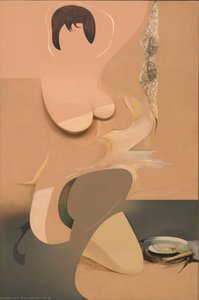
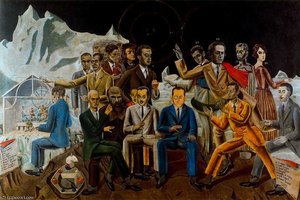
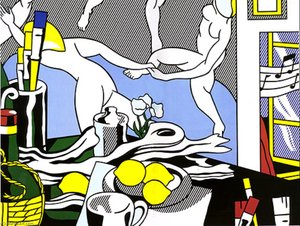
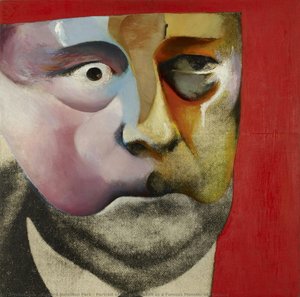
Artist Biography
The Architect of Urban Eroticism
Richard Lindner, born in Hamburg, Germany, in 1901, remains one of the most singular and arresting figures in twentieth-century art. A German-American painter whose vision pulsed with a restless, mechanical energy, his work offers an unsettling yet captivating blend of urban eroticism and stylized form. His artistic journey was shaped by a profound duality, rooted in European traditions yet profoundly transformed by the vibrant, often contradictory landscape of New York City. Lindner did not merely paint scenes; he constructed psychological landscapes where the boundaries between human flesh and industrial precision seemed to dissolve, creating a visual language that continues to provoke and fascinate contemporary viewers.
The foundations of his aesthetic were laid in the disciplined environments of Germany. Following his family's move to Nuremberg, Lindner received a rigorous education at the Kunstgewerbeschule, where he honed his skills in design and craftsmanship. This early training in structure and form would later manifest in the almost architectural precision of his figures. His subsequent studies at the Kunstakademie in Munich exposed him to the Neue Sachlichkeit movement, a style defined by its stark realism and critical engagement with the social realities of the era. While Lindner eventually moved toward a more stylized, surrealist-inflected approach, the underlying tension between objective reality and symbolic distortion remained a permanent fixture of his creative psyche.
A Journey Through Displacement and Discovery
Lindner’s life was marked by the seismic shifts of mid-century history. His move to Berlin in 1927 placed him at the heart of a burgeoning avant-garde, but the rising tide of Nazism forced a pivotal exodus. Fleeing to Paris in 1933, Lindner entered a period of profound observation. Working as a commercial artist provided him with a unique vantage point, allowing him to absorb the diverse influences of the Parisian art scene while maintaining a professional connection to the aesthetics of mass media and advertising. This intersection of high art and commercial graphic design would become a cornerstone of his later mature style.
The eventual transition to the United States marked the true metamorphosis of his artistic voice. Immersed in the overwhelming scale and frenetic pace of New York City, Lindner found the perfect canvas for his explorations of modern alienation and desire. The city’s neon lights, crowded streets, and cinematic atmosphere provided the raw material for a new kind of figurative painting. His work began to evolve into the iconic imagery for which he is most celebrated: figures that appear both intensely human and strangely robotic, navigating spaces that feel simultaneously intimate and profoundly impersonal.
Symbolism, Form, and Lasting Legacy
The mature works of Richard Lindner are characterized by a striking, almost sculptural approach to the human figure. His subjects often possess a smooth, mannequin-like quality, with limbs and torsos rendered in bold, simplified shapes that suggest both strength and vulnerability. This mechanical eroticism serves as a powerful commentary on gender roles and the impact of mass culture on individual identity. Through his use of exaggerated proportions and flattened perspectives, Lindner explored the tension between the biological and the artificial, creating a world where the human form is both celebrated and commodified.
Lindner’s achievements lie in his ability to synthesize disparate influences into a cohesive, unmistakable vision. His significance extends beyond mere stylistic innovation; he captured the psychological zeitgeist of an era defined by rapid urbanization and the rise of consumer culture. His legacy is found in:
- The fusion of graphic design and fine art: Utilizing the bold lines and saturated colors of advertising to elevate figurative painting.
- Exploration of gender dynamics: Using stylized, often hyper-feminized or masculinized figures to critique social constructs.
- Urban psychological mapping: Creating much more than landscapes, he painted the emotional atmosphere of the modern metropolis.
- The intersection of the organic and the industrial: Developing a unique vocabulary of "robot-like" figures that reflect the technological age.
Today, Richard Lindner is remembered as a visionary who dared to look at the modern world through a lens of beautiful distortion. His paintings remain vital, serving as hauntingly beautiful windows into the complexities of desire, identity, and the enduring spirit of the urban experience.
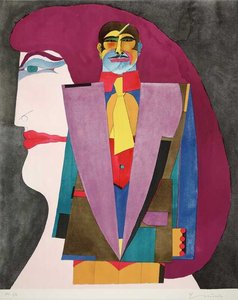
Richard Lindner
1901 - 1978 , Germany
Quick Facts
- Artistic Movement Or Style: Urban eroticism, Pop Art, Cyberpunk
- Artists Or Movements Influenced By This Artist: ['American Pop Art']
- Artists Who Influenced This Artist:
- Hansen Prinzhorn
- Neue Sachlichkeit
- Date Of Birth: November 11, 1901
- Date Of Death: April 16, 1978
- Full Name: Richard Lindner
- Nationality: German-American
- Notable Artworks:
- Marilyn Was Here
- The Meeting
- Louis ii
- Place Of Birth: Hamburg, Germany

