

 Preview
 Send
Send Share
Share
 Details

 Download
 Similars
 X-Ray
X-Ray Diaporama
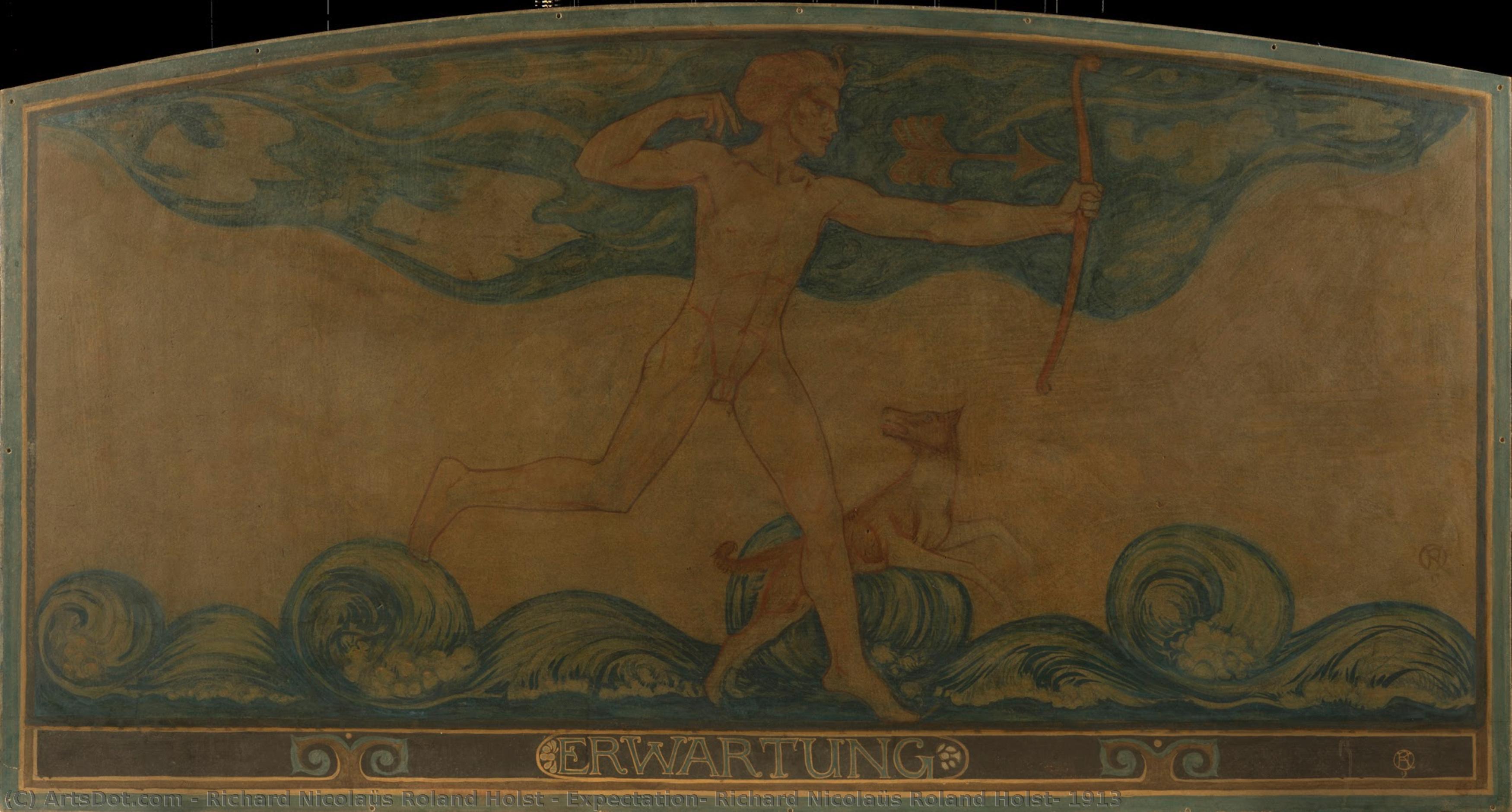
Expectation, Richard Nicolaüs Roland Holst, 1913

 Read More
Purchase a high-resolution, enhanced digital image, far superior to the online preview.
Each file is meticulously prepared by our in-house specialists using advanced tools and expert manual retouching. We ensure every image has exceptional clarity, precise color accuracy, and fine detail.
The final file is delivered via email within 72 hours, optimized for immediate use in professional, editorial, and print environments. This is the same quality trusted by top-tier design studios, publishers, and galleries.
Digital Image
Download a high-resolution file for personal display, printing, and creative projects. ( Buy Print Buy Hand Made Painting)
Included in Every Digital Image Order
Expert Digital Delivery, Guaranteed
When you choose ArtsDot.com, you're not just getting an image - you're receiving a professionally enhanced digital artwork, crafted with precision and backed by a satisfaction guarantee. Here's everything that comes with your order, automatically:

Fast Email Delivery
Your high-resolution digital image file will be emailed to you within 72 hours of ordering - ready for immediate use.

AI-Enhanced Digital File
Your artwork is professionally optimized using advanced AI tools and manual editing, ensuring maximum detail, clarity, and color accuracy.

Free Lifetime Re-Delivery
Accidentally deleted or lost your file? No worries - we'll resend it to you anytime, free of charge.

No Import Fees - Ever
Enjoy your artwork instantly with zero customs, duties, or delivery fees - digital downloads are always tax-free.

Color Accuracy Guarantee
We ensure your digital image reflects the original colors as closely as possible using professional tools and color management.

60-Day Satisfaction Guarantee
If you're not satisfied with your digital image, we'll revise it or refund 100% within 60 days - no questions asked.

100% Money-Back Guarantee
Not satisfied? Get a full refund within 60 days of receiving your digital file - no questions asked.

Bulk Order Discounts
Buy 3 images, save 10% - Buy 5, save 15% - Buy 10+, save 20%. Great for creative projects, galleries, and agencies.
Related Artworks








Artist Biography
The Celestial Visionary: Richard Nicolaüs Roland Holst
Richard Nicolaüs Roland Holst, a name perhaps less immediately recognizable than some of his contemporaries, nevertheless occupies a unique and profoundly influential position in the development of modern abstract art. Born in 1880, Holst’s life was one dedicated to exploring the hidden harmonies of the universe, translating cosmic principles into a visual language that predated many of the better-known movements of the early 20th century. While biographical details remain somewhat sparse – Holst deliberately cultivated an air of mystery around his personal life – it is clear that his artistic journey was deeply intertwined with esoteric studies and a fascination with theosophy, astrology, and ancient mythology. He wasn’t merely *representing* the world; he sought to reveal its underlying structure through form and color.Early Influences and The Search for Universal Laws
Holst's initial artistic training was conventional enough, steeped in the academic traditions of his time. However, a growing dissatisfaction with representational art led him down increasingly unconventional paths. He became captivated by the writings of Helena Blavatsky and other theosophists, believing that art could be a powerful tool for spiritual awakening and a means to access higher realms of consciousness. This conviction fueled an intense study of symbolism – not merely as decorative motifs, but as keys to unlocking universal truths. He absorbed influences from diverse sources: the vibrant color palettes of Impressionism, the flattened perspectives of Japanese prints, and the geometric precision of Islamic art. But these were never simply imitated; they were synthesized into something entirely new. Holst’s early works, though still figurative, began to exhibit a distinct tendency towards abstraction, with forms dissolving into swirling patterns and colors imbued with symbolic meaning. He believed that specific color combinations resonated with planetary energies and could evoke particular emotional states in the viewer.The Development of a Unique Abstract Language
By the 1910s, Holst had largely abandoned representational imagery altogether. His paintings became increasingly abstract, characterized by dynamic compositions of interlocking geometric shapes, radiant colors, and complex symbolic arrangements. He developed a personal iconography based on astrological signs, alchemical symbols, and ancient archetypes. Crucially, his abstraction wasn’t about rejecting form; it was about discovering a more fundamental *form* – the underlying structure of reality itself. Holst's technique was meticulous and deliberate. He often worked in layers, building up surfaces with thin washes of color to create luminous effects. He also experimented with unconventional materials, incorporating metallic pigments and iridescent paints to enhance the otherworldly quality of his work. His canvases weren’t simply painted; they were constructed – carefully orchestrated arrangements designed to resonate with cosmic energies.Major Achievements and Artistic Philosophy
Holst never sought widespread recognition or commercial success. He exhibited sporadically, primarily in small galleries frequented by fellow esotericists and avant-garde artists. His influence was largely exerted through a close circle of students and followers who were drawn to his unique artistic philosophy. He believed that true art wasn’t about self-expression; it was about channeling universal forces. While he resisted categorization, Holst's work can be seen as a precursor to several major abstract movements, including Suprematism, Constructivism, and even Abstract Expressionism. His emphasis on geometric form and spiritual symbolism anticipated the concerns of artists like Kasimir Malevich and Piet Mondrian. His paintings weren’t merely aesthetic objects; they were intended as tools for meditation and contemplation – visual portals to higher states of consciousness. He saw color as a living force, capable of influencing both the psyche and the physical world.Historical Significance and Lasting Legacy
Despite his relative obscurity during his lifetime, Richard Nicolaüs Roland Holst’s work has experienced a growing resurgence of interest in recent decades. Scholars are increasingly recognizing his pioneering role in the development of abstract art and his profound influence on subsequent generations of artists.- His exploration of spiritual symbolism anticipated many of the concerns of Surrealism.
- His emphasis on geometric form paved the way for Constructivist aesthetics.
- His use of color as a dynamic force influenced Abstract Expressionist painters like Mark Rothko and Barnett Newman.
Quick Facts
- Artistic Movement Or Style: Classical composer
- Artists Or Movements Influenced By This Artist:
- Gustav Holst
- Ralph Vaughan Williams
- Artists Who Influenced This Artist:
- Johann Sebastian Bach
- Franz Schubert
- Date Of Birth: 1876
- Date Of Death: 1958
- Full Name: Richard Nicolaüs Roland Holst
- Nationality: British
- Notable Artworks:
- The Planets Suite
- St Paul's Suite
- Terrestrial Choruses
- Place Of Birth: Cheltenham, United Kingdom

