 Preview
 Send
Send Share
Share
 Details

 Download
 Similars
 X-Ray
X-Ray Diaporama
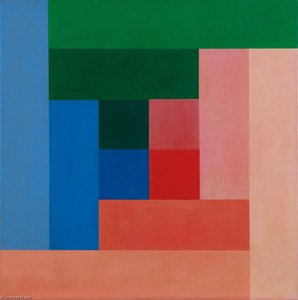
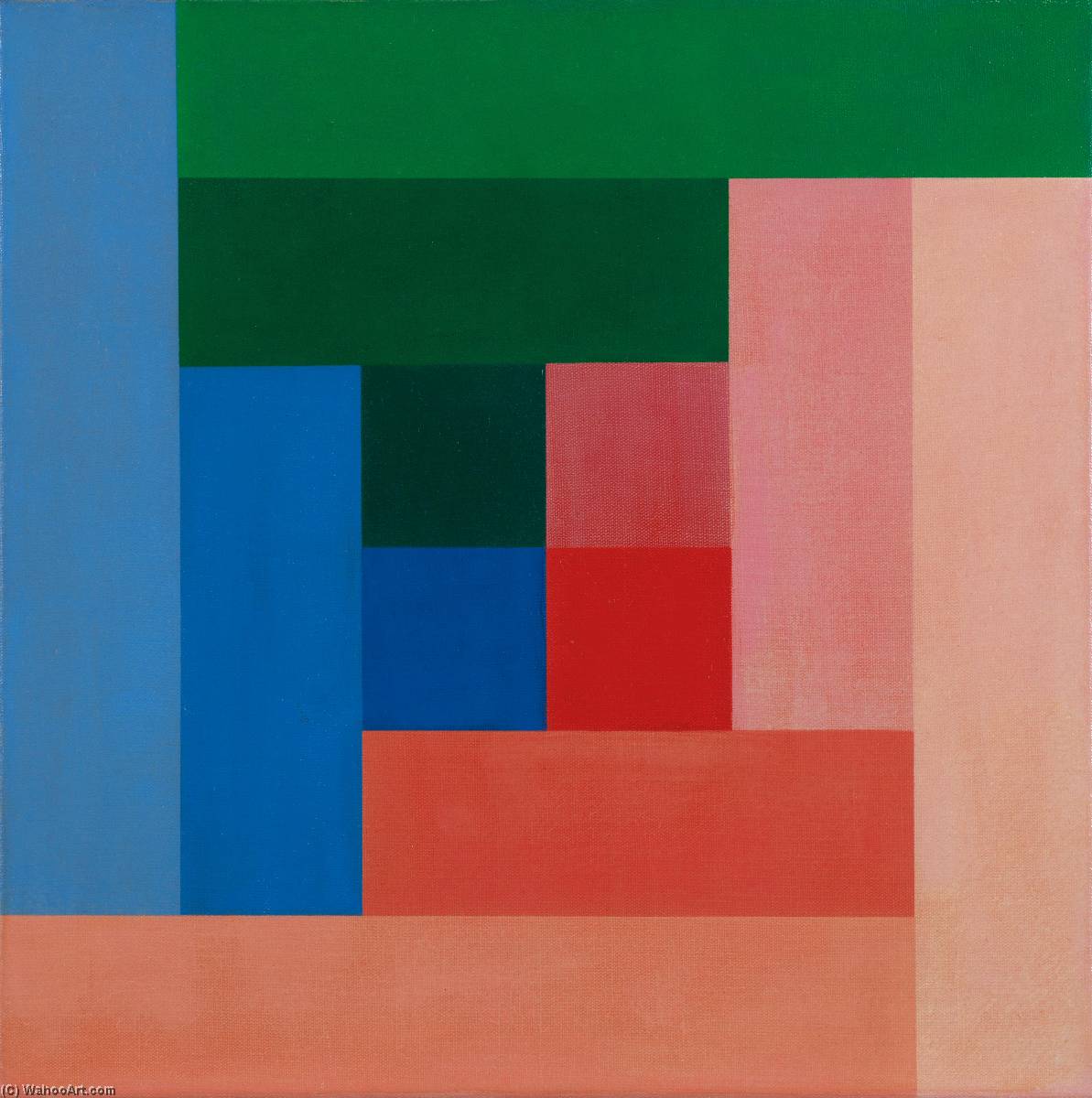
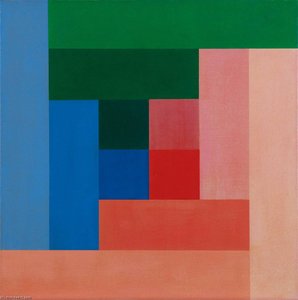
PROGRESSION VON 4 GESTUFTEN FARBEN, 1967 PROGRESSION OF FOUR GRADED COLOURS , 1967
 Read More
Hand Made Oil Reproduction
Hand-painted oil on canvas in your size and frame, made to order by our artists. ( Buy Print Buy Image)




































Pick from our preset sizes that match the artwork's original proportions.

You may enter your own dimensions to fit a specific frame or space. If your selected size does not match the original image's proportions, we will either crop the artwork or extend the painting with additional hand-painted elements. A digital mockup will be sent for your approval before production begins.
Please note that the on-screen preview does not reflect the actual cropping or extension. Only the mockup will accurately show the final composition.
While custom sizes are available, we recommend selecting a dimension from the predefined list to preserve the original proportions.
After order, ArtsDot.com team will email client for instructions and provide a mockup preview
Worldwide Delivery () in 3/4 weeks instead of standard 5 weeks. (7 September). No compromise on quality.

Free Worldwide Express Shipping

High-Quality Linen Canvas

Full Shipping Insurance

Customs Tax Refund Guarantee

True Color Matching Guarantee

100-Day Return Policy (Defects Only)

100% Money-Back Guarantee

Bulk Discount Offer
 Glass option is only available in size under 110 CM

PROGRESSION VON 4 GESTUFTEN FARBEN, 1967 PROGRESSION OF FOUR GRADED COLOURS , 1967
Reproduction Medium
Reproduction Size
-


Total Price
$ 263
Related Artworks



Artist Biography
A Life Dedicated to Systematic Vision: Richard Paul Lohse
Richard Paul Lohse, born in Zürich on September 13th, 1902, was a pivotal figure in the development of Concrete and Constructive art—movements that sought to strip away representational elements and explore the fundamental building blocks of visual experience. His journey wasn’t one of immediate artistic recognition but rather a gradual evolution born from practical necessity and fueled by a deep-seated political and moral conviction. Initially drawn to painting, Lohse found himself navigating the challenging economic landscape of post-WWI Switzerland. Unable to pursue formal studies in Paris, as he desired, he entered the world of advertising at Max Dalang agency in 1918, honing his skills as an advertising designer. This early experience, while seemingly pragmatic, proved formative; it instilled a precision and clarity that would later characterize his groundbreaking abstract work. During this period, Lohse’s paintings reflected the influence of late Cubism—expressive still lifes hinting at the geometric explorations to come.The Rise of a Swiss Modernist
The 1930s marked a turning point for Lohse. His burgeoning talent as a graphic artist and book designer propelled him into the forefront of modern Swiss design, a field rapidly gaining international prominence for its clean lines, functionalism, and innovative typography. He established his own studio in Zürich, allowing him greater creative freedom and control over his projects. However, Lohse was not content to simply create aesthetically pleasing designs; he believed art should be intertwined with social responsibility. This conviction led him to become an active participant in protests against the political climate of the time—a courageous stance given the restrictions imposed by the government. In 1937, alongside Leo Leuppi, Lohse co-founded Allianz, a crucial association that brought together Swiss modern artists and fostered dialogue about new artistic approaches. This collaborative spirit was further exemplified by his involvement in organizing the “Twentieth Century German Art” exhibition in London in 1938, working with Irmgard Burchard, whom he briefly married. These endeavors weren’t merely professional; they were acts of resistance, a commitment to promoting progressive ideas through artistic expression.The Breakthrough: Modular Systems and Seriality
The year 1943 witnessed a profound shift in Lohse's artistic trajectory—a breakthrough that would define his mature style. He began to standardize his pictorial means, moving away from the more intuitive compositions of his earlier work and embracing modular and serial systems. This wasn’t an abandonment of emotion but rather a new way of channeling it through rigorous logic and mathematical precision. Lohse developed paintings composed of non-representational planes of interacting color elements, arranged in carefully calculated relationships. Each element played an equal role, contributing to the overall harmony and balance of the composition. He sought to explore the inherent structure of color perception itself—how colors interact with one another, how they create spatial illusions, and how they affect the viewer’s emotional response. This systematic approach wasn't cold or impersonal; it was a deliberate attempt to uncover universal principles of visual order.Disseminating Ideas: Publications and Legacy
Lohse understood that artistic innovation required not only creation but also dissemination. In 1953, he published *New Design in Exhibitions*, a seminal work that explored the possibilities of exhibition design as a means of communicating new ideas. From 1958 onwards, he became co-editor of *Neue Grafik/New Graphic Design*, a highly influential magazine that showcased cutting-edge art and design from around the world. Through these publications, Lohse actively shaped the discourse surrounding Concrete and Constructive art, introducing his work and the work of his contemporaries to a wider audience. His paintings—characterized by their nonrepresentational forms, systematic organization, and vibrant color palettes—became emblematic of the movement’s core principles. Richard Paul Lohse died in Zürich in 1988, leaving behind a legacy that continues to inspire artists and designers today. He demonstrated that abstraction could be both intellectually rigorous and emotionally resonant, and that art could serve as a powerful tool for social change.A Lasting Impact
- Concrete Art Pioneer: Lohse is recognized as one of the most important figures in the development of Concrete art, pushing boundaries beyond traditional representation.
- Swiss Graphic Design Influence: His contributions to Swiss graphic design helped establish its international reputation for clarity and innovation.
- Political Activism: Lohse’s commitment to social justice informed his artistic practice and led him to actively protest against political oppression.
- Systematic Approach: His use of modular systems and seriality revolutionized abstract painting, creating works that are both visually striking and intellectually stimulating.
richard paul lohse
1902 - 1988
Quick Facts
- Artistic Movement Or Style: Concrete Art, Constructivism
- Date Of Birth: September 13, 1902
- Date Of Death: September 16, 1988
- Full Name: Richard Paul Lohse
- Nationality: Swiss
- Place Of Birth: Zürich, Switzerland