 Preview
 Send
Send Share
Share
 Details

 Download
 Similars
 X-Ray
X-Ray Diaporama
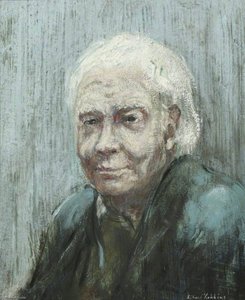
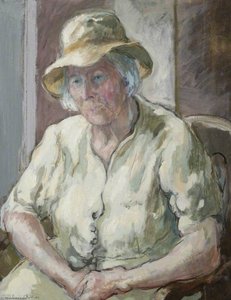
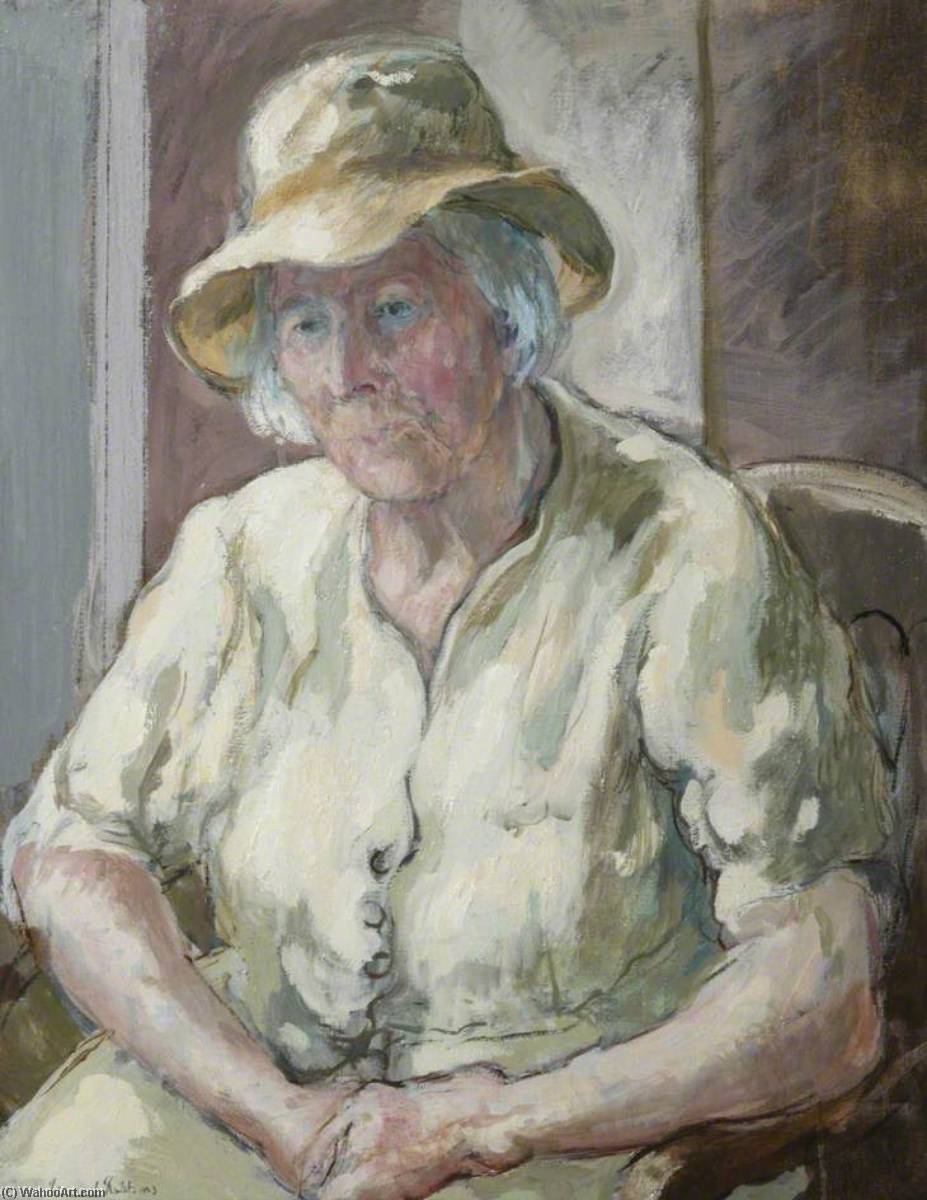
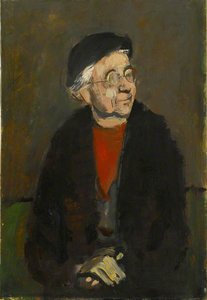
Lady Robbins (pendant to the portrait of Lord Robbins)
 74.0 x 59.0 cm
 New College
 Read More
Giclée / Art Print
Museum-quality giclée or canvas print with fast production and flexible finish options. ( Buy Hand Made Painting Buy Image)




































Pick from our preset sizes that match the artwork's original proportions.

You may enter your own dimensions to fit a specific frame or space. If your selected size does not match the original image's proportions, we will either crop the artwork or extend the image with a mirrored or solid-fill edge. A digital mockup will be sent for your approval before production begins.
Please note that the on-screen preview does not reflect the actual cropping or extension. Only the mockup will accurately show the final composition.
While custom sizes are available, we recommend selecting a dimension from the predefined list to preserve the original proportions.
Worldwide Delivery () in 2 weeks instead of standard 4/5 weeks. (2 September)

Free Worldwide Express Shipping

High-Quality Linen Canvas

Full Shipping Insurance

Customs Tax Refund Guarantee

True Color Matching Guarantee

60-Day Return Policy (Defects Only)

100% Money-Back Guarantee

Bulk Discount Offer
 Glass option is only available in size under 110 CM

Lady Robbins (pendant to the portrait of Lord Robbins)
Giclée / Art Print
Reproduction Size
-


Total Price
$ 63
Related Artworks




Artist Biography
The Architect of Serenity: The Life and Legacy of Richard Robbins
Richard Robbins (1927–2009) was far more than a mere painter; he was an architect of serenity, a master who meticulously crafted scenes of profound peace and understated beauty. His artistic legacy does not rely on grand, sweeping gestures or dramatic, turbulent narratives, but rather resides within the quiet contemplation offered by his luminous floral paintings and intricately detailed wood interiors. These works invite the viewer into a world of gentle observation, where time seems to slow, and grace is found in the smallest details. Born into a distinguished artistic and intellectual lineage in Hampstead Garden Suburb, London, Robbins was the son of the renowned economist Lionel Robbins and Iris Gardiner. This environment, steeped in London’s cultural landscape, nurtured an early appreciation for aesthetics that would eventually define his life's work.
His formative years were marked by a deep exposure to art through prestigious institutions such as King Alfred School and Dauntsey’s, but it was his time in Venice during the Second World War that proved truly transformative. The rich artistic heritage of the Venetian city, with its unique interplay of light and atmosphere, left an indelible mark on his creative soul. This early encounter with the way light dances across ancient surfaces would later become a cornerstone of his style. Following his wartime experiences, Robbins served briefly in the Royal Artillery before embarking on a rigorous formal education at Goldsmiths College, the Ruskin School of Art, and the Slade School of Fine Art. These institutions provided him with a formidable technical foundation, instilling a deep understanding of color theory, composition, and the precise mechanics of light and shadow.
A Mastery of Light, Texture, and Form
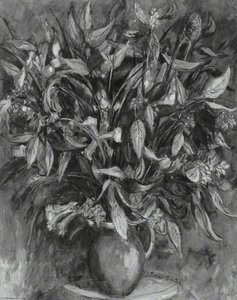
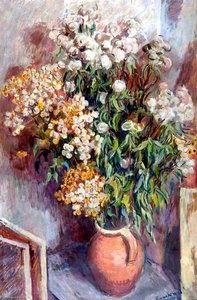
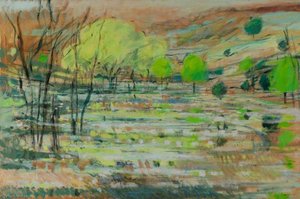
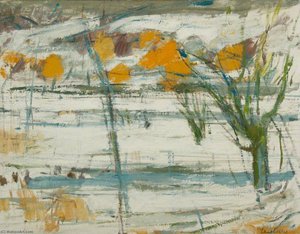
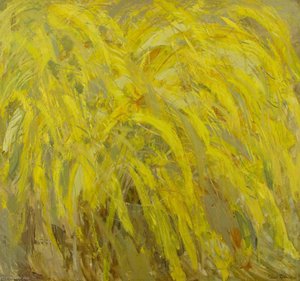
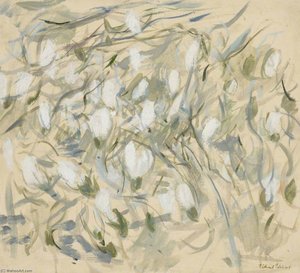
The artistic style of Richard Robbins is characterized by a profound respect for the craft and an almost poetic sensitivity to the natural world. He possessed a singular ability to capture the delicate dance of light within floral arrangements, turning botanical subjects into ethereal studies of luminosity. His paintings, such as Irises and Red Berries or Flowers in Seed, demonstrate a mastery of capturing the ephemeral—the way a petal catches the sun or how shadows soften the edges of a bloom. This focus on the subtle poetry of nature was matched by his equally impressive ability to render the warm, tactile textures of wood grain in his interior scenes. In works like Wood Interior, Robbins showcases an incredible attention to detail, where the organic patterns of timber become as much a subject of beauty as any landscape.
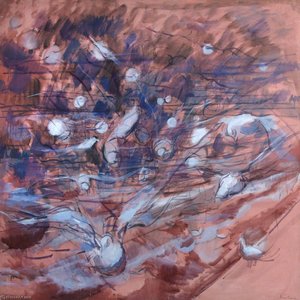
His technique was never about mere imitation; it was about capturing the essence of a moment. Through his use of color and light, he could evoke a sense of warmth and stillness that resonated deeply with his audience. This ability to weave light into his compositions allowed him to create works that felt both grounded in reality and elevated by a dreamlike quality. Whether depicting the movement of Seagulls or the stillness of a domestic setting, Robbins maintained a consistent focus on creating an atmosphere of tranquility, making his work a sanctuary for the wandering eye.
The Educator and the Artist
Beyond the easel, Robbins led a dual life that significantly impacted the broader art community. He was a dedicated educator, a role that allowed him to mentor generations of aspiring artists. His academic journey culminated in his appointment as the Head of Painting at Middlesex University. This position of authority was not merely a professional achievement but a reflection of his profound respect for the discipline and the rigorous standards of fine art. As a teacher, he brought a quiet authority to the classroom, sharing the technical wisdom gained from his prestigious training and his personal explorations of light and form.
This duality—the disciplined academic and the sensitive observer—shaped his approach to painting. His work was imbued with a sense of structural integrity and a deep respect for the fundamental principles of art, yet it never lost its emotional resonance. The historical significance of Richard Robbins lies in this balance; he bridged the gap between the rigorous traditions of British art education and a deeply personal, emotive exploration of nature's quietest moments. He remains remembered not just as a painter of beautiful things, but as an artist who taught us how to truly see the peace that exists within the world around us.
richard robbins
1927 - 2009
Quick Facts
- Artistic Movement Or Style: Floral paintings & wood interiors
- Artists Or Movements Influenced By This Artist: ['Ruskin School of Art']
- Artists Who Influenced This Artist:
- Lionel Robbins
- John Bayley
- Date Of Birth: July 12, 1927
- Date Of Death: July 28, 2009
- Full Name: Richard Robbins
- Nationality: British
- Notable Artworks:
- Lady Robbins
- Lord Robbins
- Irises and Red Berries
- Place Of Birth: Hampstead Garden Suburb, London