 Preview
 Send
Send Share
Share
 Details

 Download
 Similars
 X-Ray
X-Ray Diaporama
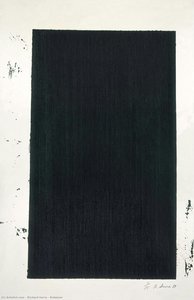
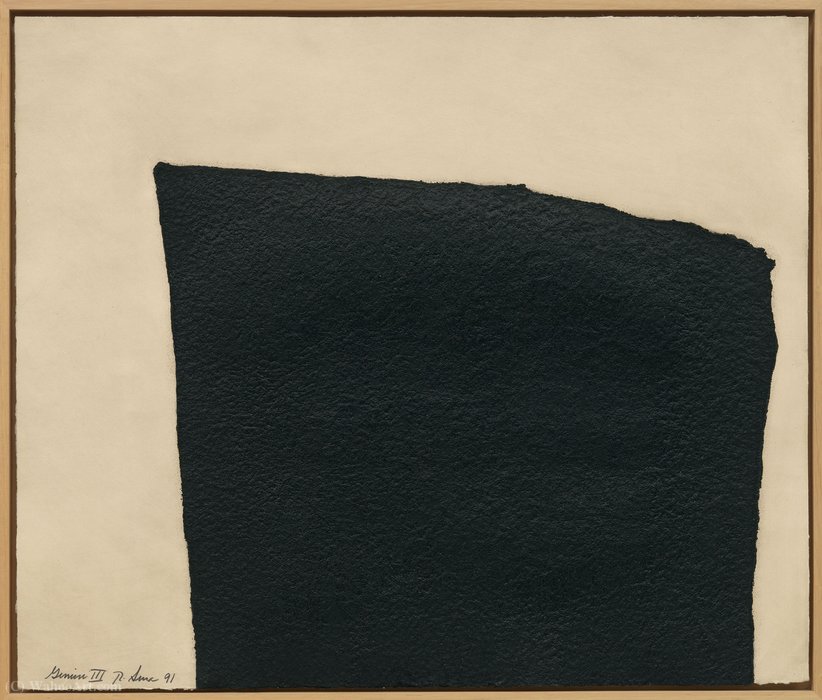
Hreppholar I from Hreppholar I-VIII
 Read More
Hand Made Oil Reproduction
Hand-painted oil on canvas in your size and frame, made to order by our artists. ( Buy Print Buy Image)




































Pick from our preset sizes that match the artwork's original proportions.

You may enter your own dimensions to fit a specific frame or space. If your selected size does not match the original image's proportions, we will either crop the artwork or extend the painting with additional hand-painted elements. A digital mockup will be sent for your approval before production begins.
Please note that the on-screen preview does not reflect the actual cropping or extension. Only the mockup will accurately show the final composition.
While custom sizes are available, we recommend selecting a dimension from the predefined list to preserve the original proportions.
After order, ArtsDot.com team will email client for instructions and provide a mockup preview
Worldwide Delivery () in 3/4 weeks instead of standard 5 weeks. (17 August). No compromise on quality.

Free Worldwide Express Shipping

High-Quality Linen Canvas

Full Shipping Insurance

Customs Tax Refund Guarantee

True Color Matching Guarantee

60-Day Return Policy (Defects Only)

100% Money-Back Guarantee

Bulk Discount Offer
 Glass option is only available in size under 110 CM

Hreppholar I from Hreppholar I-VIII
Reproduction Medium
Reproduction Size
-


Total Price
$ 263
Related Artworks







Artist Biography
The Weight of Presence: The Life and Legacy of Richard Serra
To encounter the work of Richard Serra is to engage in a physical dialogue with gravity, mass, and the very essence of space. Born in San Francisco in 1938, Serra’s artistic consciousness was forged not in the quietude of a studio, but amidst the industrial grit of the Marine Shipyards. Watching the monumental construction of steel tankers, he developed an early, profound intimacy with the raw power of metal and the transformative potential of heavy industry. This childhood exposure to the rhythmic, massive scale of maritime engineering would later become the heartbeat of his sculptural language, turning the cold rigidity of steel into a medium of profound emotional and spatial experience.
His intellectual journey was one of unexpected transitions, moving from the linguistic structures of English Literature at the University of California, Berkeley, to the rigorous formal training of Yale University. It was during his formative years in the late 1950s and early 1960s that Serra bridged the gap between the cerebral and the tactile. While studying art history, he supported himself by working in steel mills and iron foundries, a period of labor that served as a vital apprenticeship. This hands-on mastery of fabrication allowed him to move beyond mere representation, treating steel not just as a material, but as a protagonist capable of bending, twisting, and asserting its own monumental will.
The Alchemy of Process and Material
Serra’s emergence within the Minimalist and Process Art movements marked a radical shift in how sculpture was perceived by the public. He moved away from the idea of sculpture as a self-contained object sitting upon a pedestal, instead proposing that art should be an environmental encounter. His early, seminal works, such as the Splash series, utilized molten lead to trace the boundaries between floor and wall, effectively making the act of creation—the physical movement of the liquid metal—the subject of the work itself. This emphasis on the process of transformation became a cornerstone of his practice, where the traces of action remained etched into the final form.
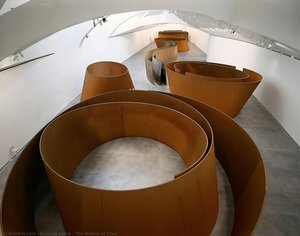
As his career progressed, Serra’s scale expanded to match his ambitions. He began working with massive plates of Cor-Ten steel, a material celebrated for its ability to develop a warm, protective layer of rust over time. This oxidation process allowed his sculptures to exist in a state of living evolution, reacting to the atmosphere and the passage of years. His works, such as the Torqued Ellipse series, do not merely occupy space; they redefine it. By curving enormous steel walls toward the viewer, he creates compressed corridors that force a heightened awareness of one's own body, breath, and movement within the architectural void.
A Monumental Legacy of Controversy and Connection
The historical significance of Richard Serra lies in his ability to provoke deep, often visceral, responses from both the public and the institution. His career was not without its storms, most notably the controversy surrounding Tilted Arc, a site-specific installation in New York City that was ultimately removed following intense public outcry. Yet, even in this moment of friction, Serra’s core philosophy remained unshaken: art must be inextricably linked to its site, and the viewer's relationship to that site is paramount. He believed that sculpture should not be an ornament added to a landscape, but a force that alters the very perception of the environment.
Throughout his decades of prolific creation, Serra’s achievements have been recognized with the highest honors, including the US National Arts Award and the J. Paul Getty Medal. His influence persists in the way contemporary artists approach scale, materiality, and the phenomenological experience of art. To walk through The Matter of Time is to lose oneself in a labyrinth of steel and shadow, experiencing a sense of time that is measured not by clocks, but by the slow, rhythmic movement of the human spirit through space. He leaves behind a world permanently altered by his vision—a world where steel can sing with silence and where gravity becomes a form of poetry.

Richard Serra
1939 - , United States of America
Quick Facts
- Artistic Movement Or Style: Minimalism & Process Art
- Artists Or Movements Influenced By This Artist: ['']
- Artists Who Influenced This Artist: ['']
- Date Of Birth: 1938
- Date Of Death: 2024
- Full Name: Richard Serra
- Nationality: American
- Notable Artworks:
- Tilted Arc
- Snake
- Naples
- Place Of Birth: San Francisco, United States