 Preview
 Send
Send Share
Share
 Details

 Download
 Similars
 X-Ray
X-Ray Diaporama
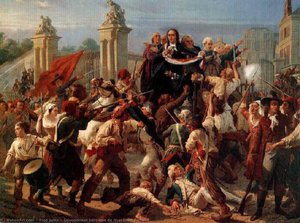
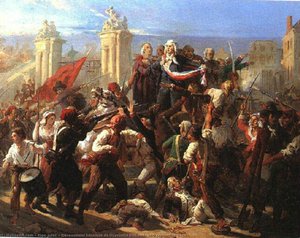
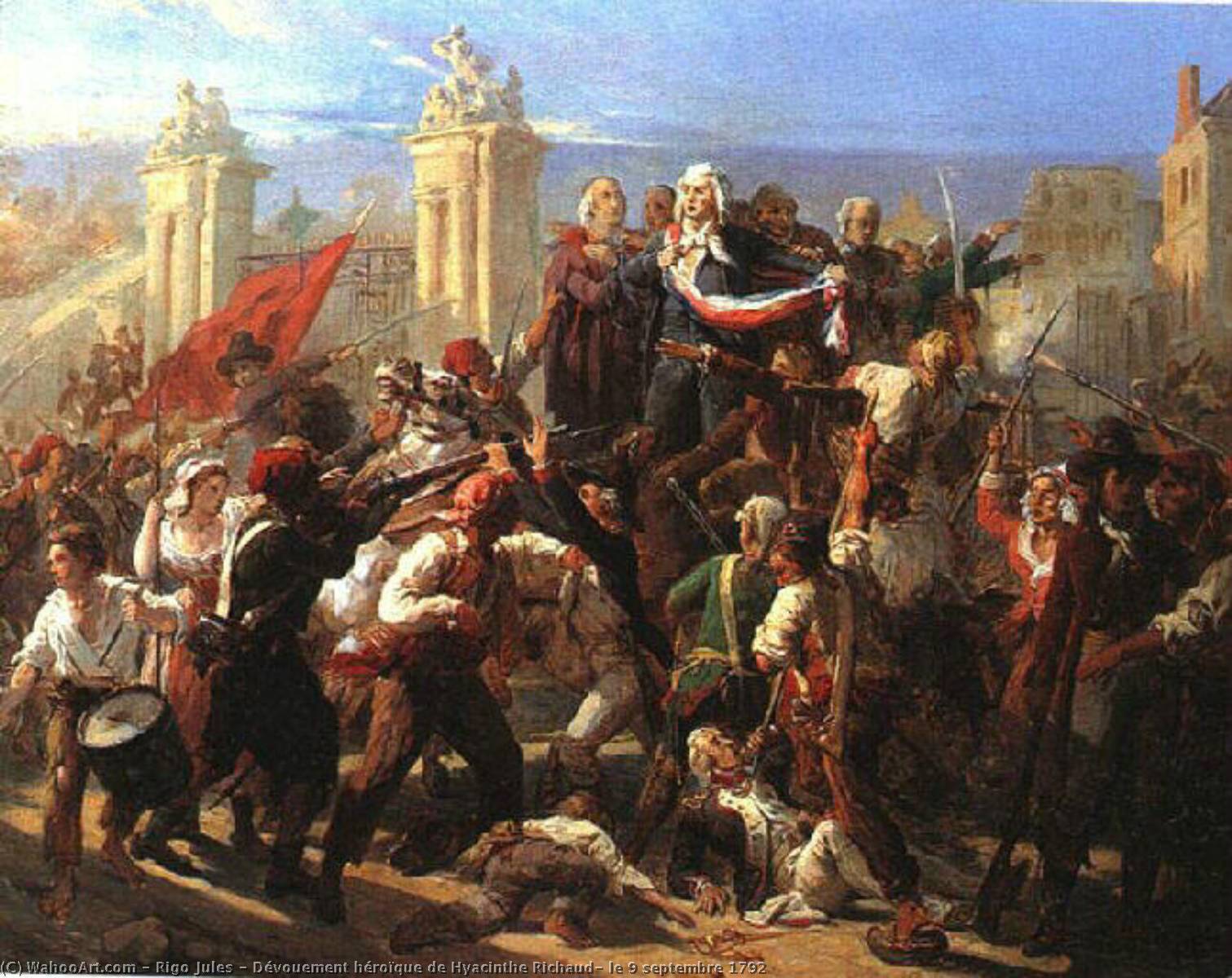
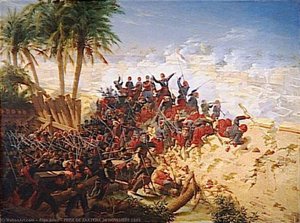
Dévouement héroïque de Hyacinthe Richaud, le 9 septembre 1792
 Read More
Hand Made Oil Reproduction
Hand-painted oil on canvas in your size and frame, made to order by our artists. ( Buy Print Buy Image)




































Pick from our preset sizes that match the artwork's original proportions.

You may enter your own dimensions to fit a specific frame or space. If your selected size does not match the original image's proportions, we will either crop the artwork or extend the painting with additional hand-painted elements. A digital mockup will be sent for your approval before production begins.
Please note that the on-screen preview does not reflect the actual cropping or extension. Only the mockup will accurately show the final composition.
While custom sizes are available, we recommend selecting a dimension from the predefined list to preserve the original proportions.
After order, ArtsDot.com team will email client for instructions and provide a mockup preview
Worldwide Delivery () in 3/4 weeks instead of standard 5 weeks. (27 August). No compromise on quality.

Free Worldwide Express Shipping

High-Quality Linen Canvas

Full Shipping Insurance

Customs Tax Refund Guarantee

True Color Matching Guarantee

60-Day Return Policy (Defects Only)

100% Money-Back Guarantee

Bulk Discount Offer
 Glass option is only available in size under 110 CM

Dévouement héroïque de Hyacinthe Richaud, le 9 septembre 1792
Reproduction Medium
Reproduction Size
-


Total Price
$ 263
Related Artworks









Artist Biography
The Meticulous Legacy of Rigo Jules
In the vibrant, shifting landscape of nineteenth-century French art, few names evoke the quiet dignity and technical precision of Jules Alfred Vincent Rigo. Born in Paris in 1810, Rigo emerged as a painter whose brush captured not just the likeness of his subjects, but the very essence of their social standing and historical weight. His journey began under the tutelage of the esteemed Leon Coignet, a master of decoration and painting whose influence is etched into the foundational strength of Rigo’s compositions. This early apprenticeship provided him with more than just technical skill; it instilled a profound respect for the decorative arts and a capacity for the meticulous detail that would become his artistic hallmark.
Rigo’s career was a fascinating tapestry of artistic pursuit and entrepreneurial spirit. While he is celebrated today as a portraitist of distinction, his life was also deeply intertwined with the world of lithography. Alongside his brother Édouard, he operated under the name Rigo Frères, managing Parisian printing workshops that contributed to the dissemination of visual culture during a transformative era. This dual identity—as both a fine artist and a skilled lithographer—allowed him to navigate the commercial and creative currents of Paris with unique versatility, even as he transitioned into independent ventures like Lith Rigo et Cie.
A Master of Neoclassical Grandeur
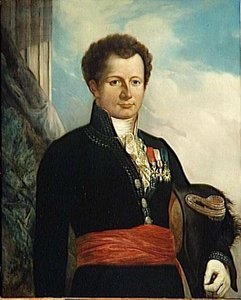
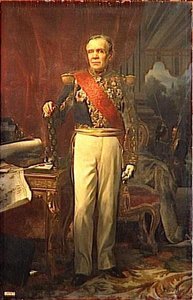
The true soul of Rigo’s work lies in his ability to marry the formal rigidity of Neoclassicism with an evocative, almost tactile sense of reality. He possessed a rare talent for capturing the weight of velvet, the cold glint of a medal, and the solemnity of a gaze. His portraits were never mere records of anatomy; they were carefully constructed narratives of power and character. This is perhaps most brilliantly realized in his depiction of Blaise François Aldegonde de Jouvencel, the Mayor of Versailles. In this work, Rigo utilizes deep, resonant tones and dramatic lighting to elevate a civic figure into an icon of historical permanence, showcasing his mastery over texture and light.
Beyond the intimate confines of portraiture, Rigo’s imagination wandered through the corridors of history. He sought to breathe life into significant moments of the past, creating works that functioned as both art and historical commentary. His paintings often featured:
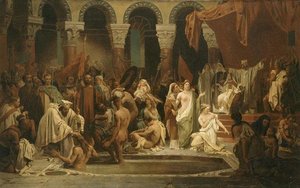
- Historical Narratives: Evocative scenes such as Le Baptême de Clovis, which utilized religious and royal symbolism to connect the viewer to France's ancestral roots.
- Civic Commemoration: Portraits that celebrated the nobility and leadership of his era, emphasizing duty and formal grandeur.
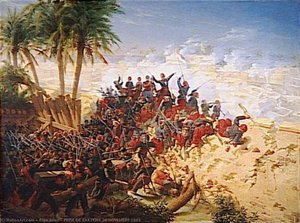
- Dramatic Event Painting: Works like Prise de Zaatcha, which captured the tension and movement of significant nineteenth-century military milestones.
Historical Significance and Artistic Resonance
As the decades progressed, Rigo Jules navigated a world moving away from the structured elegance of the Neoclassical tradition toward more fluid movements. Yet, he remained steadfast in his commitment to clarity, detail, and the dignity of his subjects. His ability to convey status through subtle gestures and intricate attire made him a preferred chronicler for those wishing to be remembered with grace. Even as his professional focus shifted between the easel and the printing press, the precision required by lithography only served to refine his painterly eye.
Though he passed away in 1892, leaving behind a legacy that spans over seven decades of French art history, Rigo’s impact remains palpable. He stands as a bridge between the formal traditions of the early nineteenth century and the burgeoning complexity of the Victorian era. To look upon a work by Rigo Jules is to step into a world of structured beauty, where every fold of cloth and every glint of light serves to honor the enduring dignity of the human spirit and the weight of history itself.
rigo jules
1810 - 1880
Quick Facts
- Artistic Movement Or Style: Neoclassical, Portraiture
- Artists Who Influenced This Artist: Leon Coignet
- Date Of Birth: 1810
- Date Of Death: 1892
- Full Name: Jules Alfred Vincent Rigo
- Nationality: French
- Notable Artworks:
- BLaise Francoise Aldegonde de Jouvencel
- Le Baptême de Clovis
- Dévouement héroïque de Hyacinthe Richaud
- Place Of Birth: France