 Preview
 Send
Send Share
Share
 Details

 Download
 Similars
 X-Ray
X-Ray Diaporama
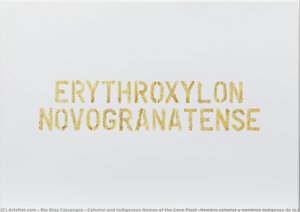
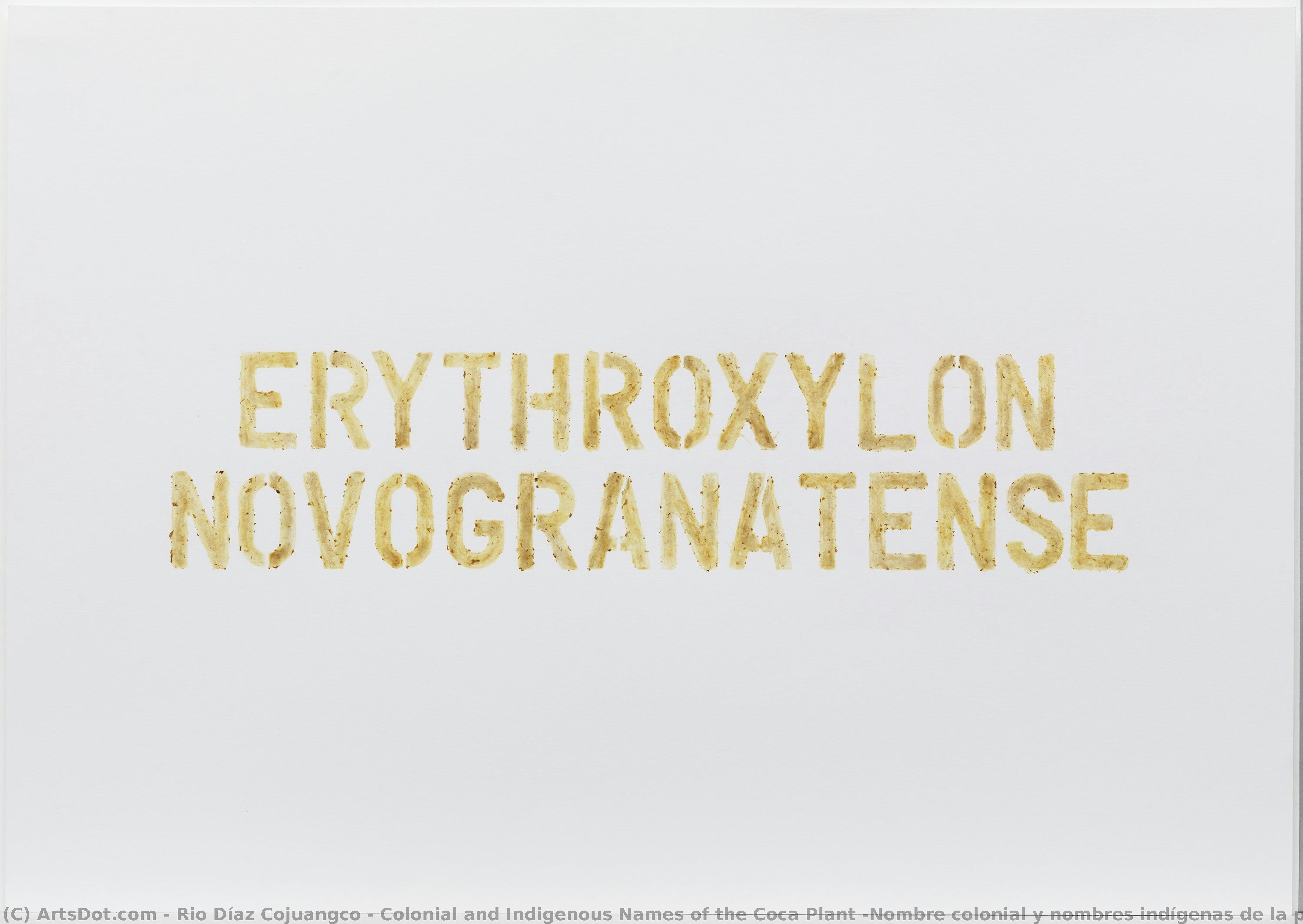
Colonial and Indigenous Names of the Coca Plant (Nombre colonial y nombres indígenas de la planta de coca)
 2014
2014 72.0 x 102.0 cm
 Read More
Giclée / Art Print
Museum-quality giclée or canvas print with fast production and flexible finish options. ( Buy Hand Made Painting Buy Image)




































Pick from our preset sizes that match the artwork's original proportions.

You may enter your own dimensions to fit a specific frame or space. If your selected size does not match the original image's proportions, we will either crop the artwork or extend the image with a mirrored or solid-fill edge. A digital mockup will be sent for your approval before production begins.
Please note that the on-screen preview does not reflect the actual cropping or extension. Only the mockup will accurately show the final composition.
While custom sizes are available, we recommend selecting a dimension from the predefined list to preserve the original proportions.
Worldwide Delivery () in 2 weeks instead of standard 4/5 weeks. (5 September)

Free Worldwide Express Shipping

High-Quality Linen Canvas

Full Shipping Insurance

Customs Tax Refund Guarantee

True Color Matching Guarantee

60-Day Return Policy (Defects Only)

100% Money-Back Guarantee

Bulk Discount Offer
 Glass option is only available in size under 110 CM

Colonial and Indigenous Names of the Coca Plant (Nombre colonial y nombres indígenas de la planta de coca)
Giclée / Art Print
Reproduction Size
-


Total Price
$ 63
Related Artworks
![Anyone\n\n[front] — Massimo Vignelli, Vignelli Associates, Modernism](/media/artworks/images-thumb/3c/b2/3cb21473072998ed9357f0c1e702cb7a.jpg)

Artist Biography
Rio Díaz Cojuangco: A Voice of Colombia’s Conflict Through Vibrant Imagery
Born in Pitalito, Huila, Colombia, in 1959, Rio Díaz Cojuangco emerged as a significant voice within contemporary Colombian art, uniquely blending personal narrative with the nation's turbulent history. His work, primarily encompassing painting and drawing, isn’t merely aesthetic; it’s a deeply considered exploration of violence, memory, and the complex relationship between artistic expression and political reality. From his early life amidst rural landscapes to his eventual relocation to Cali, Díaz’s trajectory mirrors Colombia’s own journey through decades of conflict – drug trafficking, paramilitary groups, government repression, and ultimately, a fragile peace.
Díaz's artistic foundation was shaped by the realities of his upbringing. Growing up in a region heavily impacted by armed conflict, he witnessed firsthand the devastating effects of violence on everyday life. This experience profoundly influenced his creative choices, leading him to eschew direct depictions of bloodshed and instead focus on capturing the subtle yet pervasive ways that conflict permeated Colombian society. His early career coincided with a period of intense upheaval, marked by escalating drug cartel activity and increasing government involvement in counter-narcotics operations. This backdrop fueled his artistic exploration, prompting him to investigate how cultural representations – particularly music and visual media – were utilized as tools of propaganda and manipulation.
Early Career & Artistic Style
Díaz’s formal artistic training began in the late 1970s, culminating in his victory at the Mutya ng Pilipinas beauty pageant in 1977. This initial foray into the entertainment industry provided a platform for him to develop his visual sensibilities and gain exposure within the Philippine cultural landscape. However, it was his subsequent move to Los Angeles with his wife, Hajji Alejandro, that truly ignited his artistic ambitions. The experience of navigating a new culture while grappling with personal challenges – including separation from his spouse – undoubtedly shaped his perspective and informed his evolving artistic style.
Díaz’s work is characterized by a distinctive blend of realism and surrealism. He often employs bold, saturated colors—a deliberate choice intended to evoke emotional intensity—and utilizes techniques reminiscent of expressionism, particularly in his use of brushstrokes and the distortion of figures. His compositions frequently incorporate elements of collage and assemblage, layering images and textures to create complex visual narratives. A key element of his style is the juxtaposition of seemingly disparate subjects – military personnel alongside musicians, political figures with everyday citizens—reflecting the fractured nature of Colombian society.
The “Amarillismo” Collection & Political Commentary
A pivotal moment in Díaz’s artistic development was the creation of his extensive “Amarillismo” (Sensationalism) collection, beginning in 2008. This series comprised over 150 LPs—a deliberate and symbolic accumulation—reflecting his fascination with popular culture and its role in shaping public perception. The selection criteria for these records were particularly revealing: Díaz prioritized albums that presented a sensationalized or propagandistic view of reality, often employing melodramatic imagery and exaggerated narratives. The inclusion of titles like *La Guerrila…y cambio su traje de encajes por la vieja carabina* (The guerrilla who exchanged her lace dress for a carbine) immediately signals his intention to critique the manipulation of symbols and the blurring of lines between truth and fiction.
This collection wasn’t merely an aesthetic exercise; it served as a direct commentary on Colombia's political landscape. Díaz meticulously documented the use of music—from patriotic anthems to popular ballads—as tools for reinforcing state narratives and shaping public opinion during periods of conflict. The inclusion of records like *Hombres de Acero* (Men of War), featuring a Hollywood action film soundtrack, highlights the pervasive influence of American media and its role in legitimizing military interventions.
Legacy & Continuing Influence
Rio Díaz Cojuangco’s untimely death in 2004 at the age of 45 cut short a remarkably prolific career. Despite his relatively brief time as an artist, his work has had a lasting impact on Colombian art and continues to resonate with audiences today. His unflinching exploration of violence, memory, and cultural representation offers a powerful critique of Colombia’s past and present, prompting viewers to confront uncomfortable truths about the nation's history.
Díaz’s influence extends beyond his own artistic output. He is remembered as a passionate advocate for social justice and a committed observer of Colombian society. His work serves as a reminder of the importance of art as a tool for critical engagement and social change, inspiring subsequent generations of artists to use their voices to challenge power structures and amplify marginalized perspectives. His legacy can be seen in the continued interest in his work by museums and galleries across Colombia and internationally, solidifying his place as one of the most important contemporary artists to emerge from the country.
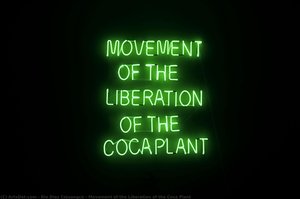
To learn more about Rio Díaz Cojuangco’s artwork, including “Movement of Liberation,” visit ArtsDot.com.

rio díaz cojuangco
1959 - 2004 , Philippines
Quick Facts
- Artistic Movement Or Style: Expressionism (influenced)
- Artists Or Movements Influenced By This Artist: ['Filipino art']
- Artists Who Influenced This Artist: ['Victorio Edades']
- Date Of Birth: August 14, 1959
- Date Of Death: October 4, 2004
- Full Name: Rio Díaz Cojuangco
- Nationality: Filipino
- Notable Artworks:
- Movement of Liberation
- Colonial & Indigenous Names
- Place Of Birth: Manila, Philippines