

 Preview
 Send
Send Share
Share
 Details

 Download
 Similars
 X-Ray
X-Ray Diaporama
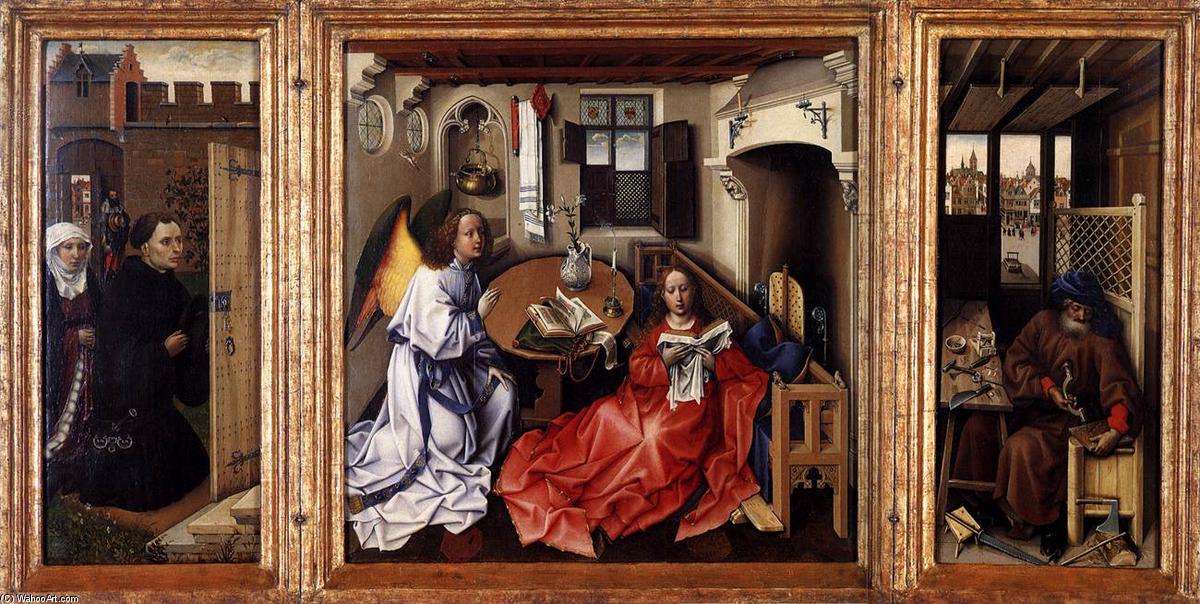
Mérode Altarpiece
 Oil On Canvas
- WallArt
- Early Netherlandish
 1427
1427- Renaissance
 64.0 x 63.0 cm
 Metropolitan Museum of Art
 Read More
Purchase a high-resolution, enhanced digital image, far superior to the online preview.
Each file is meticulously prepared by our in-house specialists using advanced tools and expert manual retouching. We ensure every image has exceptional clarity, precise color accuracy, and fine detail.
The final file is delivered via email within 72 hours, optimized for immediate use in professional, editorial, and print environments. This is the same quality trusted by top-tier design studios, publishers, and galleries.
Digital Image
Download a high-resolution file for personal display, printing, and creative projects. ( Buy Print Buy Hand Made Painting)
Included in Every Digital Image Order
Expert Digital Delivery, Guaranteed
When you choose ArtsDot.com, you're not just getting an image - you're receiving a professionally enhanced digital artwork, crafted with precision and backed by a satisfaction guarantee. Here's everything that comes with your order, automatically:

Fast Email Delivery
Your high-resolution digital image file will be emailed to you within 72 hours of ordering - ready for immediate use.

AI-Enhanced Digital File
Your artwork is professionally optimized using advanced AI tools and manual editing, ensuring maximum detail, clarity, and color accuracy.

Free Lifetime Re-Delivery
Accidentally deleted or lost your file? No worries - we'll resend it to you anytime, free of charge.

No Import Fees - Ever
Enjoy your artwork instantly with zero customs, duties, or delivery fees - digital downloads are always tax-free.

Color Accuracy Guarantee
We ensure your digital image reflects the original colors as closely as possible using professional tools and color management.

60-Day Satisfaction Guarantee
If you're not satisfied with your digital image, we'll revise it or refund 100% within 60 days - no questions asked.

100% Money-Back Guarantee
Not satisfied? Get a full refund within 60 days of receiving your digital file - no questions asked.

Bulk Order Discounts
Buy 3 images, save 10% - Buy 5, save 15% - Buy 10+, save 20%. Great for creative projects, galleries, and agencies.
Collectible Description
The Mérode Altarpiece: A Masterpiece of Northern Renaissance Art
The Mérode Altarpiece, attributed to Robert Campin (Master of Flémalle), is a captivating triptych that exemplifies the brilliance of Early Netherlandish painting. Created around 1427, this intricate artwork combines religious symbolism with everyday life, offering a profound glimpse into the spiritual and cultural landscape of the 15th century.
Subject and Composition
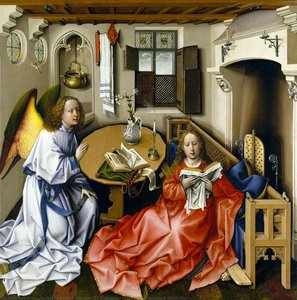
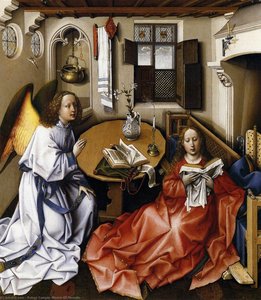
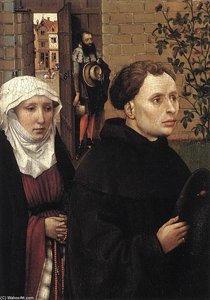
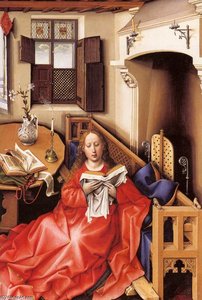
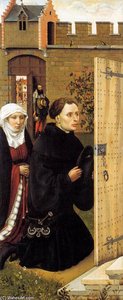
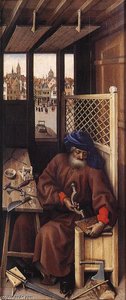
The triptych is divided into three panels, each depicting a distinct scene. The central panel portrays the Annunciation to Mary in a contemporary domestic setting, while the side panels feature the donors kneeling in prayer and Saint Joseph engaged in his carpentry work. This arrangement creates a narrative flow that invites viewers to engage with the story on multiple levels.
Style and Technique
Campin's mastery of oil painting techniques is evident in the Mérode Altarpiece. The artwork showcases meticulous brushwork, rich textures, and a vibrant color palette dominated by deep reds, blues, and golds. The use of naturalistic lighting and careful attention to detail bring the scenes to life, creating a sense of depth and realism that was groundbreaking for its time.
Historical Context
The Mérode Altarpiece is considered a foundational work in the development of Northern Renaissance art. It reflects the transition from medieval traditions to the modern techniques that would define the period. Campin's innovative use of oil paints and his focus on everyday scenes infused with deep symbolism set the stage for future artists like Jan van Eyck and Rogier van der Weyden.
Symbolism and Meaning
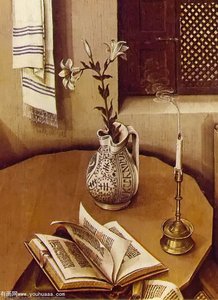
The artwork is rich in symbolic elements that convey deeper spiritual messages. The lily and fountain in the central panel symbolize the purity of Mary, while the rays of light represent the Holy Spirit. The domestic setting of the Annunciation scene underscores the accessibility of divine grace in everyday life. These symbols invite viewers to reflect on themes of faith, humility, and divine intervention.
Emotional Impact
The Mérode Altarpiece evokes a sense of tranquility and reverence through its serene composition and harmonious color palette. The intricate details and naturalistic elements create an intimate connection between the viewer and the sacred scenes depicted. This emotional resonance makes the artwork a powerful addition to any collection, offering both aesthetic beauty and spiritual depth.
Why Choose a Reproduction?
For art lovers, collectors, and interior designers seeking to bring the timeless elegance of the Mérode Altarpiece into their spaces, a high-quality reproduction is an excellent choice. Our hand-painted reproductions capture the intricate details and vibrant colors of the original artwork, ensuring that you can enjoy this masterpiece in your own home or gallery.
Related Artworks
Artist Biography
The Dawn of Netherlandish Realism: The Legacy of Robert Campin
In the misty, burgeoning landscape of the fifteenth-century Low Countries, a transformative vision began to take shape, forever altering the trajectory of Western art. At the heart of this revolution stood Robert Campin, an artist whose name is now inextricably linked with the Master of Flémalle. Born around 1375 in Valenciennes, France, Campin emerged from a period of transition, bridging the gap between the stylized elegance of the International Gothic and the profound, tactile realism that would define the Northern Renaissance. While much of his early life remains veiled by the shadows of history, his presence in Tournai for over three decades established him as a titan of the Flemish tradition, a master whose brushwork breathed life into the divine through the lens of the everyday.
The evolution of Campin’s artistry was not merely a personal journey but a technical conquest. He was among the earliest and most daring pioneers to embrace the medium of oil painting, moving away from the flatter, more opaque qualities of tempera. This mastery of oil allowed him to achieve an unprecedented luminosity, capturing the way light dances across polished brass, settles into the heavy folds of velvet, or glimmers upon a single drop of water. Through this innovation, Campin did not just paint subjects; he sculpted them with light and shadow, creating a sense of weight and presence that felt startlingly immediate to his contemporary viewers.
Symbolism Within the Domestic Sphere
What truly distinguishes the work of Robert Campin is his ability to weave the sacred into the seemingly mundane. To look upon a masterpiece like the Mérode Altarpiece is to enter a world where every object carries a whispered prayer. In his hands, a domestic interior—a quiet room filled with the familiar clutter of middle-class life—becomes a stage for profound theological truths. This technique, often referred to as disguised symbolism, invites the viewer to look closer, finding the miraculous hidden within the ordinary.
In these sacred narratives, nothing is accidental:
- The Annunciation: Within a contemporary Flemish parlor, the arrival of the Angel Gabriel is marked by subtle cues, where light streaming through a window serves as a metaphor for divine grace.
- Everyday Objects: A simple basin of water or a clean towel represents purity, while the flickering candle or the humble flora in a vase speaks to the omnipresence of the Holy Spirit.
- Texture and Detail: The meticulous rendering of wooden furniture, heavy drapery, and ceramic vessels grounds the spiritual event in a tangible, human reality that resonates with emotional depth.
A Lasting Influence on the Northern Renaissance
The historical significance of Robert Campin cannot be overstated. Alongside contemporaries like Jan van Eyck, he laid the foundational stones for the development of Early Netherlandish painting. While Van Eyck is often celebrated for his ethereal perfection, Campin provided a more robust, grounded realism—a style that emphasized the physical presence and psychological weight of his figures. His influence rippled through the workshops of Tournai and beyond, shaping the next generation of painters, including Jacques Daret, who carried forward the traditions of Flemish precision.
Though some of his works were once attributed to the anonymous "Master of Flémalle," modern scholarship has largely unified these identities, recognizing the singular, powerful voice behind the panels. His ability to marry the spiritual with the material created a visual language that would dominate Northern Europe for decades. Today, when we gaze upon his surviving altarpieces and devotional panels, we are not merely looking at relics of the past; we are witnessing the very moment when art learned to see the world with new, unblinking eyes, finding the eternal within the ephemeral beauty of human existence.
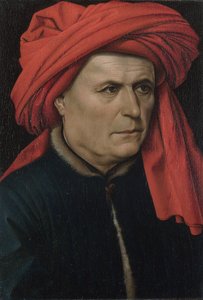
robert campin (master of flemalle)
1375 - 1444 , France
Quick Facts
- Artistic Movement Or Style: Early Netherlandish Painting
- Artists Who Influenced This Artist: ['Jan van Eyck']
- Date Of Birth: ca. 1375 Valenciennes
- Date Of Death: 1444 Tournai
- Full Name: Robert Campin
- Nationality: Flemish
- Notable Artworks:
- Mérode Altarpiece
- Portrait of a Man
- Place Of Birth: Tournai, Belgium

