 Preview
 Send
Send Share
Share
 Details

 Download
 Similars
 X-Ray
X-Ray Diaporama
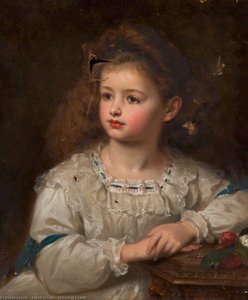
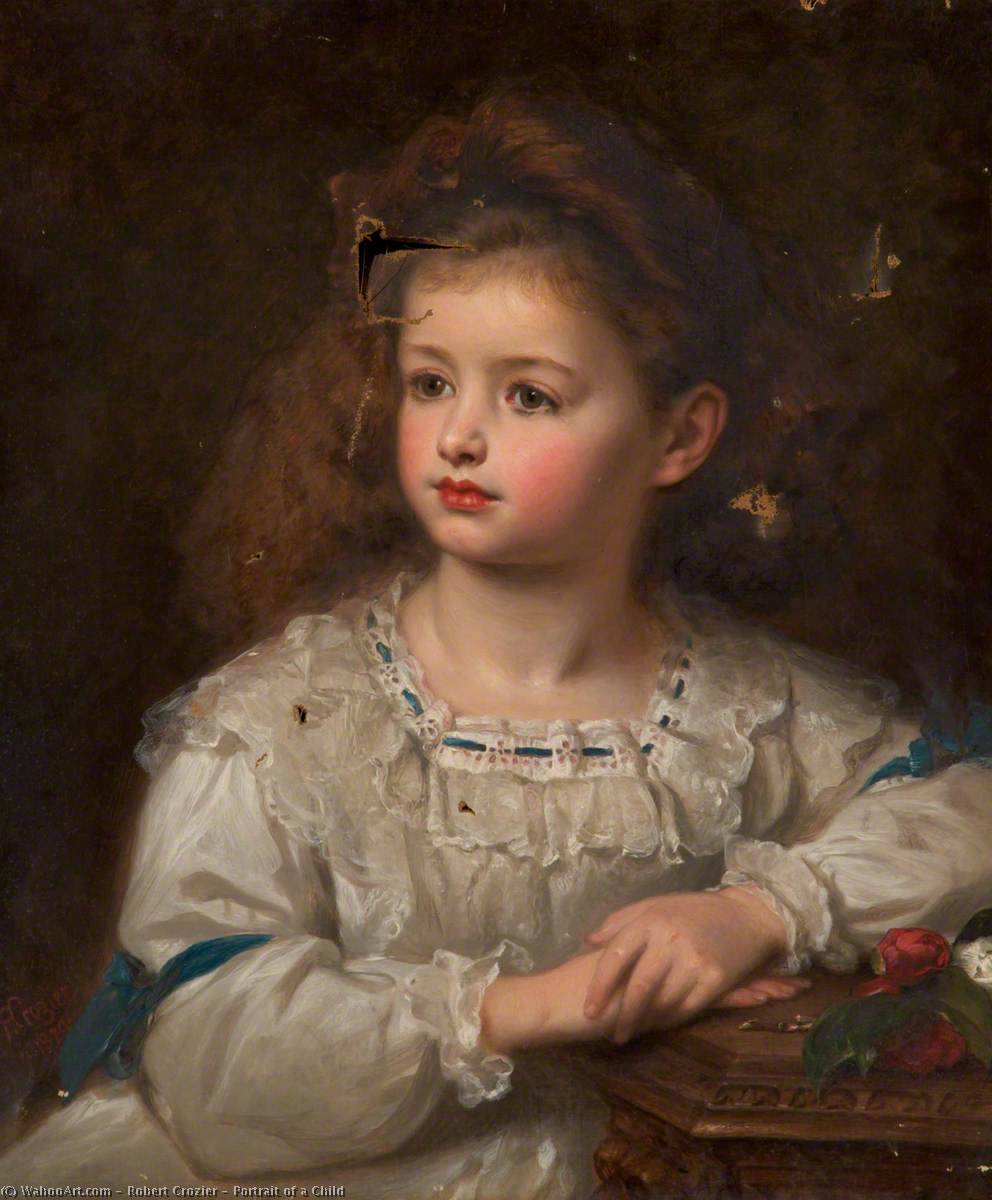
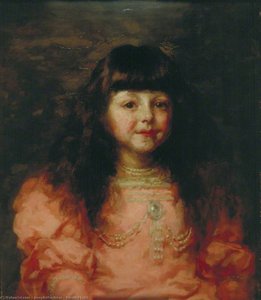
Portrait of a Child
 1870
1870 61.0 x 51.0 cm
 Read More
Hand Made Oil Reproduction
Hand-painted oil on canvas in your size and frame, made to order by our artists. ( Buy Print Buy Image)




































Pick from our preset sizes that match the artwork's original proportions.

You may enter your own dimensions to fit a specific frame or space. If your selected size does not match the original image's proportions, we will either crop the artwork or extend the painting with additional hand-painted elements. A digital mockup will be sent for your approval before production begins.
Please note that the on-screen preview does not reflect the actual cropping or extension. Only the mockup will accurately show the final composition.
While custom sizes are available, we recommend selecting a dimension from the predefined list to preserve the original proportions.
After order, ArtsDot.com team will email client for instructions and provide a mockup preview
Worldwide Delivery () in 3/4 weeks instead of standard 5 weeks. (28 August). No compromise on quality.

Free Worldwide Express Shipping

High-Quality Linen Canvas

Full Shipping Insurance

Customs Tax Refund Guarantee

True Color Matching Guarantee

60-Day Return Policy (Defects Only)

100% Money-Back Guarantee

Bulk Discount Offer
 Glass option is only available in size under 110 CM

Portrait of a Child
Reproduction Medium
Reproduction Size
-


Total Price
$ 263
Related Artworks








Artist Biography
The Visionary Landscapes of Robert Crozier
In the vast, sun-drenched expanse of the Australian continent, few artists have captured the psychological depth of the landscape with as much haunting precision as Robert Crozier. Born in Melbourne in 1940, Crozier emerged as a singular voice in Australian art history, a painter capable of transforming the familiar textures of the bush into surreal, emotive realms. His journey began with an intimate fascination for the natural world, yet his vision was never merely observational; it was deeply introspective, seeking to uncover the hidden emotional resonances buried within the earth and sky.
Crozier’s artistic identity was profoundly shaped by his early encounters with European Surrealism. The dreamlike logic of René Magritte and the subversive philosophies of André Breton provided him with a conceptual toolkit that allowed him to look beyond the surface of reality. This exposure instilled in him a lifelong commitment to exploring subconscious imagery, leading him to challenge conventional perceptions of space and form. During his formal training at the Royal Melbourne Institute of Technology (RMIT), Crozier refined his technical mastery while nurturing an experimental spirit that refused to be tethered by tradition. His professors encouraged this boundary-pushing approach, fostering a style that would eventually become his hallmark: a delicate balance between meticulous detail and deliberate, unsettling distortions of perspective.
A Symphony of Texture and Symbolism
To stand before a Crozier landscape is to enter a space where the physical world begins to dissolve into symbolism. His canvases often depict the rugged Australian bushland through a muted, sophisticated palette, yet these scenes are frequently punctuated by striking geometric shapes and manipulated textures that disrupt the viewer's sense of stability. This technique creates a captivating tension, inviting the observer to wander through landscapes that feel simultaneously grounded in nature and untethered from reality. Through his mastery of tonal modulation, he achieves a spatial illusion that can make a flat plane appear infinitely deep or a distant horizon feel claustrophobically close.
The thematic core of his work often revolves around the profound relationship between humanity, memory, and the natural environment. His most celebrated pieces serve as windows into these contemplative themes:
- The Silent Landscape (1968): A seminal work that explores the quietude of the Australian wilderness, utilizing stillness to evoke a sense of primordial solitude.
- Red Earth (1972): An exploration of color and heat, where the terrestrial elements of the continent are rendered with a visceral, almost tactile intensity.
- Fractured Horizon (1975): A masterpiece of his mature style, where the very structure of the landscape is broken into symbolic fragments, reflecting the fragility of perception.
Legacy and Artistic Significance
The legacy of Robert Crozier lies in his ability to bridge the gap between the tangible Australian landscape and the intangible reaches of the human psyche. He did not merely paint what he saw; he painted how the land felt—its isolation, its ancient memory, and its capacity to haunt the mind. His work has garnered significant critical acclaim, securing his place as a pioneer who brought a sophisticated, surrealist sensibility to the tradition of Australian landscape painting.
By integrating the structural rigor of modernism with the evocative power of romanticism, Crozier created a visual language that remains as potent today as it was during his most prolific years. His contribution to the art world is marked by a refusal to accept the landscape as a static subject, instead treating it as a living, breathing entity capable of reflecting the deepest complexities of the human experience.
Quick Facts
- Artistic Movement Or Style: Surrealism
- Artists Or Movements Influenced By This Artist: ['Australian Surrealist Movement']
- Artists Who Influenced This Artist:
- Salvador Dalí
- Joan Miró
- Date Of Birth: Living
- Full Name: Robert Crozier
- Nationality: Australian
- Notable Artworks:
- The Wanderer
- Red Desert
- Place Of Birth: Melbourne, Australia