

 Preview
 Send
Send Share
Share
 Details

 Download
 Similars
 X-Ray
X-Ray Diaporama
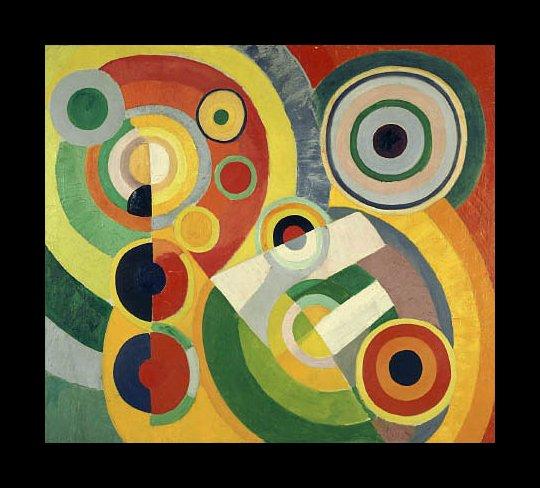
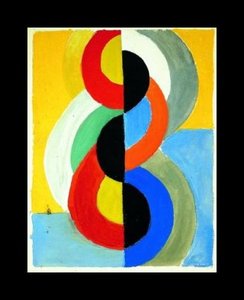
The Joy of Life


 Read More
Purchase a high-resolution, enhanced digital image, far superior to the online preview.
Each file is meticulously prepared by our in-house specialists using advanced tools and expert manual retouching. We ensure every image has exceptional clarity, precise color accuracy, and fine detail.
The final file is delivered via email within 72 hours, optimized for immediate use in professional, editorial, and print environments. This is the same quality trusted by top-tier design studios, publishers, and galleries.
Digital Image
Download a high-resolution file for personal display, printing, and creative projects. ( Buy Print Buy Hand Made Painting)
Included in Every Digital Image Order
Expert Digital Delivery, Guaranteed
When you choose ArtsDot.com, you're not just getting an image - you're receiving a professionally enhanced digital artwork, crafted with precision and backed by a satisfaction guarantee. Here's everything that comes with your order, automatically:

Fast Email Delivery
Your high-resolution digital image file will be emailed to you within 72 hours of ordering - ready for immediate use.

AI-Enhanced Digital File
Your artwork is professionally optimized using advanced AI tools and manual editing, ensuring maximum detail, clarity, and color accuracy.

Free Lifetime Re-Delivery
Accidentally deleted or lost your file? No worries - we'll resend it to you anytime, free of charge.

No Import Fees - Ever
Enjoy your artwork instantly with zero customs, duties, or delivery fees - digital downloads are always tax-free.

Color Accuracy Guarantee
We ensure your digital image reflects the original colors as closely as possible using professional tools and color management.

60-Day Satisfaction Guarantee
If you're not satisfied with your digital image, we'll revise it or refund 100% within 60 days - no questions asked.

100% Money-Back Guarantee
Not satisfied? Get a full refund within 60 days of receiving your digital file - no questions asked.

Bulk Order Discounts
Buy 3 images, save 10% - Buy 5, save 15% - Buy 10+, save 20%. Great for creative projects, galleries, and agencies.
Collectible Description
The Radiant Echoes of Robert Delaunay’s “The Joy of Life”
Robert Delaunay's "The Joy of Life," painted in 1930, isn’t merely a depiction of color and form; it’s an immersive experience, a vibrant distillation of the burgeoning artistic currents swirling around Paris at the time. Created during a period of intense experimentation with abstraction, this work exemplifies the Orphism movement – Delaunay's bold departure from representational art towards a purely visual language driven by emotion and perception. The painting’s genesis lies in a fascination with light, color theory, and the burgeoning influence of scientific discoveries regarding optics, particularly the work of Michel Eugène Chevreul on simultaneous contrast.
- Geometric Harmony: At its core, “The Joy of Life” is defined by its meticulously arranged geometric shapes – circles, squares, and lines – each imbued with a specific hue. These aren’t random splashes; they are carefully considered elements designed to interact dynamically, creating a sense of movement and rhythm that draws the viewer into the composition.
- Chromatic Intensity: Delaunay's masterful use of color is paramount. He employed techniques like complementary colors – red and green, blue and orange, yellow and purple – not just for visual impact but also to create optical vibrations within the painting itself. This was a radical departure from traditional painting, where color served primarily to represent objects.
- Influence of Modernism: The work reflects the broader modernist movement’s rejection of academic conventions and embrace of subjective experience. Delaunay wasn't interested in replicating reality; he sought to express his *perception* of it through a highly stylized lens.
The Orphism Movement & Sonia Delaunay
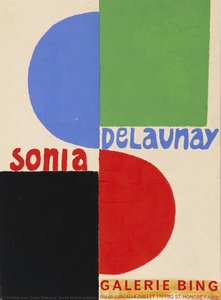
To fully appreciate “The Joy of Life,” one must understand the context of its creation – the rise of Orphism and the pivotal role played by Robert and Sonia Delaunay. Following their initial explorations with Neo-Impressionism, they sought to push beyond mere optical mixing of colors, developing a style characterized by bold, non-naturalistic color combinations and geometric abstraction. This movement, named after Sonia’s 1912 exhibition, was a direct response to the prevailing artistic trends of the time, rejecting the increasingly rigid formalism of Cubism in favor of a more fluid and emotionally charged approach.
Sonia Delaunay's influence is particularly evident in the painting's dynamic energy and its exploration of color as an independent entity. Her collaborative spirit with Robert was crucial to the development of Orphism, fostering a shared vision that challenged established artistic norms.Symbolic Resonance & Emotional Impact
"The Joy of Life" transcends a simple visual exercise; it’s imbued with symbolic resonance. The concentric circles can be interpreted as representing the interconnectedness of all things, reflecting Delaunay's belief in the fundamental unity of color and light. The vibrant palette evokes feelings of joy, energy, and optimism – fittingly named for its subject. The division into two distinct halves—one more structured with geometric lines, the other softer and curved—creates a visual tension that mirrors the complexities of human experience.
Beyond mere aesthetics, “The Joy of Life” invites contemplation on themes of dynamism, transformation, and the inherent beauty found within abstract forms. It’s a testament to Delaunay's pioneering spirit and his profound understanding of color as a powerful expressive force.Technical Details & Reproduction Considerations
Delaunay employed oil paints on canvas, utilizing techniques such as layering and glazing to build up the rich colors and create depth within the composition. The painting’s surface is characterized by its textured brushwork and subtle variations in tone – a testament to Delaunay's meticulous attention to detail. When considering a reproduction of “The Joy of Life,” it’s crucial to select a high-quality print on archival paper that accurately captures the original’s vibrant colors and textural nuances. The best reproductions will faithfully reproduce the layering and glazing techniques, ensuring that the painting retains its dynamic energy and emotional impact.
Related Artworks
Artist Biography
A Pioneer of Abstract Color: The Life and Art of Robert Delaunay
Robert Delaunay, born in Paris in 1885, emerged as a pivotal figure in the radical artistic shifts of the early twentieth century. Though initially drawn to more traditional forms of painting, his journey led him toward an exploration of color and light that would ultimately define his legacy and contribute significantly to the birth of abstract art. Delaunay wasn’t merely interested in *representing* the world; he sought to capture its very essence through a vibrant language of geometric shapes and luminous hues, co-founding the Orphism movement with his wife, Sonia Delaunay, and others who shared their vision. His early life was marked by a degree of instability – his parents divorced when he was young, and he was raised by relatives – but this perhaps fostered an independent spirit that would serve him well in challenging artistic conventions. He initially pursued decorative arts, but quickly gravitated towards painting, exhibiting at the Salon des Indépendants as early as 1904, demonstrating a burgeoning talent and ambition.From Divisionism to the Dawn of Orphism
Delaunay’s artistic development was characterized by constant experimentation. He initially engaged with Neo-Impressionism, or Divisionism, absorbing its principles of applying small, distinct dots of color to create a shimmering effect. However, he soon moved beyond simply replicating optical phenomena; he began to investigate the expressive potential of color itself. A crucial friendship with Jean Metzinger proved formative during this period, as they explored the possibilities of fragmented forms and mosaic-like compositions. These early collaborations laid groundwork for their later involvement in Cubism, though Delaunay would ultimately diverge from its more analytical approach. He wasn’t interested in dissecting objects into geometric components; rather, he sought to synthesize them into dynamic arrangements of color and light. This shift culminated in the development of Orphism – a term coined by the poet Guillaume Apollinaire – which aimed to create a purely abstract art that evoked emotional responses through its chromatic intensity. Simultaneous Contrasts: Sun and Moon, exemplifies this approach, showcasing Delaunay’s masterful manipulation of color to convey a sense of energy and movement.The Power of ‘Simultanéité’ and Artistic Influence
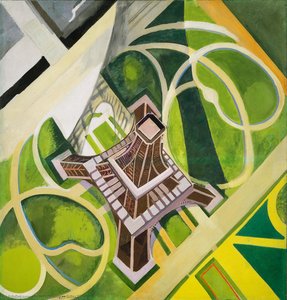
Central to Delaunay's artistic philosophy was the concept of “simultanéité” – the idea that colors interact with each other, creating new sensations and perceptions. He believed that color wasn’t merely a descriptive element but an active force capable of shaping our experience of reality. This belief informed his series of paintings depicting the Eiffel Tower, where he deconstructed the iconic structure into a network of intersecting planes and vibrant hues. These weren't depictions *of* the tower, but rather explorations of how light and color transformed its appearance. Delaunay’s theories resonated deeply with other artists of his time, influencing figures like Paul Klee, Franz Marc, August Macke, and even Russian avant-garde movements. His emphasis on abstraction and the expressive power of color helped pave the way for a new generation of artists who rejected representational conventions in favor of purely visual forms. He wasn’t simply creating paintings; he was developing a theoretical framework for understanding the relationship between color, light, and perception.Later Years and Enduring Legacy
The outbreak of World War I forced Delaunay and his wife to seek refuge in Spain and Portugal, where they continued to work and exhibit. After returning to Paris in the 1920s, he explored a range of subjects, including portraits and figurative scenes, but always remained committed to his core principles of color and abstraction. In his later years, Delaunay revisited earlier themes, creating increasingly complex and dynamic compositions. He also undertook ambitious projects such as designing large-scale colored reliefs for the 1937 Paris International Exposition, demonstrating his ability to translate his artistic vision into architectural contexts. Robert Delaunay’s untimely death in 1941 marked a loss for the art world, but his influence continues to be felt today. His pioneering work laid the foundation for many subsequent developments in abstract art, and his exploration of color remains a source of inspiration for artists across disciplines. His legacy is not merely one of aesthetic innovation, but also of intellectual inquiry – a testament to the power of art to transform our understanding of the world around us.Notable Works
- The Eiffel Tower (1909-1911)
- Simultaneous Contrasts: Sun and Moon (1913)
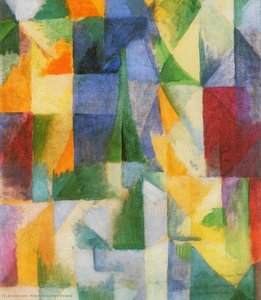
- Windows Open Simultaneously, 1st Part, 3rd Motif (1912)
- Road in Laon (1910)
- Rhythms (1934)
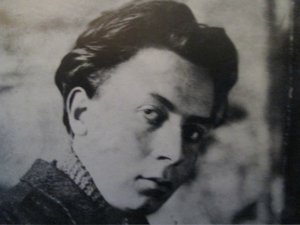
Robert Delaunay
1885 - 1941 , France
Quick Facts
- Artistic Movement Or Style: Orphism, Cubism
- Artists Or Movements Influenced By This Artist:
- Stanton Macdonald-Wright
- Sonia Delaunay
- Der Blaue Reiter
- Artists Who Influenced This Artist: ['Paul Klee']
- Date Of Birth: April 12, 1885
- Date Of Death: 1941
- Full Name: Robert Delaunay
- Nationality: French
- Notable Artworks:
- Eiffel Tower
- Simultaneous Contrasts
- Windows Open Simultaneously
- Place Of Birth: Paris, France

