 Preview
 Send
Send Share
Share
 Details

 Download
 Similars
 X-Ray
X-Ray Diaporama
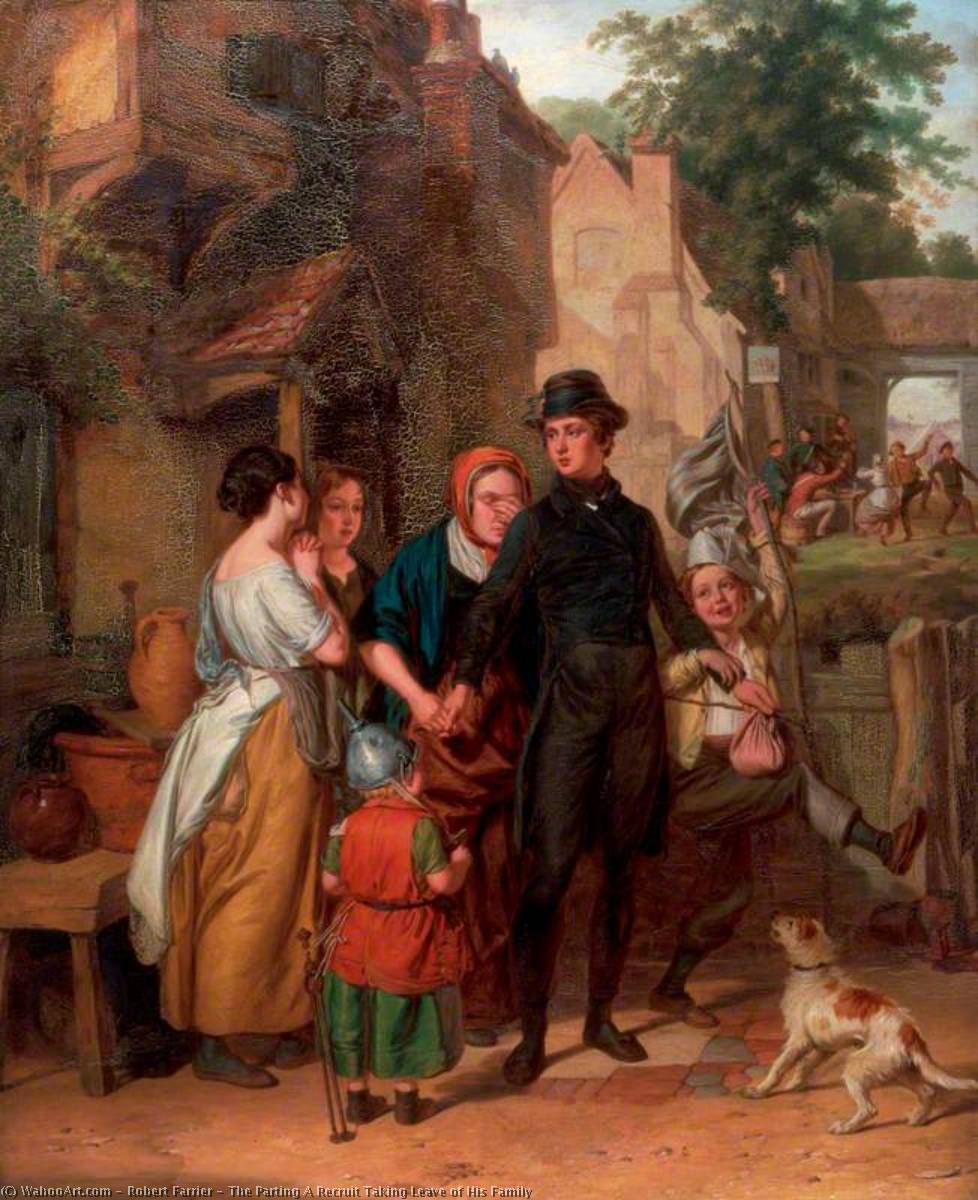
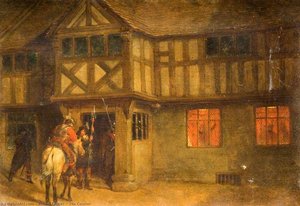
The Parting A Recruit Taking Leave of His Family
 1844
1844 74.0 x 62.0 cm
 Read More
Hand Made Oil Reproduction
Hand-painted oil on canvas in your size and frame, made to order by our artists. ( Buy Print Buy Image)




































Pick from our preset sizes that match the artwork's original proportions.

You may enter your own dimensions to fit a specific frame or space. If your selected size does not match the original image's proportions, we will either crop the artwork or extend the painting with additional hand-painted elements. A digital mockup will be sent for your approval before production begins.
Please note that the on-screen preview does not reflect the actual cropping or extension. Only the mockup will accurately show the final composition.
While custom sizes are available, we recommend selecting a dimension from the predefined list to preserve the original proportions.
After order, ArtsDot.com team will email client for instructions and provide a mockup preview
Worldwide Delivery () in 3/4 weeks instead of standard 5 weeks. (27 August). No compromise on quality.

Free Worldwide Express Shipping

High-Quality Linen Canvas

Full Shipping Insurance

Customs Tax Refund Guarantee

True Color Matching Guarantee

60-Day Return Policy (Defects Only)

100% Money-Back Guarantee

Bulk Discount Offer
 Glass option is only available in size under 110 CM

The Parting A Recruit Taking Leave of His Family
Reproduction Medium
Reproduction Size
-


Total Price
$ 263
Related Artworks










Artist Biography
The Gentle Humorist of Chelsea: The Life and Legacy of Robert Farrier
In the bustling heart of nineteenth-century London, amidst the evolving landscapes of the Victorian era, there lived an artist who possessed the rare ability to find extraordinary charm in the most ordinary moments. Robert Farrier (1796–1879), born in Chelsea, was much more than a mere chronicler of his time; he was a master of the miniature, a painter who could distill the vast complexities of human emotion into a small, exquisitely rendered frame. His journey began not with a brush, but with the precise, disciplined hand of an engraver’s apprentice. This early training in printmaking instilled within him a foundational mastery of tonal control and meticulous detail—skills that would later allow him to breathe life into the delicate features of his subjects, particularly the innocent faces of childhood.
Farrier’s artistic evolution was marked by a transition from the rigid precision of engraving to the fluid, emotive possibilities of miniature portraiture. While he sought formal instruction at the Royal Academy, debuting there in 1818, his true genius emerged when he began to infuse his work with a sense of whimsical observation. Unlike many of his contemporaries who pursued the grand, sweeping narratives of Romanticism, Farrier turned his gaze inward toward the domestic sphere. He became a storyteller of the small-scale, capturing the fleeting glances, the quiet mischief, and the tender vulnerabilities of daily life. His ability to blend a subtle realism with a playful, almost humorous spirit set him apart, creating a body of work that felt both intimately personal and universally relatable.
A Mastery of Miniature and Mood
The brilliance of Farrier’s technique lies in his command over tonal gradation and the delicate application of light. In his miniature portraits, every brushstroke was calculated to evoke a psychological depth that belied the small size of the canvas. He had an uncanny knack for capturing what might be called "the soul in miniature." This is perhaps most evident in his celebrated depictions of youth. Through works such as “The Mischievous Boy” and “Schoolboy,” Farrier invited viewers into a world of childhood innocence, where a single furrowed brow or a shy smile could convey an entire narrative of growing up.
Beyond the intimate portraits, Farrier’s versatility extended to larger compositions that explored themes of movement and social connection. His painting “The Courier” serves as a magnificent testament to his ability to handle oil on canvas, showcasing a dynamic scene of travelers set against an imposing architectural backdrop. In this work, one can sense the same spirit of adventure and camaraderie that he brought to his domestic scenes, albeit through a more expansive lens. His mastery was not limited to the brush; his engravings, including notable works after Romney and Simmons, further solidified his reputation as a versatile technician capable of navigating both the fine lines of printmaking and the rich textures of oil painting.
Historical Significance and Enduring Charm
The historical significance of Robert Farrier resides in his role as a bridge between the formal traditions of the late eighteenth century and the burgeoning sentimentalism of the Victorian age. He captured a specific cultural zeitgeist—a period that valued domestic stability, the sanctity of the family, and the romanticized beauty of the everyday. His notable works, including “Sunday Morning—The Toilet,” “Hesitation,” and “The Parting,” remain enduring examples of how art can serve as a mirror to the human condition, reflecting our most fundamental joys and sorrows through an understated visual language.
Today, Farrier’s legacy is preserved in esteemed collections such as the Wolverhampton Art Gallery, where his ability to evoke nostalgia continues to resonate with modern audiences. He remains a celebrated figure for those who appreciate the nuance of the miniature and the profound impact of a gentle, humorous perspective. His life's work stands as a testament to the idea that greatness is not always found in the monumental, but often in the quiet, beautifully captured moments of a life well-observed.
robert farrier
1796 - 1879
Quick Facts
- Artistic Movement Or Style: Romanticism
- Artists Or Movements Influenced By This Artist: ['Romantic Painting']
- Artists Who Influenced This Artist: ['William Hayley']
- Date Of Death: 1879
- Full Name: Robert Farrier
- Nationality: English
- Notable Artworks:
- The Schoolboy
- Sunday Morning
- Hesitation
- Minnie O'Donnell's Toilet
- Place Of Birth: Chelsea, London