 Preview
 Send
Send Share
Share
 Details

 Download
 Similars
 X-Ray
X-Ray Diaporama
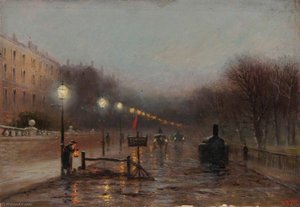
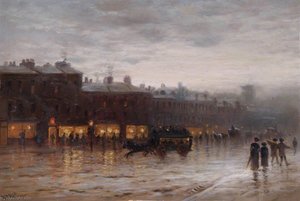
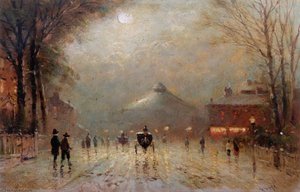
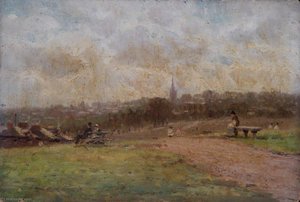
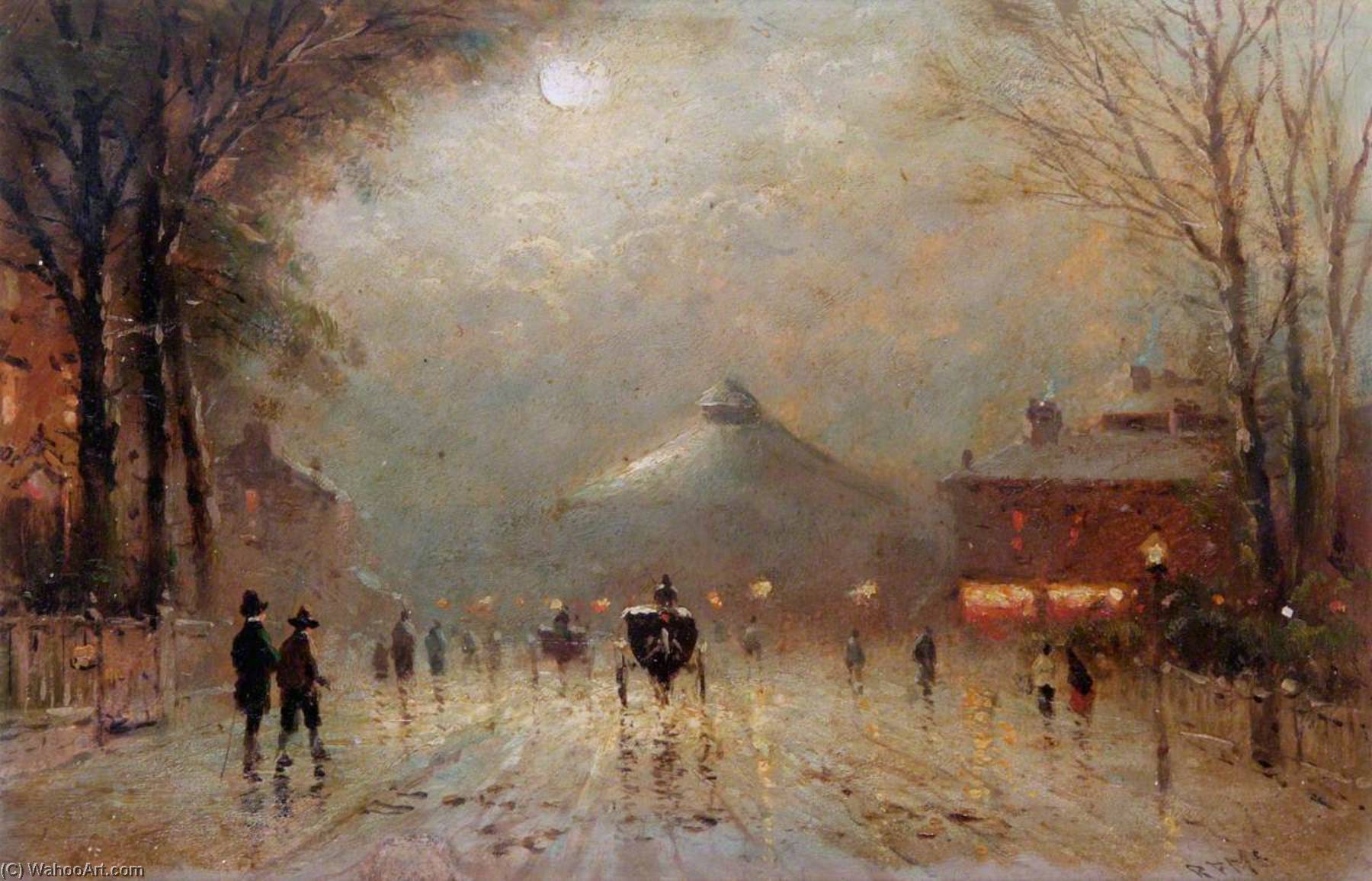
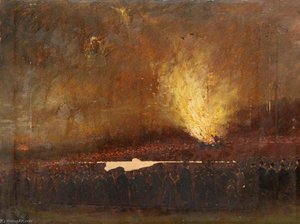
Chalk Farm Road from Haverstock Hill
 1890
1890 20.0 x 31.0 cm
 Camden Local Studies And Archives Centre
 Read More
Giclée / Art Print
Museum-quality giclée or canvas print with fast production and flexible finish options. ( Buy Hand Made Painting Buy Image)




































Pick from our preset sizes that match the artwork's original proportions.

You may enter your own dimensions to fit a specific frame or space. If your selected size does not match the original image's proportions, we will either crop the artwork or extend the image with a mirrored or solid-fill edge. A digital mockup will be sent for your approval before production begins.
Please note that the on-screen preview does not reflect the actual cropping or extension. Only the mockup will accurately show the final composition.
While custom sizes are available, we recommend selecting a dimension from the predefined list to preserve the original proportions.
Worldwide Delivery () in 2 weeks instead of standard 4/5 weeks. (23 August)

Free Worldwide Express Shipping

High-Quality Linen Canvas

Full Shipping Insurance

Customs Tax Refund Guarantee

True Color Matching Guarantee

60-Day Return Policy (Defects Only)

100% Money-Back Guarantee

Bulk Discount Offer
 Glass option is only available in size under 110 CM

Chalk Farm Road from Haverstock Hill
Giclée / Art Print
Reproduction Size
-


Total Price
$ 63
Related Artworks










Artist Biography
A Painter of Hampstead Heath: The Life and Legacy of Robert Findlay McIntyre
In the heart of the Victorian era, a period defined by rapid industrialization and profound social shifts, there existed a quiet corner of the English landscape that remained untouched by the soot of progress. It was within this realm of pastoral tranquility that Robert Findlay McIntyre (1846–1906) found his greatest inspiration. Born in the rolling landscapes of Worcestershire, England, McIntyre’s early life provided him with a foundational appreciation for the natural world. While the specific details of his formal education remain somewhat veiled by time, his early years suggest a deep immersion in classical studies paired with a self-directed pursuit of artistic mastery—a journey common among many gifted creators of his generation who sought mentorship through local observation and practice.
The trajectory of McIntyre’s career took a transformative turn around 1870 when he relocated to the vibrant, bustling atmosphere of London. This migration was more than a mere change of scenery; it was an immersion into the epicenter of a burgeoning artistic revolution. As the city expanded, so too did the influences available to him. Moving away from the rigid structures of traditional academic painting, McIntyre began to embrace the emerging Impressionistic sensibilities that were sweeping through Europe. This evolution allowed him to bridge the gap between the Romantic tradition—which emphasized emotion and the sublime—and a new, modern focus on the fleeting qualities of light, atmosphere, and the immediate sensory experience of the landscape.
The Art of Atmosphere and Light
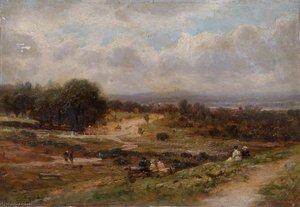
McIntyre’s body of work is most profoundly felt in his depictions of Hampstead Heath and the surrounding London environs. He possessed a rare ability to capture the ephemeral; his canvases serve as windows into a bygone age of quietude. His technique was characterized by a masterful use of loose brushstrokes and subtle tonal gradations, reminiscent of the great Impressionist masters like Monet or Sisley. Rather than focusing on the starkly urban or the grandly dramatic, McIntyre turned his gaze toward the gentle rhythms of rural life and the soft, shifting moods of the English countryside.
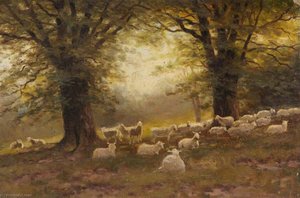
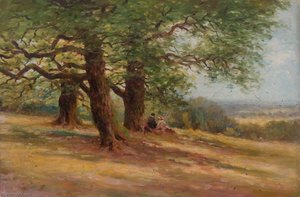
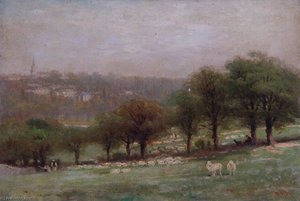
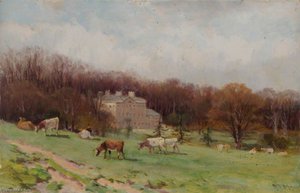
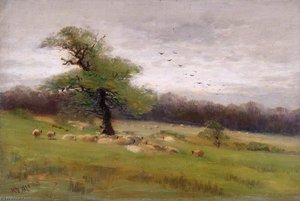
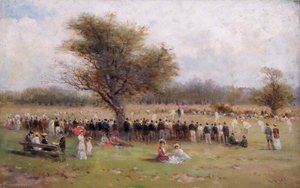
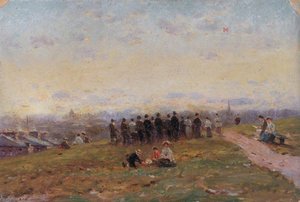
His palette was intentionally restrained, favoring a sophisticated arrangement of muted greens, deep blues, and earthy browns. These colors were not merely chosen for accuracy but to evoke a specific contemplative mood. In works such as "East Heath, Sheep under Trees," one can witness his ability to render the serene atmosphere of a grassy field, where the play of light through foliage creates a sense of profound peace. Whether depicting the movement of a crowd in "Kite Flying, Parliament Hill" or the stark, frozen beauty of "The Road to Edgware, Winter," McIntyre’s hand is always guided by an intention to capture the essence of a moment rather than just its physical form.
Historical Significance and Artistic Spirit
Though he may not hold the same household name recognition as contemporaries like Turner or Constable, the historical significance of Robert Findlay McIntyre lies in his role as a chronicler of a disappearing world. His paintings act as vital aesthetic records of the late 19th-century English landscape before it was irrevocably altered by urban sprawl. Through his eyes, we see the sheep grazing under ancient trees and the quiet paths of East Heath, preserved in oil and watercolor for eternity.
The enduring charm of his work can be summarized through several key artistic pillars:
- The Romantic-Impressionist Synthesis: His unique ability to blend the emotional depth of Romanticism with the light-focused techniques of Impressionism.
- Atmospheric Precision: A dedication to capturing the "feeling" of weather, from the biting chill of a London winter to the warmth of a summer afternoon on the Heath.
- Pastoral Preservation: His commitment to documenting the rural pockets of London, providing a nostalgic and beautiful glimpse into Victorian life.
Ultimately, McIntyre’s legacy is one of observation and reverence. He taught his viewers to slow down and notice the subtle shifts in the sky and the quiet dignity of the natural world. In every brushstroke, there is a testament to a life spent looking closely at the beauty that exists in the periphery of the modern rush.
robert finlay mcintyre
1846 - 1906
Quick Facts
- Artistic Movement Or Style: Impressionism
- Artists Who Influenced This Artist:
- Jean-Auguste Dominique Ingres
- Gustave Courbet
- Date Of Birth: 1846
- Date Of Death: 1906
- Full Name: Robert Findlay McIntyre
- Nationality: British
- Notable Artworks:
- East Heath, Sheep under Trees
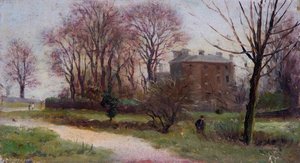
- The Pryors, East Heath
- Kite Flying, Parliament Hill
- Place Of Birth: Glasgow