

 Preview
 Send
Send Share
Share
 Details

 Download
 Similars
 X-Ray
X-Ray Diaporama
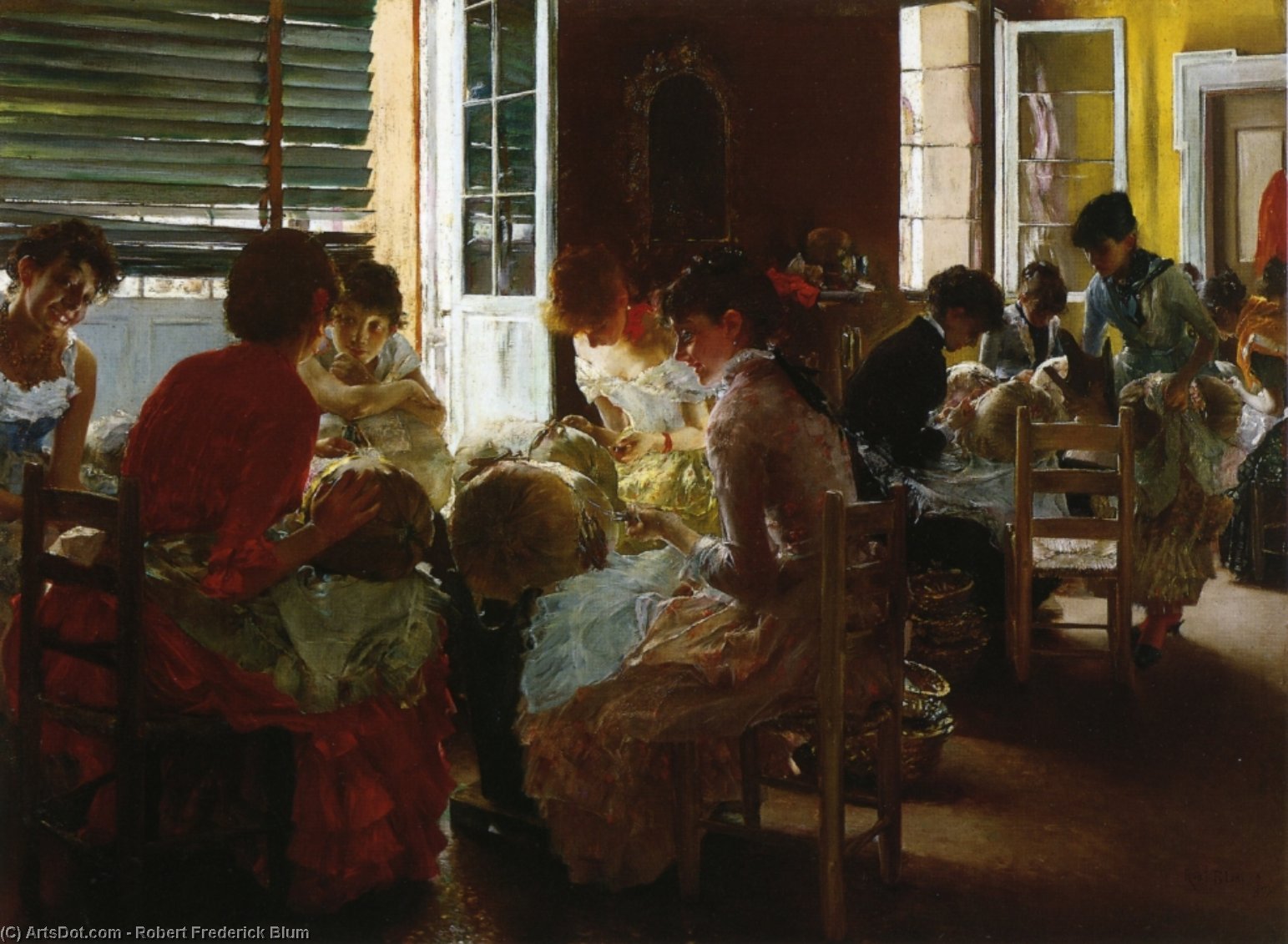
Venetian Lace Makers (also known as Venetian Lace Workers)


 Read More
Purchase a high-resolution, enhanced digital image, far superior to the online preview.
Each file is meticulously prepared by our in-house specialists using advanced tools and expert manual retouching. We ensure every image has exceptional clarity, precise color accuracy, and fine detail.
The final file is delivered via email within 72 hours, optimized for immediate use in professional, editorial, and print environments. This is the same quality trusted by top-tier design studios, publishers, and galleries.
Digital Image
Download a high-resolution file for personal display, printing, and creative projects. ( Buy Print Buy Hand Made Painting)
Included in Every Digital Image Order
Expert Digital Delivery, Guaranteed
When you choose ArtsDot.com, you're not just getting an image - you're receiving a professionally enhanced digital artwork, crafted with precision and backed by a satisfaction guarantee. Here's everything that comes with your order, automatically:

Fast Email Delivery
Your high-resolution digital image file will be emailed to you within 72 hours of ordering - ready for immediate use.

AI-Enhanced Digital File
Your artwork is professionally optimized using advanced AI tools and manual editing, ensuring maximum detail, clarity, and color accuracy.

Free Lifetime Re-Delivery
Accidentally deleted or lost your file? No worries - we'll resend it to you anytime, free of charge.

No Import Fees - Ever
Enjoy your artwork instantly with zero customs, duties, or delivery fees - digital downloads are always tax-free.

Color Accuracy Guarantee
We ensure your digital image reflects the original colors as closely as possible using professional tools and color management.

60-Day Satisfaction Guarantee
If you're not satisfied with your digital image, we'll revise it or refund 100% within 60 days - no questions asked.

100% Money-Back Guarantee
Not satisfied? Get a full refund within 60 days of receiving your digital file - no questions asked.

Bulk Order Discounts
Buy 3 images, save 10% - Buy 5, save 15% - Buy 10+, save 20%. Great for creative projects, galleries, and agencies.
Collectible Description
A Tapestry of Life: The Soul of Venetian Lace Makers
In the heart of the late 19th century, a period defined by the delicate interplay between tradition and modernity, Robert Frederick Blum captured a moment of profound communal intimacy in his masterpiece, Venetian Lace Makers. This evocative oil on canvas, painted in 1887, serves as more than just a depiction of a craft; it is a window into a vanished world of shared labor and social cohesion. As one gazes upon the scene, the viewer is immediately swept into a lively, bustling room where the rhythmic movement of hands and the soft murmur of conversation seem to vibrate through the very texture of the paint. Blum, an artist uniquely positioned between the burgeoning Impressionist movement and the intricate influences of Japonisme, utilizes a masterful command of light to illuminate the faces of those gathered, creating an atmosphere that feels both grand in its social scope and deeply personal in its execution.
The composition is a brilliant study in organized chaos, where a large group of figures is woven together through shared purpose. Some individuals are seated at tables, their focus intensely directed toward the delicate, intricate patterns of lace emerging from their needles, while others stand in clusters, engaged in the spirited dialogue that defines the social fabric of Venetian culture. The artist employs a warm, inviting palette that bathes the room in a soft, golden glow, suggesting an afternoon where time slows down to accommodate the meticulous demands of artistry. This use of light does not merely illuminate the subjects; it sanctifies the mundane, elevating the everyday act of lace-making into a ritual of community and heritage.
Technically, Blum’s work is a testament to the enduring power of the oil medium. The richness of the pigments allows for a depth of texture that makes the fine threads of the lace and the heavy folds of the period clothing feel almost tactile. For the discerning collector or interior designer, this painting offers an unparalleled sense of prestige and warmth. The presence of such a piece in a room introduces a narrative of historical elegance and artisanal respect. It is a work that invites contemplation, prompting the observer to reflect on the beauty found in collective effort and the quiet dignity of manual skill.
Beyond its aesthetic splendor, Venetian Lace Makers carries a profound emotional weight. It evokes a sense of nostalgia for an era where community was forged through shared tasks and face-to-face connection. The scattered bowls and domestic details scattered across the tables suggest a lived-in reality, grounding the artistic beauty in the tangible elements of daily life. For those seeking to adorn their spaces with art that inspires conversation and provides a sense of historical continuity, a high-quality reproduction of this work offers a timeless opportunity to bring the luminous spirit of 19th-century Venice into the modern home.
Related Artworks



Artist Biography
A Bridge Between Worlds: The Life and Art of Robert Frederick Blum
Robert Frederick Blum, born in Cincinnati, Ohio, in 1857, occupies a fascinating niche within the landscape of late 19th-century American art. His story isn’t one of strict adherence to a single movement, but rather a compelling synthesis – a delicate balancing act between the burgeoning Impressionist aesthetic and the captivating allure of Japonisme, that Western fascination with Japanese art and design. Blum wasn't merely an observer of these trends; he was a masterful weaver, blending them into a distinctive style that earned him recognition within prestigious artistic circles while simultaneously reflecting his own unique sensibility. His early life, deeply rooted in Cincinnati’s vibrant German immigrant community, instilled in him a strong work ethic and a keen eye for detail – qualities that would prove invaluable throughout his career. An apprenticeship at Gibson & Co. Lithographers provided foundational skills in drawing and printmaking, setting the stage for formal training at both the McMicken School of Design and the Pennsylvania Academy of Fine Arts. Yet, Blum remained largely self-taught, possessing a natural talent that flourished under the guidance of mentors like Frank Duveneck, who offered invaluable drawing lessons, and through his exposure to the expressive brushwork and vibrant colors championed by Mariano Fortuny.
Venice, Pastels, and the Embrace of Japonisme
A pivotal moment in Blum’s artistic journey arrived with a move to New York City in 1879, where he initially secured work as an illustrator for Charles Scribner's Sons. While providing a steady income, it was his subsequent trip to Venice, undertaken alongside Alexander Drake, that truly ignited his creative spirit. It was there he encountered James Abbott McNeill Whistler, a figure who profoundly influenced Blum’s artistic direction. Whistler encouraged him to explore the possibilities of pastels – a medium allowing for rapid notation and evocative color rendering – and to embrace the principles of Japanese design. This advice resonated deeply with Blum, who had already been captivated by Japanese art at the 1876 Philadelphia Centennial Exhibition. He quickly mastered pastel technique, becoming a leading exponent alongside William Merritt Chase, and co-founded the Society of Painters in Pastels, contributing significantly to the acceptance of Impressionistic aesthetics within American artistic circles. His painting *Venetian Lace Makers* (1886) became an instant success, earning him accolades and a bronze medal at the 1889 Paris Exposition Universelle – a testament to his growing reputation. The work exemplifies Blum’s ability to capture fleeting moments of light and atmosphere, infused with a delicate sensitivity that characterized his Venetian period. He wasn't simply recreating scenes; he was evoking moods, capturing the essence of a place and time with remarkable grace.
A Journey East: Japan’s Profound Influence
However, it was an assignment from *Scribner’s* magazine that propelled Blum into entirely new artistic territory. Between 1890 and 1892, he embarked on a three-year sojourn to Japan, tasked with illustrating Japanese street scenes and daily life. This experience proved transformative, profoundly impacting his work and leading him to incorporate Japanese motifs and aesthetics in increasingly sophisticated ways. He wasn’t simply documenting what he saw; he was absorbing the essence of Japanese culture – its refined sense of composition, its subtle color palettes, and its reverence for nature. His illustrations were lauded for their “ravishing precision” and vibrant colors, offering Western audiences a glimpse into a world previously shrouded in mystery. This period marked a significant departure from his earlier Venetian scenes, demonstrating a willingness to experiment and push the boundaries of his artistic expression. The influence extended beyond subject matter; Blum began to adopt Japanese compositional techniques, flattening perspective and emphasizing decorative patterns – elements that would become hallmarks of his later work. He sought not just to depict Japan, but to understand its underlying principles of beauty and harmony.
Monumental Visions: Murals and Lasting Legacy
Upon returning to New York City, Blum received a prestigious commission to create murals for the Mendelssohn Glee Club. *Music and the Dance* (1895), a large-scale frieze, is considered his most important work – a monumental achievement that showcases his mastery of composition, color, and narrative storytelling. The companion piece, *The Feast of Bacchus*, was completed after his untimely death in 1903. These murals represent the culmination of Blum’s artistic journey, seamlessly blending European traditions with Japanese aesthetics to create a uniquely American vision. Sadly, Blum's life was cut short at the age of forty-six, but his legacy endures as an artist who skillfully bridged the gap between Impressionism and Japonisme. He played a crucial role in popularizing these styles within America, not only through his paintings but also through his illustrations for *Scribner’s* magazine, which brought his art to a wider audience. His membership in prestigious organizations like the National Academy of Design and the Society of American Artists further solidified his position as a leading figure in the American art world. The rediscovery and restoration of his monumental murals at the Brooklyn Museum have served to highlight the grandeur and artistic significance of his later works, ensuring that Robert Frederick Blum’s contribution to American art will continue to be celebrated for generations to come.
A Lasting Impression
Blum's impact resonates through several key aspects of his artistry:
- Blending Styles: Blum's unique ability to synthesize European and Japanese artistic traditions created a captivating style, demonstrating an openness to diverse influences.
- Illustrative Impact: His work for *Scribner’s* magazine popularized Impressionistic styles among a broader audience, bringing sophisticated art into everyday life.
- Recognition & Affiliation: Membership in prestigious art organizations like the National Academy of Design and Society of American Artists affirmed his talent and secured his place within the artistic establishment.
- Monumental Achievements: The rediscovery of his murals at the Brooklyn Museum underscored their artistic importance, revealing a scale and ambition often overlooked in discussions of American Impressionism.
Robert Frederick Blum remains a testament to the power of cross-cultural exchange and the enduring beauty of artistic innovation. His work continues to inspire, reminding us that true artistry lies in the ability to see the world through new eyes and translate those visions onto canvas with grace and skill. He was an artist who dared to look both East and West, creating a uniquely American voice within the international art conversation of his time – a voice that still speaks eloquently today.
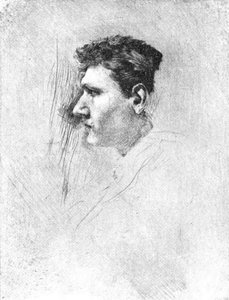
Robert Frederick Blum
1857 - 1903 , United States of America
Quick Facts
- Artistic Movement Or Style: Impressionism, Japonisme
- Artists Or Movements Influenced By This Artist: ['American Impressionism']
- Artists Who Influenced This Artist:
- Whistler
- Fortuny
- Duveneck
- Date Of Birth: July 9, 1857
- Date Of Death: June 8, 1903
- Full Name: Robert Frederick Blum
- Nationality: American
- Notable Artworks:
- In the Laundry
- Venetian Lace Makers
- Old Powhatan Chimney
- Music and the Dance
- Place Of Birth: Cincinnati, USA

