 Preview
 Send
Send Share
Share
 Details

 Download
 Similars
 X-Ray
X-Ray Diaporama
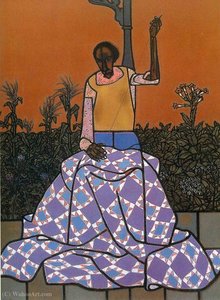
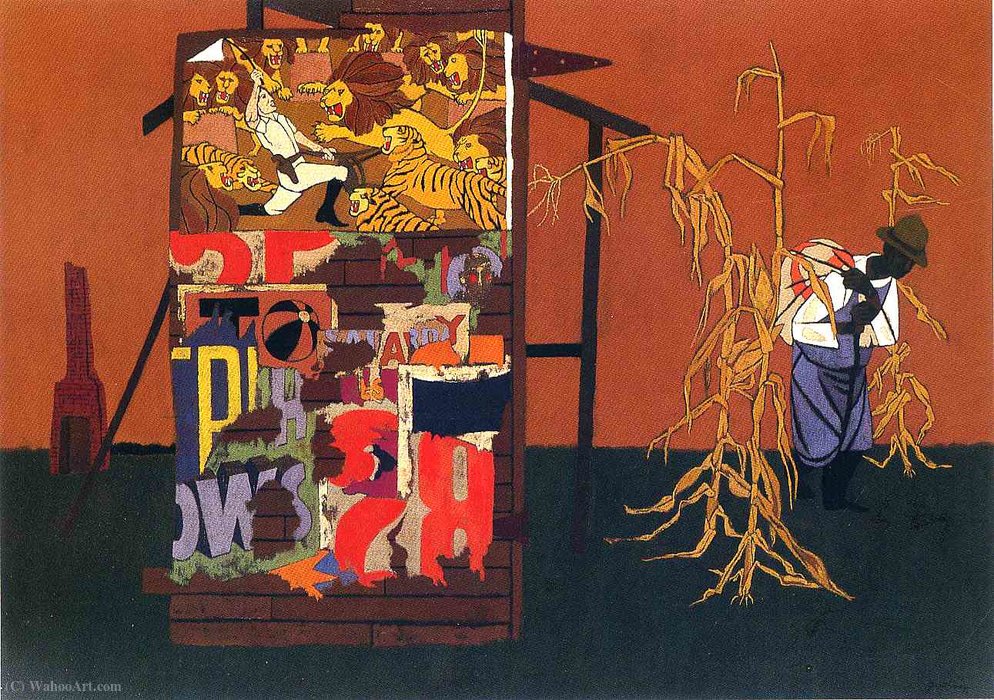
Untitled (878)
 Read More
Giclée / Art Print
Museum-quality giclée or canvas print with fast production and flexible finish options. ( Buy Hand Made Painting Buy Image)




































Pick from our preset sizes that match the artwork's original proportions.

You may enter your own dimensions to fit a specific frame or space. If your selected size does not match the original image's proportions, we will either crop the artwork or extend the image with a mirrored or solid-fill edge. A digital mockup will be sent for your approval before production begins.
Please note that the on-screen preview does not reflect the actual cropping or extension. Only the mockup will accurately show the final composition.
While custom sizes are available, we recommend selecting a dimension from the predefined list to preserve the original proportions.
Worldwide Delivery () in 2 weeks instead of standard 4/5 weeks. (18 August)

Free Worldwide Express Shipping

High-Quality Linen Canvas

Full Shipping Insurance

Customs Tax Refund Guarantee

True Color Matching Guarantee

60-Day Return Policy (Defects Only)

100% Money-Back Guarantee

Bulk Discount Offer
 Glass option is only available in size under 110 CM

Untitled (878)
Giclée / Art Print
Reproduction Size
-


Total Price
$ 63
Related Artworks
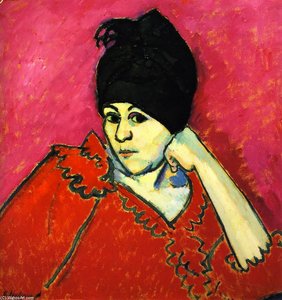
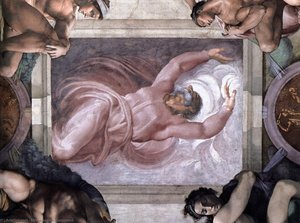
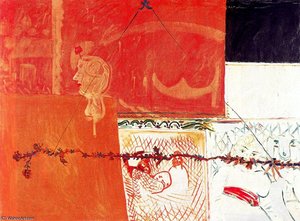
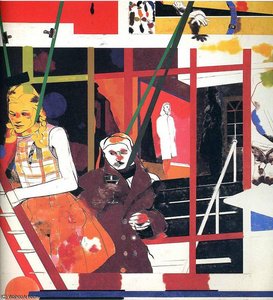
Artist Biography
The Crucible of Experience
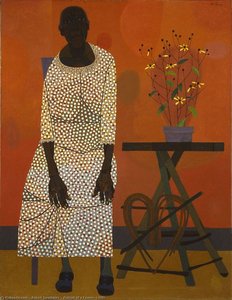
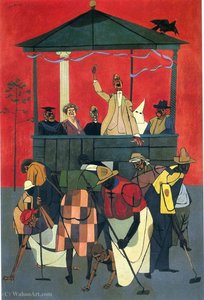
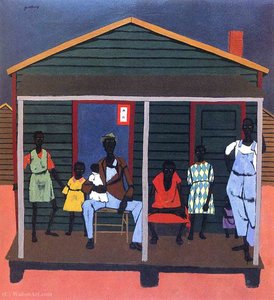
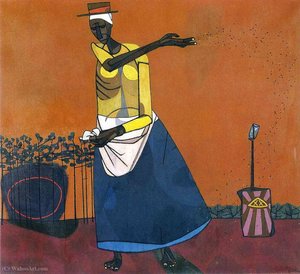
Robert Gwathmey’s journey into the heart of American Social Realism was forged in a crucible of profound personal loss. Born in 1903, his early years were shadowed by tragedy, as he witnessed the sudden deaths of both parents—his father lost to an industrial accident and his mother to a vehicular collision. This early encounter with the fragility of life instilled in him a deep-seated empathy for the vulnerable and the overlooked. His path to artistry was far from linear; after brief studies in business at North Carolina State College, he sought broader horizons, traveling aboard a freighter before refining his technique at the Maryland Institute Design and the prestigious Pennsylvania Academy of Fine Arts. It was here that the classical traditions of the past met the radical innovations of European modernism, setting the stage for a painter who would look at the world through a lens of both reverence and reconstruction.A Synthesis of Modernity and Tradition
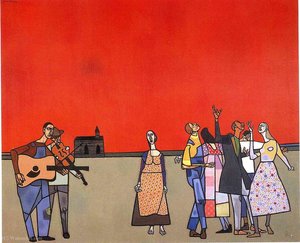
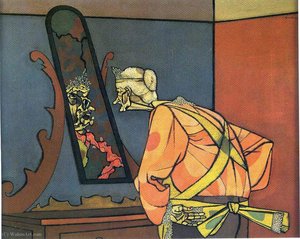
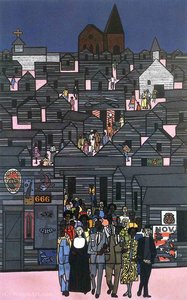
Gwathmey’s aesthetic was a masterful dialogue between the structured precision of geometric abstraction and the raw, emotive power of social realism. He did not merely depict his subjects; he distilled them. Drawing inspiration from the bold experimentation of Pablo Picasso, the vibrant palettes of Henri Matisse and Rufiona Tamayo, and the soulful textures of Vincent van Gogh, Gwathmey learned to simplify complex human experiences into powerful, symbolic forms. His work often utilized a unique vocabulary of shapes and colors to convey deeper social truths, transforming the mundane into the monumental.His artistic development was shaped by a diverse array of influences:
- The satirical edge of Honoré Daumier
- The grounded realism of Jean-François Millet
- The expressive colorism of Modernist masters
Capturing the Soul of Rural America
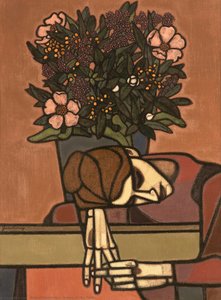
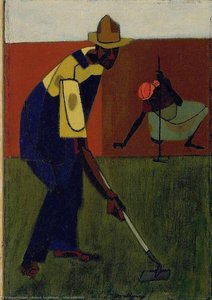
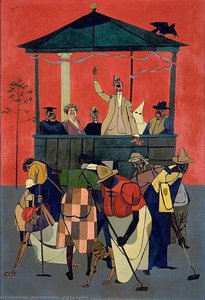
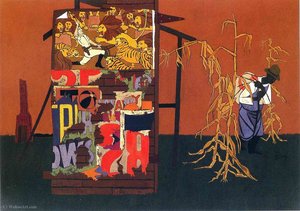
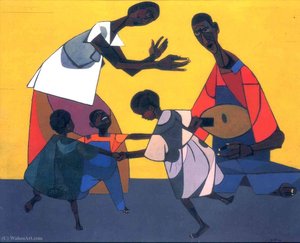
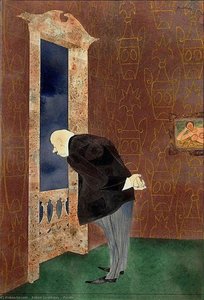
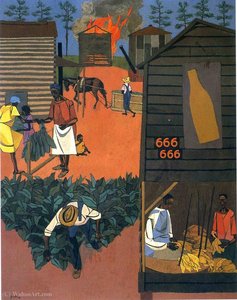
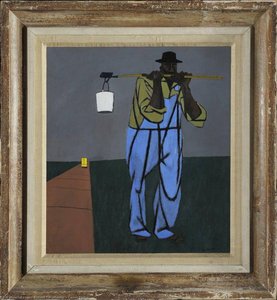
At the core of Gwathmey’s oeuvre lies a profound commitment to portraying the realities of rural America, particularly the lives of African American communities in the South. He possessed a rare ability to capture the quiet dignity of labor and the stillness of domestic life without descending into sentimentality. In works such as Man with Hoe (1944), he utilized earthy tones and bold, architectural lines to celebrate the strength of the laborer. Similarly, his 1945 masterpiece, Asleep at the Table, demonstrates a more lyrical side of his talent, where the boundaries between the human form and the domestic environment blur into a dreamlike state of peace.Gwathmey believed that an artist could never be truly separate from the world they inhabit. As he famously articulated, an artist must possess eyes that see the things that are almost forgotten. His legacy remains one of profound empathy, a visual testament to the beauty found in the struggles of ordinary people and the enduring dignity of the human condition.
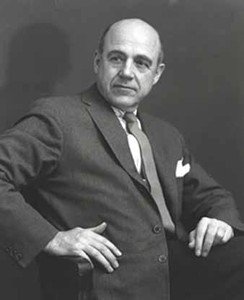
Robert Gwathmey
1903 - 1988
Quick Facts
- Artistic Movement Or Style: Social Realism
- Artists Or Movements Influenced By This Artist: ['Painters Eleven']
- Artists Who Influenced This Artist:
- Pablo Picasso
- Henri Matisse
- Vincent van Gogh
- Rufino Tamayo
- Date Of Birth: 1903
- Date Of Death: 1988
- Full Name: Robert Gwathmey
- Nationality: American
- Notable Artworks:
- Parade
- Untitled (219)
- Untitled (791)
- Place Of Birth: North Carolina State College, USA