 Preview
 Send
Send Share
Share
 Details

 Download
 Similars
 X-Ray
X-Ray Diaporama
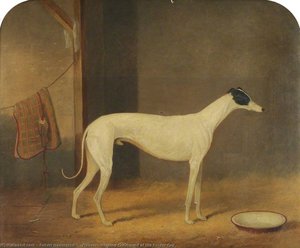
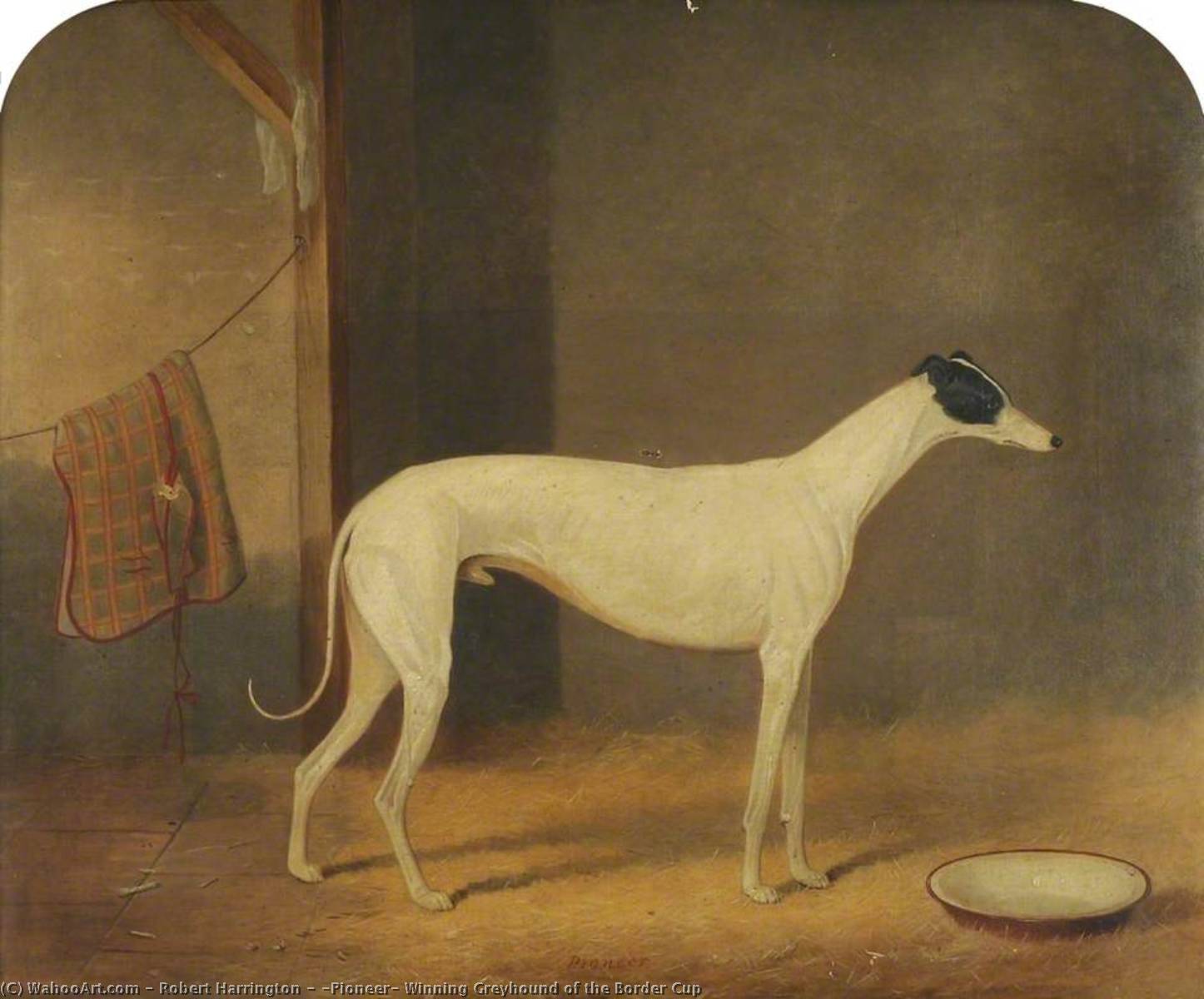
'Pioneer' Winning Greyhound of the Border Cup
 1860
1860 42.0 x 52.0 cm
 Read More
Hand Made Oil Reproduction
Hand-painted oil on canvas in your size and frame, made to order by our artists. ( Buy Print Buy Image)




































Pick from our preset sizes that match the artwork's original proportions.

You may enter your own dimensions to fit a specific frame or space. If your selected size does not match the original image's proportions, we will either crop the artwork or extend the painting with additional hand-painted elements. A digital mockup will be sent for your approval before production begins.
Please note that the on-screen preview does not reflect the actual cropping or extension. Only the mockup will accurately show the final composition.
While custom sizes are available, we recommend selecting a dimension from the predefined list to preserve the original proportions.
After order, ArtsDot.com team will email client for instructions and provide a mockup preview
Worldwide Delivery () in 3/4 weeks instead of standard 5 weeks. (1 September). No compromise on quality.

Free Worldwide Express Shipping

High-Quality Linen Canvas

Full Shipping Insurance

Customs Tax Refund Guarantee

True Color Matching Guarantee

60-Day Return Policy (Defects Only)

100% Money-Back Guarantee

Bulk Discount Offer
 Glass option is only available in size under 110 CM

'Pioneer' Winning Greyhound of the Border Cup
Reproduction Medium
Reproduction Size
-


Total Price
$ 263
Related Artworks










Artist Biography
The Soul of the British Wild: The Artistry of Robert Harrington
In the quiet, mist-laden landscapes of the nineteenth-century British countryside, a profound connection between the observer and the natural world was being forged through the brushstrokes of Robert Harrington. Born around 1800 in the historic city of Carlisle, Harrington emerged as a painter whose work served as a vital bridge between the rugged traditions of Northern England and a burgeoning global appreciation for wildlife. His life’s work was not merely a collection of anatomical studies, but an evocative dialogue with the fauna and flora of Northumberland and Cumbria. Through his eyes, the fleeting movement of a bird in flight or the stillness of a woodland stream became eternal, captured with a sensitivity that transcende simple documentation to touch upon the very essence of the wild.
Harrington’s artistic journey was deeply rooted in the Romantic ideals that swept through Europe during his formative years. While biographical records from his early life remain somewhat elusive, it is clear that he was shaped by the atmospheric traditions of his home region. He likely drew inspiration from local masters who prioritized the emotional resonance of a landscape over rigid, photographic realism. This influence manifested in a style that embraced the lyrical and the sublime. His fascination with ornithology—the scientific study of birds—provided him with a foundation of meticulous detail, yet he never allowed technical accuracy to stifle the expressive power of his work. Instead, he used his knowledge to breathe life into his subjects, ensuring that every feather and sinew felt imbued with a living spirit.
Technique and the Tapestry of Nature
To gaze upon a Harrington canvas is to witness a masterclass in atmospheric layering. He possessed a singular ability to manipulate light and shadow, employing thin, delicate washes of color to build depth and mood. This technique allowed him to recreate the shifting qualities of the British sky—the heavy gloom of an approaching storm or the soft, golden glow of a setting sun over the heather moorlands. His brushwork was characterized by a beautiful duality; while his depictions of wildlife often required a precise, observant hand, his landscapes utilized a looser, more dynamic stroke. This fluidity conveyed the rustle of leaves in a woodland breeze and the rhythmic movement of water through mountain streams, creating a sense of motion that draws the viewer into the scene.
The recurring motifs within his oeuvre speak to a deep-seated reverence for the serenity and grandeur of the wilderness. His paintings frequently feature:
- The rugged moorlands of Northern England, rendered with textures that evoke the tactile nature of heather and peat.
- Intimate wildlife portraits, where birds and mammals are captured in moments of quiet dignity or sudden action.
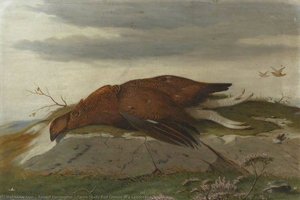
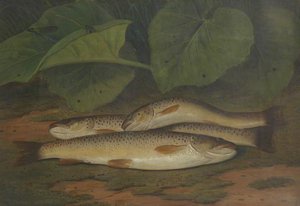
- Luminous water scenes, such as his notable depictions of trout in local streams, which highlight his skill in capturing transparency and reflection.
Legacy and Historical Resonance
Though Harrington’s primary focus remained the British landscape, his artistic vision possessed a resonance that extended far beyond the borders of Cumbria. The emotional depth and connection to nature found in his work mirrored the sensibilities of the developing Canadian art scene, making him a figure of significant historical interest for those studying the evolution of naturalist painting across the Atlantic. His ability to find the extraordinary within the ordinary—the majesty in a common bird or the drama in a simple woodland clearing—established a standard for wildlife art that balanced scientific curiosity with poetic expression.
Today, the works of Robert Harrington stand as a testament to a period when art and nature were inextricably linked. He remains a celebrated figure for his ability to capture the fleeting beauty of the natural world, leaving behind a legacy of canvases that continue to evoke the hauntingly beautiful landscapes of a bygone era. His contribution to the genre of wildlife and landscape painting ensures that the spirit of the nineteenth-century British countryside remains vibrantly alive in the modern imagination.
Quick Facts
- Artistic Movement Or Style: Astronomy
- Artists Or Movements Influenced By This Artist: ['Astronomers']
- Artists Who Influenced This Artist: ['James Christy']
- Date Of Birth: October 21, 1942
- Date Of Death: January 23, 1993
- Full Name: Robert Sutton Harrington
- Nationality: American
- Notable Artworks: ['Pluto Satellite Charon']
- Place Of Birth: Virginia