

 Preview
 Send
Send Share
Share
 Details

 Download
 Similars
 X-Ray
X-Ray Diaporama
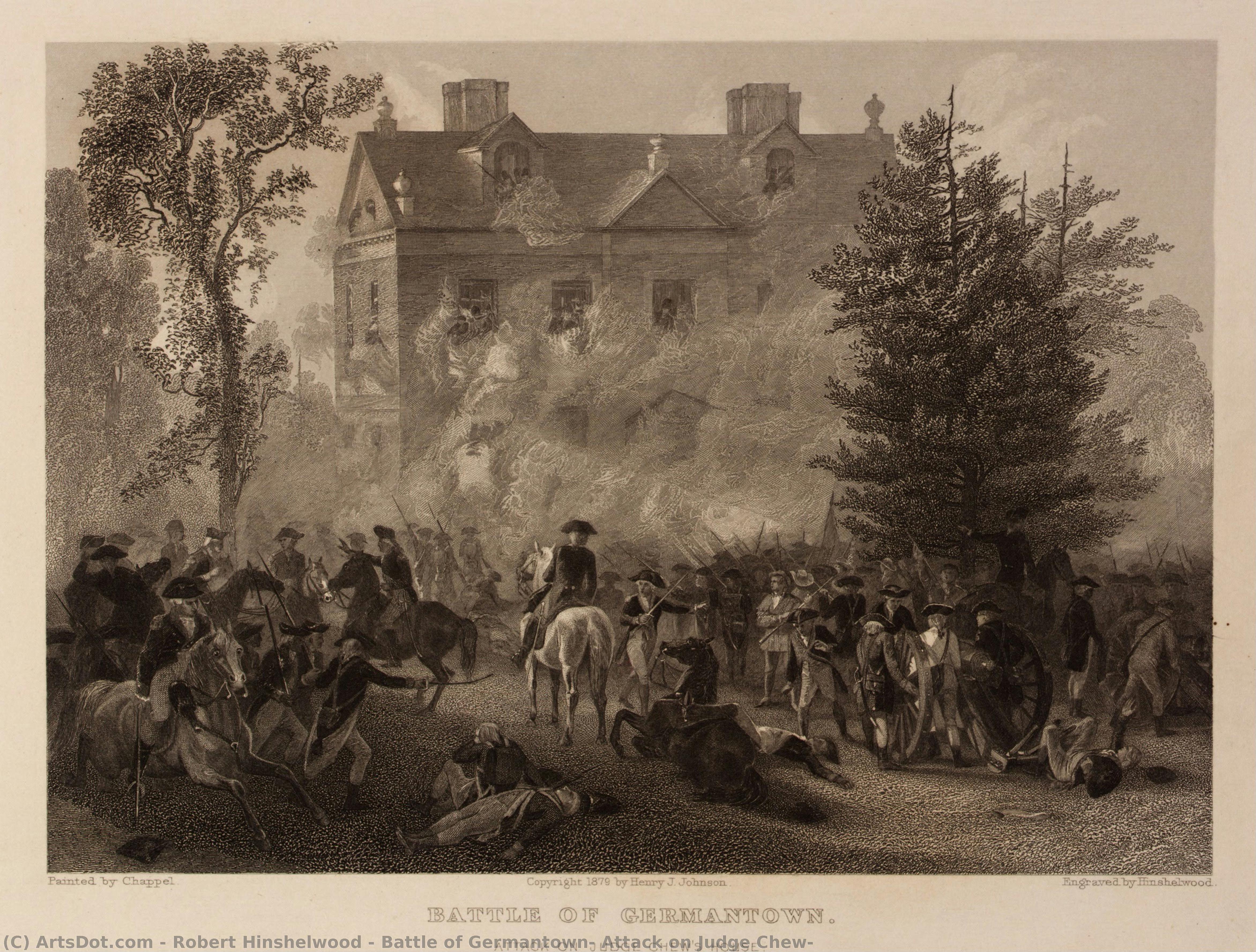
Battle of Germantown, Attack on Judge Chew


 Read More
Purchase a high-resolution, enhanced digital image, far superior to the online preview.
Each file is meticulously prepared by our in-house specialists using advanced tools and expert manual retouching. We ensure every image has exceptional clarity, precise color accuracy, and fine detail.
The final file is delivered via email within 72 hours, optimized for immediate use in professional, editorial, and print environments. This is the same quality trusted by top-tier design studios, publishers, and galleries.
Digital Image
Download a high-resolution file for personal display, printing, and creative projects. ( Buy Print Buy Hand Made Painting)
Included in Every Digital Image Order
Expert Digital Delivery, Guaranteed
When you choose ArtsDot.com, you're not just getting an image - you're receiving a professionally enhanced digital artwork, crafted with precision and backed by a satisfaction guarantee. Here's everything that comes with your order, automatically:

Fast Email Delivery
Your high-resolution digital image file will be emailed to you within 72 hours of ordering - ready for immediate use.

AI-Enhanced Digital File
Your artwork is professionally optimized using advanced AI tools and manual editing, ensuring maximum detail, clarity, and color accuracy.

Free Lifetime Re-Delivery
Accidentally deleted or lost your file? No worries - we'll resend it to you anytime, free of charge.

No Import Fees - Ever
Enjoy your artwork instantly with zero customs, duties, or delivery fees - digital downloads are always tax-free.

Color Accuracy Guarantee
We ensure your digital image reflects the original colors as closely as possible using professional tools and color management.

60-Day Satisfaction Guarantee
If you're not satisfied with your digital image, we'll revise it or refund 100% within 60 days - no questions asked.

100% Money-Back Guarantee
Not satisfied? Get a full refund within 60 days of receiving your digital file - no questions asked.

Bulk Order Discounts
Buy 3 images, save 10% - Buy 5, save 15% - Buy 10+, save 20%. Great for creative projects, galleries, and agencies.
The Tumultuous Echoes of Conflict
To gaze upon this depiction of the Battle of Germantown is to be instantly transported across the veil of time, into the raw, visceral heart of the American Revolutionary War. It is not merely a record of troop movements; it is a captured moment of chaos, courage, and desperate human endeavor. The scene pulses with an energy that seems almost palpable, drawing the viewer into the fray where history was being forged by sheer grit and determination. One can almost hear the clatter of hooves on cobblestones and the shouted commands echoing through the air.
A Study in Historical Drama and Composition
The composition itself is a masterclass in dramatic tension. Robert Hinshelwood has orchestrated a complex tableau featuring mounted figures surging forward, their horses adding dynamic diagonal lines that guide the eye deep into the scene. These riders approach a structure—perhaps Judge Chew's house, as historical context suggests—which serves as both a focal point and a symbol of the objective sought in the conflict. The surrounding crowd, a tapestry of civilian and military figures, adds layers of narrative depth. They are not passive observers; their varied postures suggest anticipation, fear, and unwavering support for the cause unfolding before them. The black and white medium, characteristic of its engraving style, strips away the distraction of color, forcing an intense focus on form, gesture, and the sheer weight of the human drama.
Technique and Evocative Detail
The technique employed here speaks to the skilled hand of a master engraver. The interplay between deep shadow and stark highlight is used not just for realism, but for emotional emphasis. Notice how the artist renders the musculature of the horses and the determined set of the men's faces; these details elevate the piece beyond mere illustration into the realm of high art. For those considering a reproduction for an interior space, this engraving style offers unparalleled graphic impact. It lends a sense of weighty gravitas to any room, suggesting intellectual depth and a connection to pivotal moments in Western history.
Symbolism of Conflict and Resilience
Beyond the immediate action, the artwork resonates with deeper symbolism. The battle itself represents more than just military strategy; it embodies the struggle for ideals—the fight for liberty against overwhelming odds. The juxtaposition of organized military force against the backdrop of civilian life speaks to how deeply conflict permeates the very fabric of community. It is a meditation on resilience: the human spirit, represented by these gathered figures, refusing to yield even when surrounded by danger and uncertainty.
A Legacy for the Modern Collector
Owning this piece is acquiring a tangible link to a defining moment in American history. Whether displayed in a study dedicated to military history or integrated into a more eclectic gallery setting, it commands attention. It invites contemplation on themes of sacrifice, duty, and the enduring cost of freedom. A reproduction allows one to bring the dramatic energy and historical weight of this powerful engraving into your personal sanctuary, making every viewing an immersive journey back to the crucible of revolution.
Related Artworks
Artist Biography
Edward Lear: A Life of Whimsical Observation and Artistic Innovation
Born in May 1812, Edward Lear’s life was a remarkable tapestry woven from seemingly disparate threads – a career as a draughtsman, musician, poet, illustrator, and naturalist. His journey, marked by both professional success and personal eccentricity, ultimately cemented his place as one of the most distinctive figures of the Victorian era, celebrated for his unique blend of scientific observation and imaginative storytelling. From humble beginnings, Lear’s artistic development was shaped not through formal training but by a deeply ingrained curiosity about the natural world and an unconventional approach to creative expression.
Early life experiences profoundly influenced Lear's artistic sensibilities. A childhood illness that left him partially deaf instilled in him a heightened awareness of sound and a fascination with the details of the environment. This sensitivity, coupled with his father’s profession as a botanist, fostered a lifelong love of nature and a meticulous eye for observation – qualities that would become central to his work. His early employment as a draughtsman for the Zoological Society provided him with invaluable experience in rendering birds and animals with remarkable accuracy, skills he later honed through extensive travels throughout Europe and beyond.
Lear’s artistic output spanned several distinct genres, each showcasing his unique talents. As an illustrator, he produced detailed drawings of exotic birds and plants for publications like *A Sketchbook of Birds*, contributing significantly to the burgeoning field of ornithological illustration. However, it is perhaps his literary work that has secured him enduring fame. His limericks, characterized by their playful absurdity and inventive wordplay, captured the imaginations of a generation and established him as a master of nonsense verse. Furthermore, his travel books – *A Visit to Europe and the Holy Land*, *The Home Country* – were not merely accounts of journeys but richly illustrated narratives filled with whimsical observations and fantastical encounters. These works demonstrated a remarkable ability to blend scientific detail with imaginative storytelling, creating a distinctive artistic voice.
Lear’s work during the 1840s and 50s is particularly noteworthy for its exploration of the Cornish coast and the Isle of Wight. His watercolors of these landscapes are characterized by their atmospheric quality, capturing the shifting light and dramatic contours of the coastline with a sensitivity that belies his scientific training. He developed a distinctive technique, employing loose washes and subtle gradations of color to evoke a sense of mood and atmosphere – a style often described as “atmospheric perspective.” His depictions of coastal scenes, particularly those featuring cliffs, rocks, and seabirds, reveal a deep appreciation for the beauty and power of nature.
Beyond his illustrations and travel books, Lear’s influence extended to music. He composed twelve settings of Tennyson's poems, demonstrating a surprising musical talent that further enriched his artistic repertoire. His work as a poet, particularly his limericks, continues to delight readers today, offering a charming glimpse into the mind of a truly original artist. Edward Lear died in January 1888, leaving behind a legacy of whimsical observation, imaginative storytelling, and a unique contribution to Victorian art and literature.
The Elgin Marbles and Artistic Context
1812 marks a pivotal year within the broader artistic landscape of Europe. The year witnessed significant events that shaped the cultural climate, including the ongoing Napoleonic Wars and the removal of the Elgin Marbles from the Parthenon in Athens – an event with profound implications for art history. This act, undertaken by Lord Elgin under authorization from the British government, not only provided a wealth of sculptural material but also ignited debates about artistic ownership, historical preservation, and the role of the state in safeguarding cultural heritage.
The removal of these iconic sculptures underscored a prevailing interest in classical antiquity during the early 19th century. The Neoclassical movement, which had dominated European art since the late 18th century, drew inspiration from the artistic achievements of ancient Greece and Rome. Artists sought to emulate the ideals of balance, harmony, and proportion that characterized classical sculpture, aiming to create works that reflected the perceived virtues of reason and order. The Elgin Marbles, with their dynamic compositions and expressive figures, exemplified these aspirations.
Furthermore, 1812 coincided with the publication of Hokusai’s *Etchings of Waterbirds*, a groundbreaking work that demonstrated the potential of woodblock printing as an artistic medium. This publication influenced artists across Europe, encouraging experimentation with new techniques and approaches to representation. The year also saw the completion of Pietro Benvenuti's *The Oath of the Saxons* and Alexandre Carse’s *Littlehampton Pier*, showcasing the continued importance of historical and mythological subjects in European painting.
Key Artistic Achievements and Techniques
Edward Lear’s artistic achievements are characterized by a remarkable synthesis of observation, imagination, and technical skill. His illustrations for bird books, particularly his depictions of birds in flight, demonstrate an unparalleled ability to capture the dynamism and grace of these creatures. His watercolor landscapes, such as those depicting the Cornish coast, reveal a deep understanding of atmospheric perspective and color theory, creating images that are both visually stunning and emotionally evocative.
Lear’s limericks, while seemingly frivolous, demonstrate a sophisticated use of language and a keen awareness of rhythm and rhyme. His travel books combined detailed descriptions of landscapes and cultures with whimsical anecdotes and imaginative narratives, offering readers a unique blend of information and entertainment. His work consistently showcased his ability to translate observation into art, whether through meticulous botanical drawings or fantastical poetic verse.
A key element of Lear’s artistic style was his use of loose washes and subtle gradations of color in his watercolors. He avoided sharp outlines and precise details, instead opting for a more atmospheric approach that conveyed the mood and feeling of a scene. This technique, combined with his meticulous attention to detail, created images that are both visually engaging and emotionally resonant.
Legacy and Historical Significance
Edward Lear’s legacy extends far beyond his individual works. His unique blend of scientific observation and imaginative storytelling has influenced generations of artists, writers, and poets. His limericks continue to be recited and enjoyed today, demonstrating the enduring appeal of his playful wit and inventive wordplay.
Lear's work is particularly significant in the context of Victorian art and literature. He represents a counterpoint to the prevailing emphasis on realism and historical accuracy, embracing instead a more subjective and imaginative approach to artistic expression. His exploration of the natural world, combined with his whimsical narratives, reflects a broader shift towards Romanticism – an artistic movement that emphasized emotion, imagination, and the beauty of nature.
Furthermore, Lear’s career highlights the importance of independent artists in a rapidly changing cultural landscape. His success as a draughtsman, illustrator, musician, poet, and travel writer demonstrates the versatility of artistic talent and the potential for individuals to forge their own unique paths. Edward Lear remains an enduring figure of Victorian art and literature, celebrated for his whimsical observation, imaginative storytelling, and lasting contribution to the creative spirit.

robert hinshelwood
1812 - , United Kingdom
Quick Facts
- Artistic Movement Or Style: Literary nonsense, Illustration
- Artists Or Movements Influenced By This Artist:
- Lewis Carroll
- Victorian Illustration
- Artists Who Influenced This Artist:
- William Blake
- John Tenniel
- Date Of Birth: May 12, 1812
- Date Of Death: January 29, 1888
- Full Name: Edward Lear
- Nationality: English
- Notable Artworks:
- The Fortress of San George
- Limner's Book of Nonsense
- Place Of Birth: England

