 Preview
 Send
Send Share
Share
 Details

 Download
 Similars
 X-Ray
X-Ray Diaporama
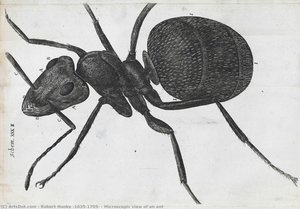
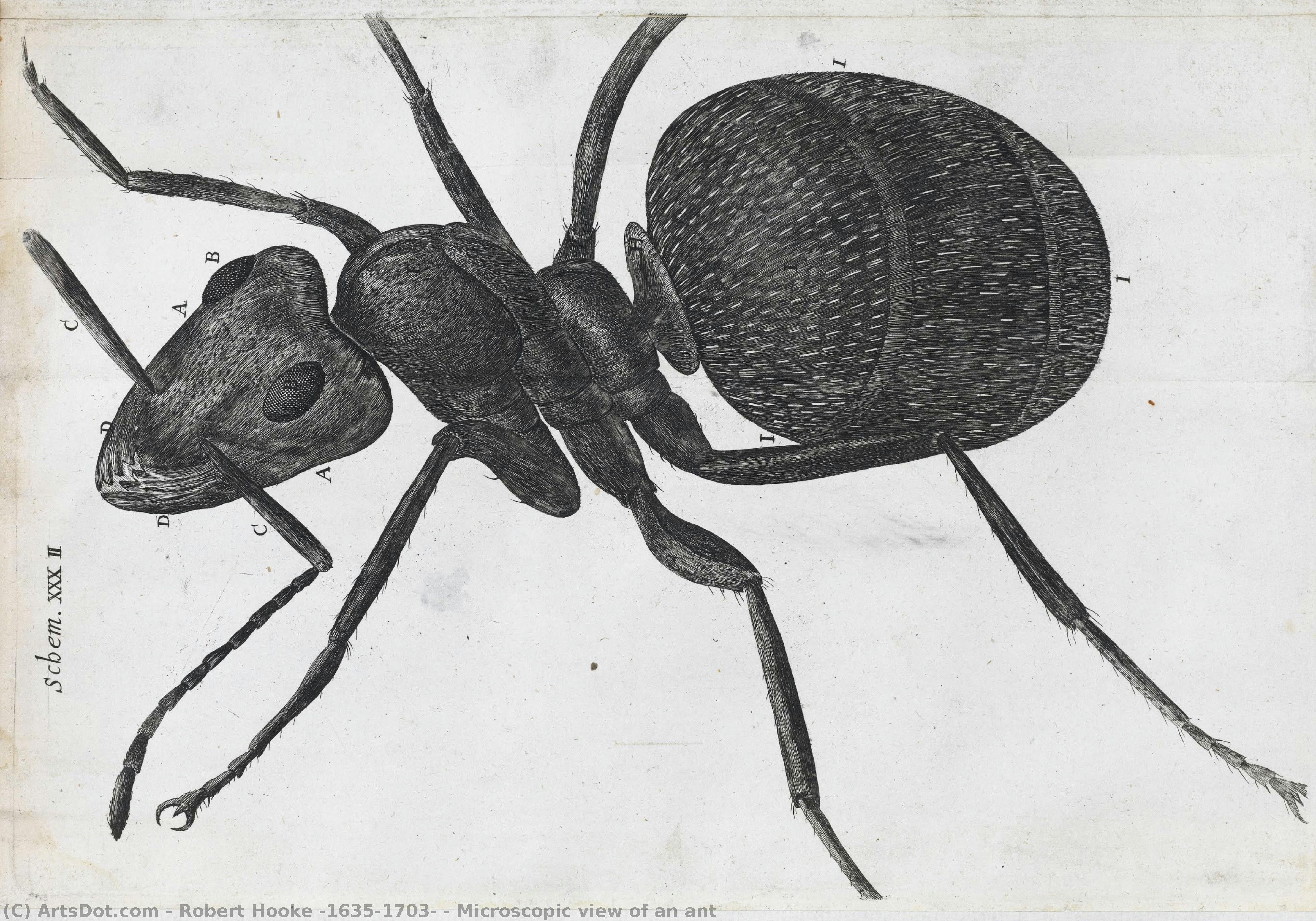
Microscopic view of an ant


 Read More
Hand Made Oil Reproduction
Hand-painted oil on canvas in your size and frame, made to order by our artists. ( Buy Print Buy Image)




































Pick from our preset sizes that match the artwork's original proportions.

You may enter your own dimensions to fit a specific frame or space. If your selected size does not match the original image's proportions, we will either crop the artwork or extend the painting with additional hand-painted elements. A digital mockup will be sent for your approval before production begins.
Please note that the on-screen preview does not reflect the actual cropping or extension. Only the mockup will accurately show the final composition.
While custom sizes are available, we recommend selecting a dimension from the predefined list to preserve the original proportions.
After order, ArtsDot.com team will email client for instructions and provide a mockup preview
Worldwide Delivery () in 3/4 weeks instead of standard 5 weeks. (17 August). No compromise on quality.

Free Worldwide Express Shipping

High-Quality Linen Canvas

Full Shipping Insurance

Customs Tax Refund Guarantee

True Color Matching Guarantee

60-Day Return Policy (Defects Only)

100% Money-Back Guarantee

Bulk Discount Offer
 Glass option is only available in size under 110 CM

Microscopic view of an ant
Reproduction Medium
Reproduction Size
-


Total Price
$ 263
Related Artworks
Artist Biography
The Architect of the Unseen: The Life and Legacy of Robert Hooke
In the grand tapestry of the seventeenth century, few figures shimmered with as much restless, multifaceted brilliance as Robert Hooke. Often whispered about in the same breath as the giants of the Scientific Revolution, Hooke was a man whose intellect refused to be confined by the boundaries of a single discipline. Born in 1635 in the quiet village of Freshwater on the Isle of Wight, he emerged from a modest background to become a polymath of unparalleled reach. His mind functioned like the very instruments he perfected—precise, penetrating, and capable of bringing the most minute details into sharp, undeniable focus. To study Hooke is not merely to study a scientist, but to witness the birth of modern observation, where the invisible worlds of biology and the structural complexities of architecture began to merge under a single, inquisitive gaze.
The trajectory of Hooke’s life was defined by an insatiable hunger for discovery that often pushed him into the very heart of the era's most intense intellectual battles. His early years, marked by self-directed learning and a profound aptitude for mathematics, led him to the prestigious Christ Church, Oxford. It was here that his collaborative spirit flourished, most notably through his partnership with Robert Boyle. Hooke was the mechanical genius behind much of the era's experimental progress; he designed the sophisticated vacuum pumps that allowed Boyle to explore the fundamental laws of gases, effectively providing the physical stage upon which the drama of modern chemistry could unfold. His role as the first Curator of Experiments for the Royal Society placed him at the epicenter of a new way of knowing—a movement where truth was no longer found in ancient texts, but in the repeatable, visible evidence of the laboratory.
Micrographia and the Revelation of the Cell
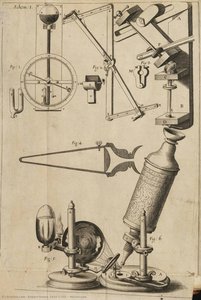
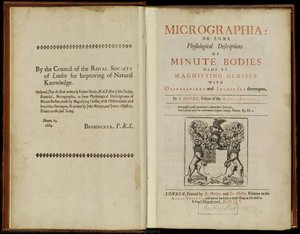
Perhaps the most breathtaking chapter in Hooke’s storied career arrived in 1665 with the publication of Micrographia. This was not merely a scientific treatise; it was a visual masterpiece that bridged the gap between rigorous science and exquisite art. Utilizing a compound microscope of his own ingenious design, Hooke turned his lens toward the minuscule, revealing a hidden universe that had remained entirely inaccessible to human perception. Through his meticulous observations, he documented the intricate structures of insects, the delicate textures of plants, and the fascinating complexity of a flea. It was within these pages that he first observed the tiny, porous compartments of cork, which he famously termed "cells"—a nomenclature that would forever anchor the foundation of biological science.
The impact of Micrographia cannot be overstated. The detailed illustrations, which captured the structural beauty of the microscopic world, captivated the public imagination and transformed the way humanity perceived its place in nature. Hooke’s ability to translate the unseen into the visible was a feat of both scientific precision and artistic sensitivity. He demonstrated that the smallest fragment of life possessed a structural grandeur comparable to the most magnificent cathedral. This period of his work represents a profound shift in human consciousness, as the boundaries of the "natural" were expanded to include the microscopic, forever altering the trajectory of biology and optics.
A Legacy Written in Stone and Physics
Beyond the lens of the microscope, Hooke’s influence permeated the very fabric of the physical world. As a surveyor and architect, he played a pivotal role in the reconstruction of London following the Great Fire of 1666. His work as a surveyor was essential in restoring order to a devastated cityscape, and his architectural insights helped shape the resilience of the urban landscape. This same structural intuition applied to his work in physics; his formulation of Hooke's Law—the principle describing the elasticity of materials—remains a fundamental concept in engineering and mechanics to this day. He possessed an uncanny ability to find the underlying mathematical laws that governed both the tension of a spring and the movement of the heavens.
Yet, his scientific journey was often shadowed by the intense rivalries of his time, most notably with Isaac Newton. While history has sometimes unfairly obscured Hooke's contributions in favor of Newton's more polished narratives, modern scholarship has worked tirelessly to restore him to his rightful place as "England's Leonardo." From investigating the rotation of Mars and Jupiter to hypothesizing the inverse square law of gravity, Hooke’s fingerprints are found on nearly every major scientific advancement of his era. He remains a symbol of the pure, unadulterated pursuit of knowledge—a man who looked at a tiny cell or a vast star and saw the same beautiful, complex, and interconnected universe.
robert hooke (1635-1703)
1635 - 1703 , United Kingdom
Quick Facts
- Artistic Movement Or Style: Scientific Illustration
- Artists Or Movements Influenced By This Artist: Isaac Newton
- Artists Who Influenced This Artist: Robert Boyle
- Date Of Birth: 1635
- Full Name: Robert Hooke
- Nationality: English
- Notable Artworks: ['Micrographia']
- Place Of Birth: Freshwater, United Kingdom