 Send
Send Share
Share
 Details

 Download
 Similars
 Diaporama
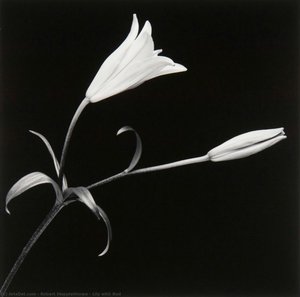
Lily with Bud


 Read More
Hand Made Oil Reproduction
Hand-painted oil on canvas in your size and frame, made to order by our artists. ( Buy Print Buy Image)




































Pick from our preset sizes that match the artwork's original proportions.

You may enter your own dimensions to fit a specific frame or space. If your selected size does not match the original image's proportions, we will either crop the artwork or extend the painting with additional hand-painted elements. A digital mockup will be sent for your approval before production begins.
Please note that the on-screen preview does not reflect the actual cropping or extension. Only the mockup will accurately show the final composition.
While custom sizes are available, we recommend selecting a dimension from the predefined list to preserve the original proportions.
After order, ArtsDot.com team will email client for instructions and provide a mockup preview
Worldwide Delivery () in 3/4 weeks instead of standard 5 weeks. (20 August). No compromise on quality.

Free Worldwide Express Shipping

High-Quality Linen Canvas

Full Shipping Insurance

Customs Tax Refund Guarantee

True Color Matching Guarantee

60-Day Return Policy (Defects Only)

100% Money-Back Guarantee

Bulk Discount Offer
 Glass option is only available in size under 110 CM

Lily with Bud
Reproduction Medium
Reproduction Size
-


Total Price
$ 263
Artwork Description
The Ethereal Precision of Mapplethorpe’s Botanical Vision
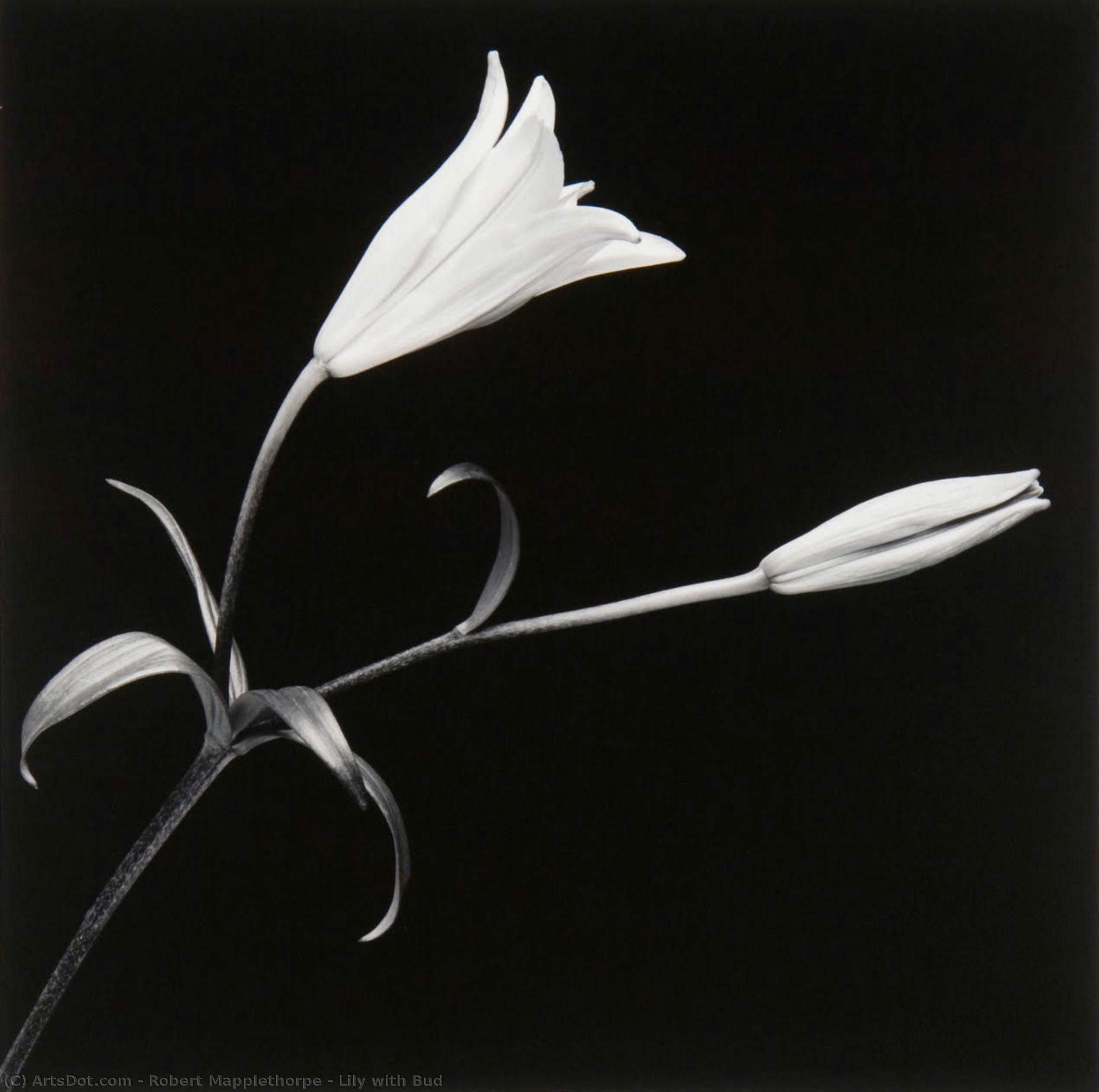
In the quiet, monochromatic realm of Robert Mapplethorpe’s "Lily with Bud," beauty is not merely observed; it is sculpted from light and shadow. Created in 1989, this profound photograph serves as a masterclass in the art of the still life, capturing a single lily plant that stands as a testament to the artist's singular ability to find the divine within the organic. The composition is deceptively simple, presenting a fully blossomed flower alongside its nascent bud on a solitary stem. Yet, beneath this surface simplicity lies a complex exploration of form and texture that commands the viewer's attention, drawing them into a meditative state where every petal and curve feels monumental.
Mapplethorpe’s approach to this botanical subject transcends mere documentation, leaning instead toward a highly stylized aesthetic influenced by the Surrealist pioneers. By utilizing a stark, pitch-black background, he isolates the lily, stripping away the distractions of the natural world to focus entirely on the interplay of light and geometry. The vertical stem acts as a structural anchor, guiding the eye upward in a deliberate gesture that elevates the plant from a common garden specimen to an object of sculptural reverence. There is a rhythmic harmony found in the way the organic, flowing lines of the petals contrast with the precise, almost architectural clarity of the composition.
A Symphony of Chiaroscuro and Texture
The technical brilliance of "Lily with Bud" lies in Mapplethorpe’s mastery of large-format black-and-white photography. Through meticulous exposure and a sophisticated command of tonal range, he achieves a dramatic chiaroscuro effect that breathes life into the silver gelatin tradition. The highlights on the flower's surface possess a luminous, satin sheen, reminiscent of polished ivory or fine marble, while the deep, velvety shadows provide a sense of infinite depth. This extreme contrast does more than just define shape; it creates a palpable texture that invites the viewer to imagine the smoothness of the petals and the firm, resilient strength of the stem.
For the discerning collector or interior designer, this piece offers an unparalleled sense of elegance and sophistication. The photograph’s ability to balance high-contrast drama with a serene, tranquil atmosphere makes it a versatile cornerstone for any curated space. Whether placed in a minimalist modern gallery or as a focal point in a luxurious, classically styled room, the artwork brings a sense of timelessness. It is an image that does not merely decorate a wall but transforms the very energy of a room, offering a window into a world where nature and artifice meet in perfect, breathless equilibrium.
Symbolism and the Fragility of Existence
Beyond its formal excellence, "Lily with Bud" resonates on a deeply emotional level, touching upon themes of purity, growth, and the inevitable passage of time. The juxtaposition of the mature, open bloom with the tightly wound bud serves as a poignant metaphor for the cycle of life—the fleeting peak of perfection standing alongside the promise of what is yet to come. There is an inherent fragility in the way the light catches the delicate edges of the petals, reminding us of the ephemeral nature of beauty itself.
Mapplethorpe’s work often navigated the boundaries between the beautiful and the provocative, and even in this botanical study, one can sense a subtle, underlying sensuality. The curves of the lily are rendered with such anatomical precision that they evoke a sense of living, breathing vitality. To possess a reproduction of this work is to hold a piece of photographic history—a fragment of an era defined by an uncompromising search for truth through the lens of aesthetic perfection. It remains an enduring inspiration for those who find profound meaning in the quiet, powerful details of the natural world.
Related Artworks
Artist Biography
A Life Forged in Form: The World of Robert Mapplethorpe
Robert Mapplethorpe, a name synonymous with both breathtaking beauty and profound controversy, remains one of the most influential photographers of the 20th century. Born in Floral Park, New York, in 1946, his journey was not one of immediate artistic recognition but rather a gradual evolution fueled by experimentation, mentorship, and an unwavering commitment to exploring the boundaries of form and desire. Initially drawn to graphic arts at Pratt Institute, Mapplethorpe quickly found himself chafing against traditional academic constraints, ultimately leaving before completing his degree. This departure wasn’t a rejection of art itself, but a search for a medium that could more directly translate his burgeoning vision – a vision deeply influenced by artists like Joseph Cornell and Marcel Duchamp, whose embrace of the found object and conceptual play resonated with his own developing aesthetic sensibilities. These early years were marked by mixed-media collages, intricate assemblages born from salvaged materials and cut images, hinting at the formal precision and thematic concerns that would later define his photographic work.The Polaroid Genesis and a Creative Partnership
The pivotal moment arrived with the acquisition of a Polaroid camera in 1970. This wasn’t merely a change in tools; it was a revelation. The immediacy of the Polaroid process allowed Mapplethorpe to bypass traditional darkroom techniques, focusing instead on composition, light, and shadow – elements that would become hallmarks of his style. Initially, these Polaroids were integrated into his collages, but they soon began to assert their independence, revealing a unique power in their stark black and white tonality. Simultaneously, a deeply significant relationship blossomed with poet and musician Patti Smith. Their connection, spanning from 1967 to 1972, was one of mutual artistic support and inspiration. Smith became a frequent subject for Mapplethorpe’s lens, her raw energy and bohemian spirit captured in images that possess an intimate vulnerability. This period wasn't just about romantic partnership; it was a crucible where both artists honed their craft, challenging each other to push creative boundaries.Mastering the Form: Style, Subjects, and Controversy
Mapplethorpe’s photographic style is characterized by a rigorous formalism – an emphasis on composition, symmetry, and the interplay of light and shadow reminiscent of classical sculpture. He wasn't simply documenting his subjects; he was *constructing* them, elevating everyday objects and human forms to iconic status through meticulous technique. His subject matter was remarkably diverse: celebrity portraits featuring figures like Andy Warhol and Deborah Harry, exquisitely rendered floral still lifes – particularly orchids and calla lilies – and strikingly intimate self-portraits. However, it was his exploration of the BDSM subculture in 1970s and 80s New York City that ignited significant controversy. These images, unflinching in their depiction of sexuality and power dynamics, challenged conventional notions of taste and morality, sparking debates about censorship and artistic freedom. Mapplethorpe didn’t shy away from these controversies; he embraced them as an inherent part of his artistic practice, believing that art should provoke thought and challenge societal norms. He frequently referenced religious or classical imagery within his work, creating a compelling dialogue between contemporary subjects and historical art forms, further complicating interpretations and adding layers of meaning.Legacy and Lasting Impact
The mentorship of art curator Sam Wagstaff proved instrumental in Mapplethorpe’s career trajectory, providing crucial financial support and guidance during his formative years. Throughout the 1980s, Mapplethorpe exhibited extensively, gaining increasing recognition within the art world culminating in a major retrospective at the Whitney Museum of American Art in 1988 – a landmark achievement that solidified his position as a significant contemporary artist. However, this success was shadowed by controversy surrounding *Robert Mapplethorpe: The Perfect Moment* exhibition, which ignited fierce debates about public funding for art deemed obscene. Tragically, Mapplethorpe succumbed to AIDS in 1989, leaving behind a vast and complex body of work that continues to resonate today. Following his death, the Robert Mapplethorpe Foundation was established to preserve his artistic legacy, support medical research related to HIV/AIDS, and promote photography as an art form. His influence extends far beyond the realm of photography, impacting generations of artists with his bold exploration of sexuality, formalist approach, and unwavering commitment to pushing creative boundaries. Robert Mapplethorpe’s work remains a subject of ongoing discussion and analysis, cementing his place as one of the most important – and often challenging – American artists of the 20th century. He elevated photography to a respected art form, proving that it could be more than just documentation; it could be sculpture, poetry, and provocation all rolled into one striking image.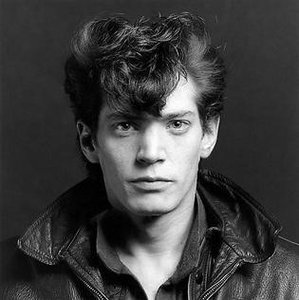
Robert Mapplethorpe
1946 - 1989 , United States of America
Quick Facts
- Artistic Movement Or Style: Formalism, Photography
- Artists Or Movements Influenced By This Artist:
- Contemporary artists
- Photographers
- Artists Who Influenced This Artist:
- Joseph Cornell
- Marcel Duchamp
- George Dureau
- Date Of Birth: 1946
- Date Of Death: 1989
- Full Name: Robert Mapplethorpe
- Nationality: American
- Notable Artworks:
- Polaroids
- Flowers
- Nudes
- Place Of Birth: Floral Park, USA
Related Articles

Monochrome Visions: Exploring the Aesthetic & Historical Significance of Black & White Photography
Explore the rich history & artistic power of black and white photography. From early techniques to iconic masters like Ansel Adams, discover why monochrome continues to captivate art lovers today. Expert insights for collectors.

White on Canvas: 10 Masterpieces & Timeless Elegance for Your Home Decor
Explore 10 iconic white paintings by Monet, Whistler & Rothko! Discover the stories behind these serene masterpieces and their impact on art history. Find museum-quality reproductions for your home decor at .
Beyond the Lens: Photography's Enduring Influence on Modern & Contemporary Art
Explore photography's pivotal role in shaping modern & contemporary art. Discover key movements, influential artists like Stieglitz, and expert collecting advice from ArtsDot.

Dark Masterpieces: 10 Iconic Paintings Dominated by Black Tones |
Explore 10 iconic paintings dominated by black tones, from Rembrandt’s chiaroscuro to Goya's dark expressions. Discover the stories behind these masterpieces & find museum-quality art reproductions for your home at .
Documentary Photography's Defining Moments: 10 Masterpieces for Your Home |
Explore 10 defining documentary photography masterpieces – from Dorothea Lange to Robert Capa. Discover powerful stories, iconic images & timeless art for your home. Museum-quality prints at .