 Preview
 Send
Send Share
Share
 Details

 Download
 Similars
 X-Ray
X-Ray Diaporama
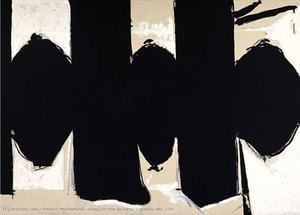
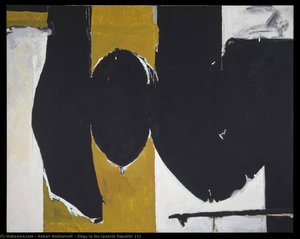
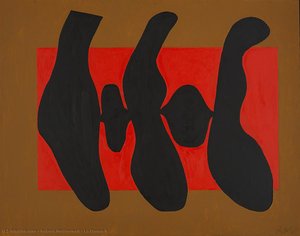
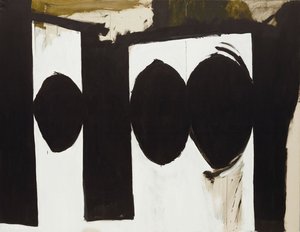
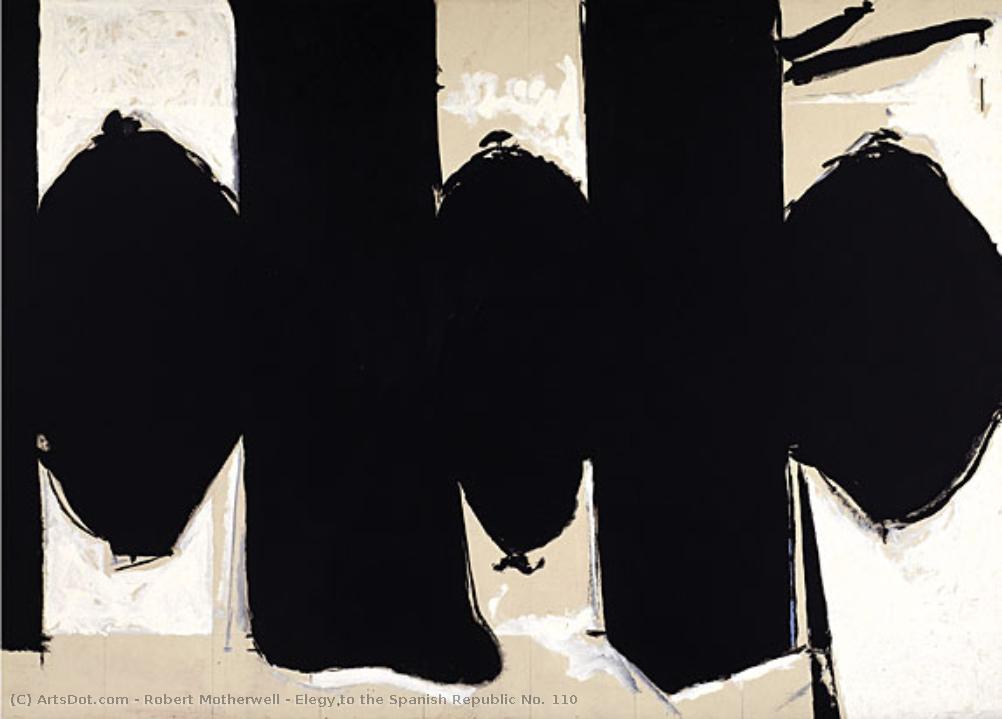
Elegy to the Spanish Republic No. 110


 Read More
Hand Made Oil Reproduction
Hand-painted oil on canvas in your size and frame, made to order by our artists. ( Buy Print Buy Image)




P118B $10

P118H $10

P118W $10

P438Z $10

P508JH $12

P508YH $12

P805H $10

P805Z $10

P919BZ $10

P919G $10

P919XJ $10

P959ZH $10

P968JZ $12

W106C $8

W218G $10

W218JH $8

W218Y $10

W307PJ $10

W316G $10

W316PJ $8

W316Y $10

W398PJ $8

W4111J $10

W500HY $15

W500JH $15

W692G $12

W849H $8

W940BG $15

W953PJ $8




Pick from our preset sizes that match the artwork's original proportions.

You may enter your own dimensions to fit a specific frame or space. If your selected size does not match the original image's proportions, we will either crop the artwork or extend the painting with additional hand-painted elements. A digital mockup will be sent for your approval before production begins.
Please note that the on-screen preview does not reflect the actual cropping or extension. Only the mockup will accurately show the final composition.
While custom sizes are available, we recommend selecting a dimension from the predefined list to preserve the original proportions.
After order, ArtsDot.com team will email client for instructions and provide a mockup preview
Worldwide Delivery () in 3/4 weeks instead of standard 5 weeks. (26 August). No compromise on quality.

Free Worldwide Express Shipping

High-Quality Linen Canvas

Full Shipping Insurance

Customs Tax Refund Guarantee

True Color Matching Guarantee

60-Day Return Policy (Defects Only)

100% Money-Back Guarantee

Bulk Discount Offer
 Glass option is only available in size under 110 CM

Elegy to the Spanish Republic No. 110
Reproduction Medium
Reproduction Size
-


Total Price
$ 263
Artwork Description
A Lament in Black and Beige: Exploring Robert Motherwell’s ‘Elegy to the Spanish Republic No. 110’
Robert Motherwell's “Elegy to the Spanish Republic No. 110,” painted in 1971, isn’t merely a visual experience; it’s an immersion into grief, memory, and the enduring weight of political trauma. This monumental work, rendered in stark black acrylic on canvas, transcends simple representation, becoming instead a potent symbol of loss and resilience—a testament to the artist's profound engagement with the Spanish Civil War and its aftermath. More than just a depiction of suffering, it’s an invitation to contemplate the nature of remembrance itself.
The painting immediately commands attention through its dramatic contrast: vast expanses of deep black are juxtaposed against a muted beige background, creating a sense of oppressive weight and quiet sorrow. The three primary black forms—not precisely figures but rather suggestive of vertical pillars or abstracted human presences—are arranged in a deliberate asymmetry, avoiding any illusion of stability. This instability mirrors the fractured nature of memory and the difficulty of confronting profound historical events. Motherwell’s masterful use of texture, achieved through layered application of paint and subtle variations in tone, adds to this tactile sense of unease, inviting the viewer to trace the contours of each shape with their eyes.
The Echoes of Spain: Context and Inspiration
To understand “Elegy to the Spanish Republic No. 110,” one must consider its genesis within a tumultuous period in European history. The Spanish Civil War (1936-1939) was a brutal conflict that pitted Republican forces against Nationalist rebels, fueled by deep ideological divisions and international intervention. Motherwell, deeply affected by the war’s human cost, embarked on this series of elegies—a deliberate act of mourning for those lost in the struggle. The “Elegy” paintings are not portraits or historical records; they are emotional responses to the tragedy, expressed through abstract forms that evoke a sense of profound sorrow and contemplation.
Furthermore, Motherwell’s artistic journey was profoundly shaped by his engagement with Surrealism. His time in Paris during the 1930s exposed him to the techniques of automatism—a method of accessing the unconscious through spontaneous creation—which he integrated into his own work. This influence is evident in the painting's gestural quality and its willingness to embrace ambiguity, suggesting that meaning isn’t fixed but emerges from the viewer’s interaction with the image.
Decoding the Symbols: Form and Emotion
The precise symbolism within “Elegy to the Spanish Republic No. 110” remains open to interpretation, contributing to its enduring power. The vertical black forms can be seen as representing the fallen—the victims of the war, or perhaps even the silenced voices of those who perished. Their repetition creates a sense of collective suffering, while their irregular shapes suggest a lack of resolution and an ongoing process of mourning. Some scholars have linked them to architectural elements, evoking images of ancient monuments or mausoleums, further emphasizing the theme of remembrance. The beige background, with its subtle variations in tone, provides a grounding element, representing perhaps the lingering hope amidst despair.
The absence of traditional lines and a flattened perspective contribute to the painting’s emotional intensity. Motherwell deliberately avoids creating a sense of depth or spatial illusion, forcing the viewer to confront the image directly and engage with its raw emotion. The overall effect is one of immediacy—a feeling that we are witnessing a moment of profound grief unfolding before our eyes.
A Legacy of Grief and Artistic Vision
Robert Motherwell’s “Elegy to the Spanish Republic No. 110” stands as a powerful example of Abstract Expressionism's ability to convey complex emotions through non-representational forms. It is not simply a painting; it’s an elegy, a memorial, and a meditation on loss—a work that continues to resonate with viewers today due to its honesty, vulnerability, and enduring relevance. Reproductions capture the essence of this powerful piece, offering a tangible connection to Motherwell's profound artistic vision.
Related Artworks

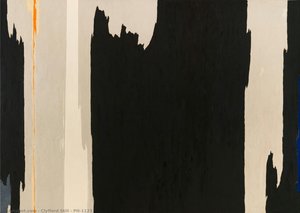
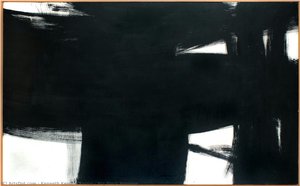
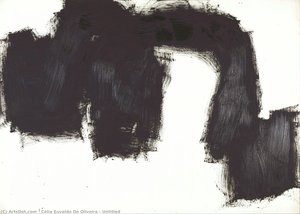
Artist Biography
Robert Motherwell: A Legacy of Grief and Bold Vision
Robert Motherwell (January 24, 1915 – July 16, 1991) stands as one of the most influential figures in American Abstract Expressionism, a movement that irrevocably altered the course of twentieth-century art. Born in Aberdeen, Washington—a town steeped in Scottish heritage—Motherwell’s early life was marked by asthma and a profound connection to the Pacific Northwest landscape, shaping his artistic sensibility from its inception. His father, Robert Burns Motherwell II, a banker with aspirations for California, instilled in him a determination that would propel him through academic pursuits and ultimately define his creative trajectory.- Early Education & Influences: Motherwell’s formative years were spent at Stanford University where he immersed himself in philosophy alongside fellow modernist Arthur Oncken Lovejoy and David Wite Prall. This intellectual grounding profoundly impacted his artistic vision, fostering a fascination with literature—particularly Mallarmé, Joyce, Poe, and Paz—that would permeate his oeuvre.
- The Surrealist Encounter: A pivotal moment arrived in 1940 when Motherwell relocated to New York City and enrolled at Columbia University under Meyer Shapiro’s guidance. Shapiro introduced him to the vibrant world of Parisian Surrealists – Max Ernst, André Breton, Wolfgang Paalen—and crucially, encouraged him to embrace “automatic” drawing as a method for accessing the subconscious.
The Elegies Series and Formal Innovation
Motherwell’s artistic breakthrough came in 1949 with the commencement of his iconic *Elegies to the Spanish Republic* series—a monumental undertaking comprising over one hundred oil paintings and numerous sketches. This series, born from a deep engagement with the political turmoil surrounding Francoist Spain, represents Motherwell's most enduring contribution to art history. The Elegies are characterized by their stark simplicity: densely packed black ink blots on white paper, meticulously crafted to convey profound emotional resonance. These canvases embody his mastery of formal innovation—a deliberate rejection of traditional perspective and a commitment to exploring the expressive potential of gesture and texture.- Technique & Composition: Motherwell’s technique involved layering ink blots onto paper, creating textured surfaces that seemed to pulsate with latent energy. The resulting compositions are deliberately ambiguous, inviting viewers to contemplate themes of loss, grief, and existential contemplation.
- Influence on Contemporaries: His work exerted considerable influence on fellow Abstract Expressionists like Helen Frankenthaler and Jackson Pollock, fostering a dialogue about the role of emotion in artistic expression.
Beyond Elegies: Exploring Landscape and Collage
While the Elegies series cemented Motherwell’s reputation as a master of emotive abstraction, his artistic exploration extended beyond this singular project. He consistently revisited themes of landscape—particularly the Californian hills—drawing inspiration from the expansive vistas that nurtured his childhood imagination. Furthermore, he experimented with collage techniques, incorporating found materials into his canvases to create layered textures and visual narratives. His sketchbook from Mexico—a collaborative effort with Roberto Matta—demonstrates a shift toward more spontaneous graphic cadences, reflecting Paalen’s influence on his artistic process.- Mexican Sketchbook: The sketchbook captures the essence of Paalen's studio environment and reflects Motherwell's evolving approach to drawing, moving away from analytical observation towards intuitive gesture.
- Collaborations & Artistic Dialogue: His collaborations with artists like Matta and Paalen fostered a dynamic artistic dialogue that enriched his oeuvre and broadened the scope of Abstract Expressionism.
Legacy and Historical Significance
Robert Motherwell’s legacy transcends mere stylistic innovation; he articulated a profound philosophical stance on art's capacity to confront mortality and grapple with complex emotional realities. His unwavering dedication to exploring these themes—coupled with his masterful command of formal language—established him as one of the foremost voices of his generation, securing his place among the titans of twentieth-century art. He died in Provincetown, Massachusetts in 1991, leaving behind a body of work that continues to inspire artists and scholars alike, ensuring his enduring influence on the history of modern art.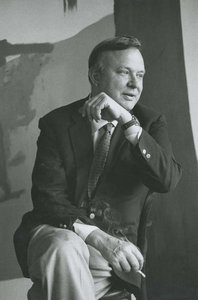
Robert Motherwell
1974 - 1991 , United States of America
Quick Facts
- Artistic Movement Or Style: Abstract Expressionism
- Artists Or Movements Influenced By This Artist:
- Jackson Pollock
- Helen Frankenthaler
- Artists Who Influenced This Artist:
- Mallarmé
- James Joyce
- Edgar Allan Poe
- Octavio Paz
- Date Of Birth: January 24, 1915
- Date Of Death: July 16, 1991
- Full Name: Robert Burns Motherwell
- Nationality: American
- Notable Artworks: ['Elegies to the Spanish Republic']
- Place Of Birth: Aberdeen, Washington
Related Articles
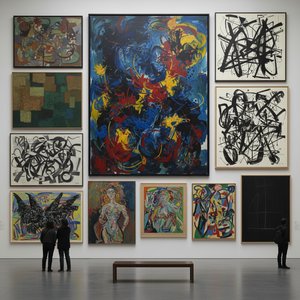
Abstract Expressionism's 10 Defining Masterpieces |
Explore 10 defining Abstract Expressionism masterpieces by Pollock, Rothko & de Kooning. Discover the stories behind these iconic paintings and find museum-quality art reproductions to elevate your home decor on .

Geometric Abstraction's 10 Defining Masterpieces | Art for Your Home - ArtsDot
Explore 10 defining masterpieces of Geometric Abstraction! Discover Kandinsky, Mondrian & Malevich’s iconic works. Find museum-quality art reproductions and curated decor ideas to elevate your home at ArtsDot.com.

Kandinsky's Masterpieces: 25 Paintings That Define Abstract Art | ArtsDot
Journey through Wassily Kandinsky's 25 most iconic abstract paintings. Explore his revolutionary use of color, form & spiritual expressionism. Find museum-quality Kandinsky reproductions and elevate your home decor with ArtsDot.com. Discover all masterpieces on ArtsDot.com!

Beyond Representation: Exploring the Emotional Landscape of Abstract Expressionism
Explore the profound emotional world of Abstract Expressionism with ArtsDot. Discover key artists like Pollock & Rothko, learn about collecting, and find museum-quality reproductions to inspire your space.
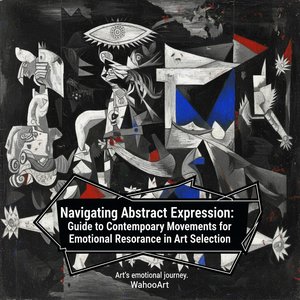
Navigating Abstract Expression: A Guide to Contemporary Movements for Emotional Resonance in Art Selection
Explore the evolution of Abstract Expressionism & discover contemporary movements for emotional resonance. Expert guidance for discerning art collectors seeking lasting value. ArtsDot.