 Preview
 Send
Send Share
Share
 Details

 Download
 Similars
 X-Ray
X-Ray Diaporama
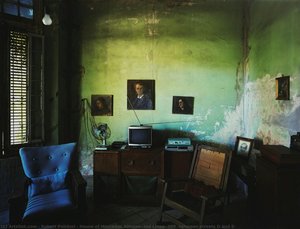
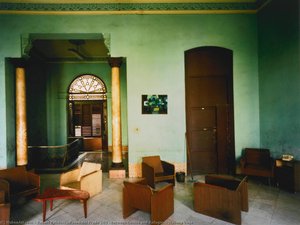
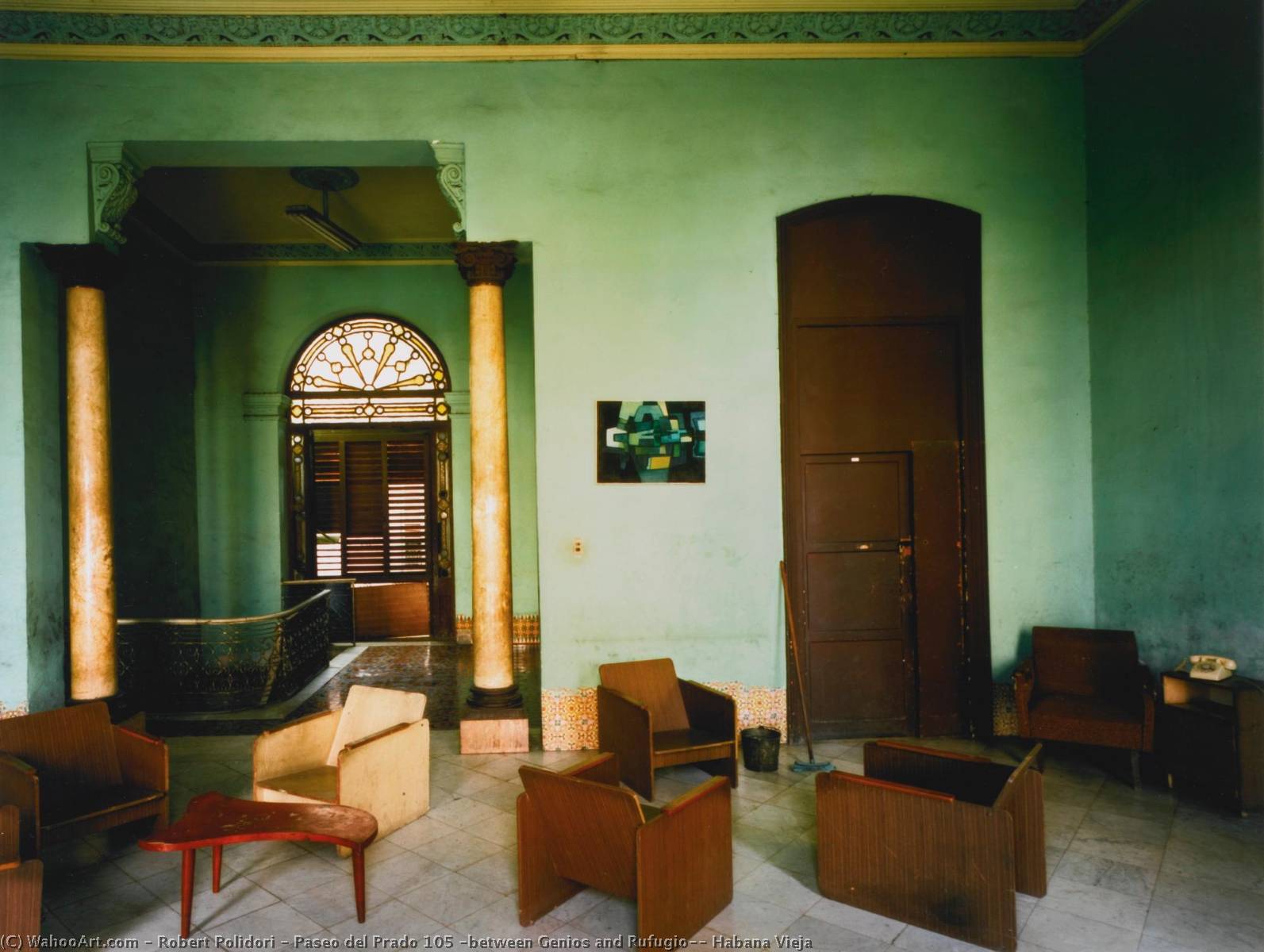
Paseo del Prado 105 (between Genios and Rufugio), Habana Vieja
 57.0 x 76.0 cm
 Read More
Hand Made Oil Reproduction
Hand-painted oil on canvas in your size and frame, made to order by our artists. ( Buy Print Buy Image)




































Pick from our preset sizes that match the artwork's original proportions.

You may enter your own dimensions to fit a specific frame or space. If your selected size does not match the original image's proportions, we will either crop the artwork or extend the painting with additional hand-painted elements. A digital mockup will be sent for your approval before production begins.
Please note that the on-screen preview does not reflect the actual cropping or extension. Only the mockup will accurately show the final composition.
While custom sizes are available, we recommend selecting a dimension from the predefined list to preserve the original proportions.
After order, ArtsDot.com team will email client for instructions and provide a mockup preview
Worldwide Delivery () in 3/4 weeks instead of standard 5 weeks. (27 August). No compromise on quality.

Free Worldwide Express Shipping

High-Quality Linen Canvas

Full Shipping Insurance

Customs Tax Refund Guarantee

True Color Matching Guarantee

60-Day Return Policy (Defects Only)

100% Money-Back Guarantee

Bulk Discount Offer
 Glass option is only available in size under 110 CM

Paseo del Prado 105 (between Genios and Rufugio), Habana Vieja
Reproduction Medium
Reproduction Size
-


Total Price
$ 263
Related Artworks








Artist Biography
The Poetics of Decay: The Visionary World of Robert Polidori
To gaze upon the work of Robert Polidori is to enter a realm where time itself seems to have paused, caught in the delicate, crumbling embrace of architectural ruin. Born on February 10, 1951, in Montreal, Quebec, Polidori’s life and artistic trajectory reflect a profound connection between geography and memory. Raised in the United States amidst the landscapes of Seattle, Southern California, and New Orleans, his early exposure to diverse environments laid the groundwork for a career dedicated to documenting the physical traces of history. As a Canadian-American photographer, he possesses a unique perspective that bridges the gap between the personal and the monumental, finding deep emotional resonance in the spaces left behind by human civilization.
Polidori’s artistic sensibilities were profoundly shaped by his academic pursuits and early cinematic encounters. His journey through the study of photography and film—influenced by the structural explorations of Michael Snow’s Wavelength—instilled in him a fascination with how light, space, and duration interact within a frame. He drew significant inspiration from Surrealist masters such as René Magritte and Giorgio Morandi, whose works taught him that the most profound truths often lie beneath a surface of quiet contemplation or subtle illusion. This influence is evident in his ability to transform a mere photograph of an abandoned room into a psychological landscape, where the textures of peeling wallpaper and sun-bleached floors evoke unspoken anxieties and the haunting beauty of what has been lost.
Architectural Echoes and the Beauty of Ruin
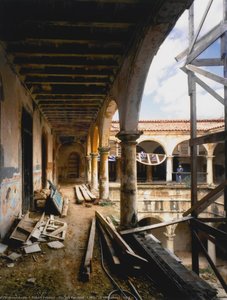
The hallmark of Polidori’s oeuvre is his mastery of large-scale color photography, a technique that allows him to present architectural decay with an almost tactile intensity. He does not merely document destruction; he celebrates the melancholic grandeur of it. His lens has traveled to the most evocative corners of the globe, capturing the aftermath of catastrophe and the slow erosion of time. From the shell-shocked structures of Beirut and the nuclear silence of Chernobyl to the post-Hurricane Katrina devastation in New and Orleans, Polidori’s work serves as a vital historical record. He captures the way light interacts with debris, turning dust and wreckage into elements of a sublime, dreamlike composition.
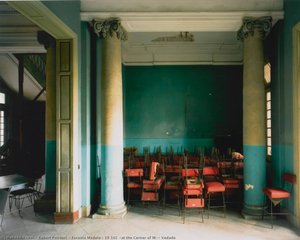
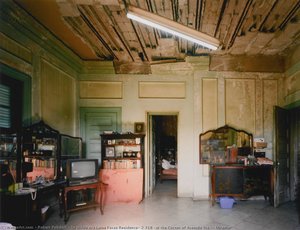
His explorations are not limited to disaster zones; they extend into the quiet, dignified decay of colonial legacies and cultural landmarks. His studies of Havana, Cuba, and the interiors of Mumbai or Amman reveal a fascination with how urban environments evolve and dissolve. Through his meticulous attention to textural detail and a muted, sophisticated color palette, he achieves a level of photographic realism that feels both hyper-present and otherworldly. In these images, the architecture becomes a protagonist, telling stories of vanished inhabitants, forgotten rituals, and the inexorable march of entropy.
A Legacy Written in Light and Shadow
The significance of Robert Polidori’s contribution to contemporary photography cannot be overstated. He has been recognized as one of the most esteemed practitioners of large-scale photography, with his work commanding presence in the world's most prestigious institutions. His career is marked by a series of monumental achievements that have solidified his place in the canon of modern art:
- Exhibition Excellence: His work has been featured in solo exhibitions at the Metropolitan Museum of Art in New York, the Musée d'art contemporain de Montréal, and the Martin-Gropius-Bau in Berlin.
- Permanent Collections: Polidori’s photographs are held in the permanent collections of the Museum of Modern Art (MoMA), the J. Paul Getty Museum, the Victoria & Albert Museum, and the Château de Versailles.
- Documentary Depth: Beyond his architectural studies, his ability to document the restoration of historical sites, such as the Château de Versailles, demonstrates a unique capacity to bridge the gap between preservation and artistic expression.
Ultimately, Polidori’s work invites us to share in a collective memory. As curator Paulette Gagnon once noted, his photographic accounts invite viewers to inhabit historical moments, making them part of our shared human experience. By finding the "utopia" within decay, Polidori reminds us that even in the process of falling apart, there is a profound, enduring grace that demands to be seen.
robert polidori
1951 -
Quick Facts
- Artistic Movement Or Style: Surrealism
- Artists Or Movements Influenced By This Artist: ['Joan Miró']
- Artists Who Influenced This Artist: ['Salvador Dalí']
- Full Name: Robert Polidori
- Nationality: British
- Notable Artworks: ['5417 Marigny Street']
- Place Of Birth: London, England