 Preview
 Send
Send Share
Share
 Details

 Download
 Similars
 X-Ray
X-Ray Diaporama
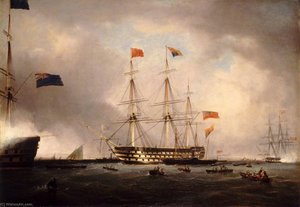
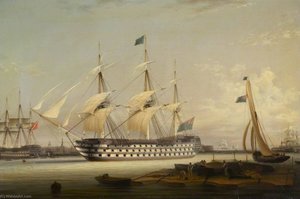
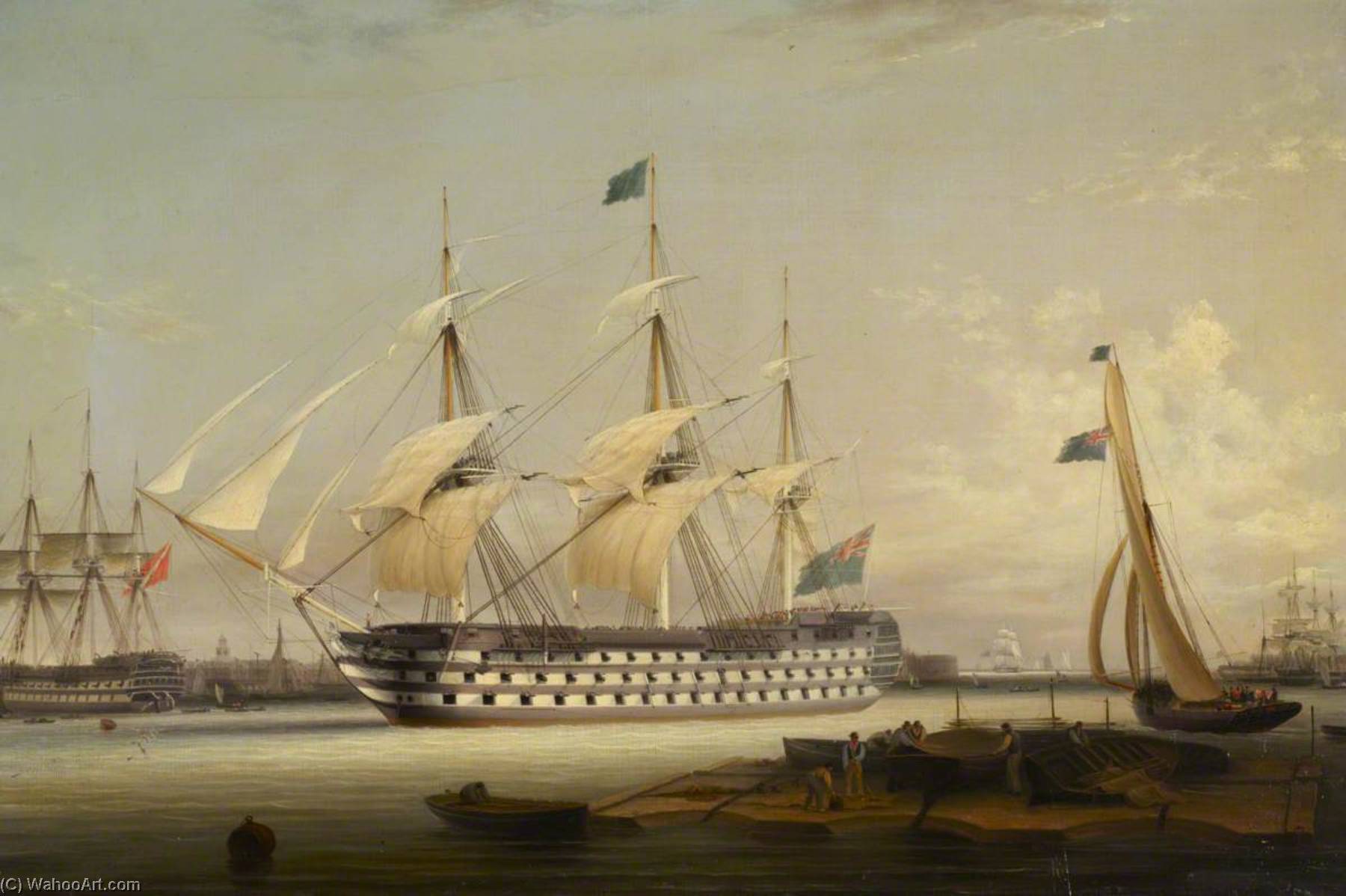
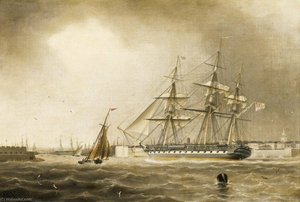
HMS 'Britannia' Entering Portsmouth Harbour
 1836
1836 46.0 x 69.0 cm
 Read More
Giclée / Art Print
Museum-quality giclée or canvas print with fast production and flexible finish options. ( Buy Hand Made Painting Buy Image)




































Pick from our preset sizes that match the artwork's original proportions.

You may enter your own dimensions to fit a specific frame or space. If your selected size does not match the original image's proportions, we will either crop the artwork or extend the image with a mirrored or solid-fill edge. A digital mockup will be sent for your approval before production begins.
Please note that the on-screen preview does not reflect the actual cropping or extension. Only the mockup will accurately show the final composition.
While custom sizes are available, we recommend selecting a dimension from the predefined list to preserve the original proportions.
Worldwide Delivery () in 2 weeks instead of standard 4/5 weeks. (23 August)

Free Worldwide Express Shipping

High-Quality Linen Canvas

Full Shipping Insurance

Customs Tax Refund Guarantee

True Color Matching Guarantee

60-Day Return Policy (Defects Only)

100% Money-Back Guarantee

Bulk Discount Offer
 Glass option is only available in size under 110 CM

HMS 'Britannia' Entering Portsmouth Harbour
Giclée / Art Print
Reproduction Size
-


Total Price
$ 63
Collectible Description
The Artist's Vision
Robert Strickland Thomas was a skilled artist known for his maritime paintings, and this piece is no exception. The attention to detail and the use of light and colour create a sense of depth and movement, drawing the viewer into the scene. The large ship, HMS 'Britannia', dominates the centre of the painting, surrounded by smaller boats and figures attending to their daily activities. Key Features of the painting include:- The use of warm colours to evoke a sense of warmth and activity in the harbour
- The intricate details of the ships and boats, showcasing the artist's skill and attention to detail
- The sense of movement and energy in the scene, created by the use of light and shadow
Hand-Painted Oil Reproductions
For those who appreciate the beauty of this painting, hand-painted oil reproductions are available at ArtsDot.com. These reproductions are created by skilled artists who use high-quality materials to ensure that the final product is both beautiful and durable. Other notable works by Robert Strickland Thomas include The Wreck of HMS 'Hero' in the Texel, 25 December 1811 and Queen Victoria's Visit to HMS 'Queen' at Portsmouth, 1 March 1842. For more information on these paintings and others, visit Robert Strickland Thomas at ArtsDot.com.The National Maritime Museum is home to many other notable maritime artworks, and visitors can learn more about the history and significance of these pieces by visiting the museum's website or planning a visit in person.
Related Artworks









Artist Biography
Robert Strickland Thomas: A Mariner’s Eye on the Eighteenth Century
Robert Strickland Thomas, a name perhaps less familiar than many of his contemporaries in 19th-century British art, nevertheless stands as a significant figure in the development of maritime illustration. Born in 1787 and tragically passing away in 1853, Thomas’s career was inextricably linked to the burgeoning world of paddle steamers and naval scenes – subjects that captured both the romance of exploration and the practical realities of commerce and warfare. His work offers a unique window into a period of rapid technological advancement and shifting social landscapes, reflecting the ambition and anxieties of an era defined by steam, empire, and industrialization.
Thomas’s early life remains somewhat shrouded in mystery, though it is known that he entered the Royal Navy at a young age. This formative experience profoundly shaped his artistic vision, instilling a deep appreciation for detail, accuracy, and the dramatic potential of nautical subjects. Unlike many artists who relied solely on idealized representations, Thomas meticulously researched his scenes, often incorporating eyewitness accounts and technical drawings to ensure their authenticity. His naval paintings are not mere romanticized depictions; they are carefully constructed narratives that convey the power, complexity, and inherent dangers of maritime life.
The Rise of a Marine Artist
Thomas’s artistic journey began as a hobby, initially producing sketches and watercolors for his own enjoyment. However, his talent quickly garnered attention, leading to commissions from wealthy patrons and eventually establishing him as a respected artist within the London art world. He was particularly adept at capturing the imposing scale of paddle steamers – vessels that were rapidly transforming river travel and shaping urban landscapes. These scenes are not simply technical renderings; they are imbued with a sense of dynamism and excitement, reflecting the technological marvels of the age.
Crucially, Thomas’s career coincided with a period of intense naval activity. The Napoleonic Wars had left an indelible mark on Britain, fostering a national pride in its maritime prowess and fueling a demand for accurate depictions of naval battles and ship designs. Thomas skillfully navigated this market, producing numerous paintings commemorating significant naval engagements, most notably his powerful rendition of the Battle of Trafalgar (1835). This work, now housed at the National Maritime Museum, is considered a landmark achievement in British maritime art – a testament to Thomas’s technical skill and dramatic flair.
Technique and Style
Thomas's artistic style can be characterized by its meticulous detail, realistic portrayal of light and shadow, and a strong sense of spatial depth. He employed the albumen print technique, which allowed for greater tonal range and sharper details than earlier methods. His compositions are often carefully balanced, with an emphasis on creating a sense of movement and drama. He was particularly skilled at rendering textures – from the weathered wood of ships to the billowing sails and the churning water – conveying a palpable sense of realism.
While influenced by artists such as William Daniell and John Brett, Thomas developed his own distinctive style, characterized by a bold use of color and a dynamic approach to composition. His paintings are not merely representations of scenes; they are imbued with a powerful emotional resonance, capturing the spirit of adventure, the challenges of seafaring, and the grandeur of the British Empire.
Notable Works and Legacy
Beyond “Battle of Trafalgar,” Thomas produced a substantial body of work encompassing a wide range of subjects. His depictions of HMS ‘Britannia’ entering Portsmouth Harbour (1842) are particularly noteworthy for their meticulous detail and atmospheric quality. Similarly, his paintings of HMS ‘Raleigh’ (1850) showcase his ability to capture the imposing scale and technical complexity of naval vessels. These works demonstrate Thomas's versatility as an artist and his commitment to documenting the changing face of British maritime life.
Although he may not be as widely celebrated as some of his contemporaries, Robert Strickland Thomas’s contribution to British art is undeniable. His paintings offer a valuable glimpse into a pivotal period in history – a time of technological innovation, imperial expansion, and profound social change. His legacy endures through the preservation of these remarkable works, which continue to captivate viewers with their technical skill, dramatic flair, and evocative portrayal of maritime life.
robert strickland thomas
1787 - 1853
Quick Facts
- Artistic Movement Or Style: Maritime Illustration
- Artists Or Movements Influenced By This Artist: ['Thomas Luny']
- Artists Who Influenced This Artist: ['Jerome Hesketh']
- Date Of Birth: 1787
- Date Of Death: 1853
- Full Name: Robert Strickland Thomas
- Nationality: British
- Notable Artworks:
- Battle of Trafalgar
- HMS 'Britannia'
- HMS 'Raleigh'
- Place Of Birth: WahooArt