 Preview
 Send
Send Share
Share
 Details

 Download
 Similars
 X-Ray
X-Ray Diaporama
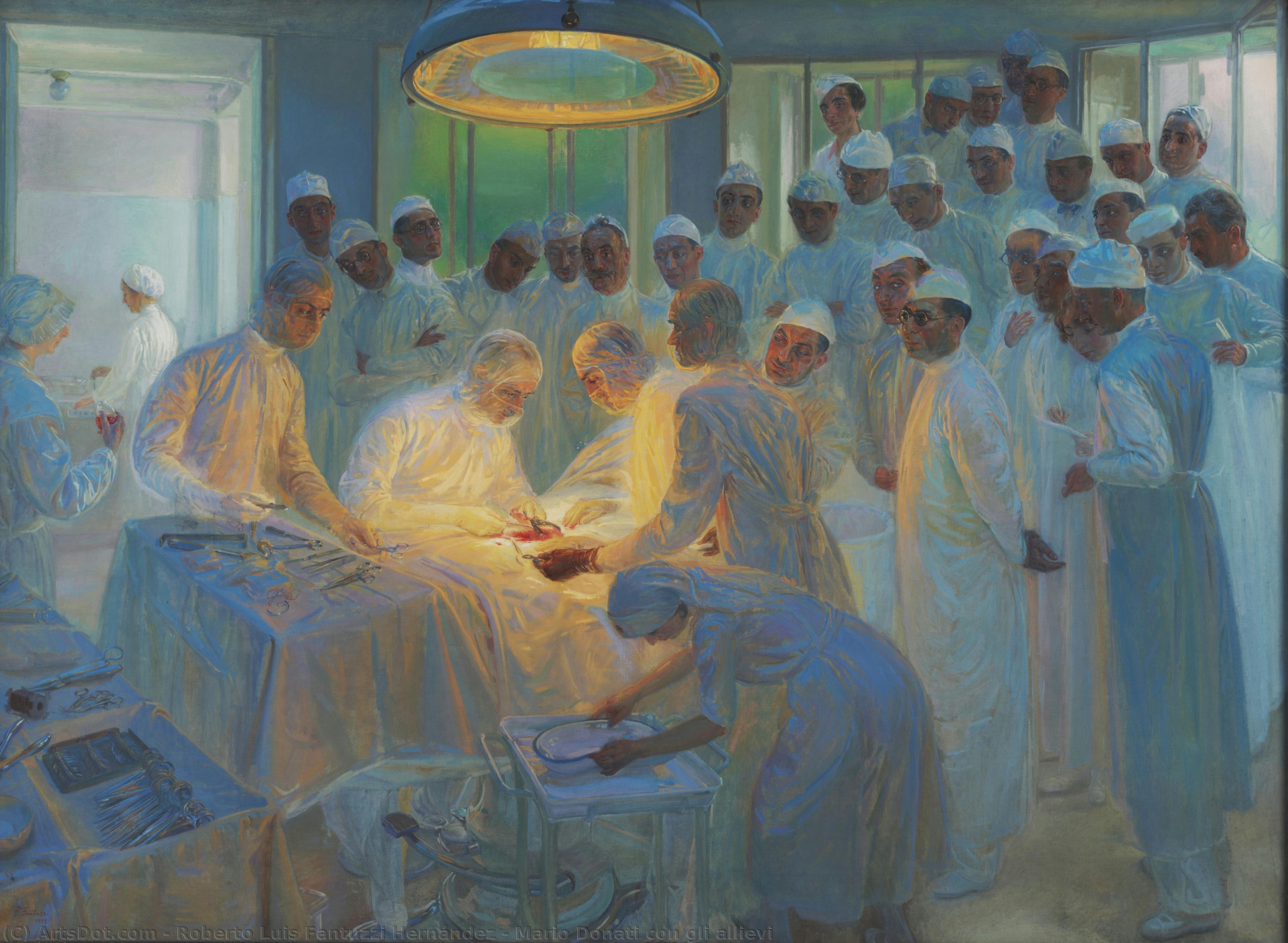
Mario Donati con gli allievi
 1933
1933 145.0 x 197.0 cm
 Ca’ Granda – Ospedale Maggiore Policlinico
 Read More
Hand Made Oil Reproduction
Hand-painted oil on canvas in your size and frame, made to order by our artists. ( Buy Print Buy Image)




































Pick from our preset sizes that match the artwork's original proportions.

You may enter your own dimensions to fit a specific frame or space. If your selected size does not match the original image's proportions, we will either crop the artwork or extend the painting with additional hand-painted elements. A digital mockup will be sent for your approval before production begins.
Please note that the on-screen preview does not reflect the actual cropping or extension. Only the mockup will accurately show the final composition.
While custom sizes are available, we recommend selecting a dimension from the predefined list to preserve the original proportions.
After order, ArtsDot.com team will email client for instructions and provide a mockup preview
Worldwide Delivery () in 3/4 weeks instead of standard 5 weeks. (1 September). No compromise on quality.

Free Worldwide Express Shipping

High-Quality Linen Canvas

Full Shipping Insurance

Customs Tax Refund Guarantee

True Color Matching Guarantee

60-Day Return Policy (Defects Only)

100% Money-Back Guarantee

Bulk Discount Offer
 Glass option is only available in size under 110 CM

Mario Donati con gli allievi
Reproduction Medium
Reproduction Size
-


Total Price
$ 263
Related Artworks







Artist Biography
Aaron Douglas: A Voice of the Harlem Renaissance
Aaron Douglas, a name often spoken with reverence within the circles of American art history, stands as one of the most vital and enduring figures of the Harlem Renaissance. Born in Topeka, Kansas, in 1899 – a place steeped in both the promise and the constraints of early 20th-century America – his life was inextricably linked to the burgeoning cultural movement that sought to define Black identity and artistic expression. Douglas’s journey wasn't one of conventional academic training; instead, he honed his craft through practical experience, working as a glassmaker and foundryman before dedicating himself fully to art in 1918 after enrolling at the University of Nebraska-Lincoln. This grounding in industry informed an underlying strength and resilience within his work, mirroring the struggles and triumphs of his community. His early years were marked by a segregated education – McKinley Elementary and Topeka High School, both institutions offering limited opportunities for Black students – experiences that undoubtedly shaped his perspective and fueled his desire to represent the realities of African American life with dignity and power.Early Influences and Artistic Development
Douglas’s artistic development was profoundly influenced by the visual language of the late 19th and early 20th centuries, particularly the work of artists like Frank Lloyd Wright and the stylized figures of African masks. He initially experimented with various styles, including realism and naturalism, but it was his exposure to the works of European Expressionists – particularly those grappling with themes of social injustice and alienation – that proved transformative. This engagement led him to adopt a more symbolic and emotionally charged approach, utilizing bold colors, dynamic compositions, and powerful imagery to convey narratives of struggle, resilience, and hope. Crucially, he drew inspiration from African art and mythology, incorporating motifs of ancestral heritage and spiritual connection into his paintings. The influence of the Arts and Crafts movement is also evident in his use of decorative elements and a commitment to craftsmanship.The Harlem Renaissance and Narrative Painting
Douglas’s career truly blossomed during the height of the Harlem Renaissance, a period of unprecedented artistic, literary, and intellectual flourishing within Black communities across America. He became a central figure in this movement, producing a prolific body of work that captured the spirit of the era – its ambition, its challenges, and its unwavering belief in self-determination. Unlike many artists who focused on depicting everyday scenes, Douglas specialized in what he termed “narrative painting,” creating large-scale murals and canvases that told stories rooted in African American history, folklore, and social commentary. His most famous series, *Aspects of Negro Life*, produced for the 1934 Harlem World’s Fair, powerfully depicted the diverse experiences of Black Americans – from sharecroppers and laborers to musicians and intellectuals. These murals weren't merely decorative; they were deliberate acts of cultural affirmation, asserting the dignity and complexity of Black life in a society riddled with prejudice and inequality.Style and Technique
Douglas’s artistic style is immediately recognizable for its distinctive blend of influences. He employed a flattened perspective, reminiscent of African masks and tribal art, to create figures that seemed both monumental and deeply human. His use of color was often dramatic and symbolic – vibrant reds and yellows representing energy and passion, while somber blues and greens conveyed sorrow and resilience. Bold lines and dynamic compositions further enhanced the emotional impact of his paintings. He favored a technique he described as “linear,” emphasizing strong outlines and geometric shapes to create a sense of movement and dynamism. His work is characterized by a powerful sense of rhythm and visual energy, reflecting the vibrant pulse of Harlem life.Legacy and Historical Significance
Aaron Douglas’s contribution to American art extends far beyond his individual works. He served as an important mentor to younger artists, including Jacob Lawrence and Romare Bearden, shaping the trajectory of several generations of Black visual artists. His paintings continue to resonate today, offering a poignant reminder of the struggles and triumphs of the Harlem Renaissance and the enduring power of artistic expression in the face of adversity. Douglas’s work is not simply historical; it remains profoundly relevant as a testament to the importance of representation, cultural pride, and social justice. He left behind a legacy of powerful imagery that continues to inspire and challenge viewers to confront uncomfortable truths about American history and its ongoing struggle for equality. His art stands as a vital link between the past and present, reminding us of the enduring spirit of the Harlem Renaissance and the artists who dared to give voice to a marginalized community.
roberto luis fantuzzi hernández
1899 - 1976 , Italy
Quick Facts
- Artistic Movement Or Style: Harlem Renaissance
- Artists Or Movements Influenced By This Artist: ['None specified']
- Artists Who Influenced This Artist: ['None specified']
- Date Of Birth: May 26, 1899
- Date Of Death: 1976
- Full Name: Aaron Douglas
- Nationality: American
- Notable Artworks: ['1939 oil on tempered hardboard']
- Place Of Birth: Topeka, Kansas, USA