 Preview
 Send
Send Share
Share
 Details

 Download
 Similars
 X-Ray
X-Ray Diaporama
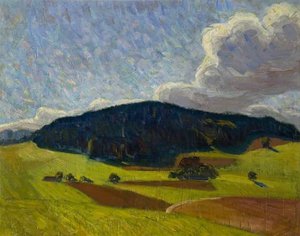
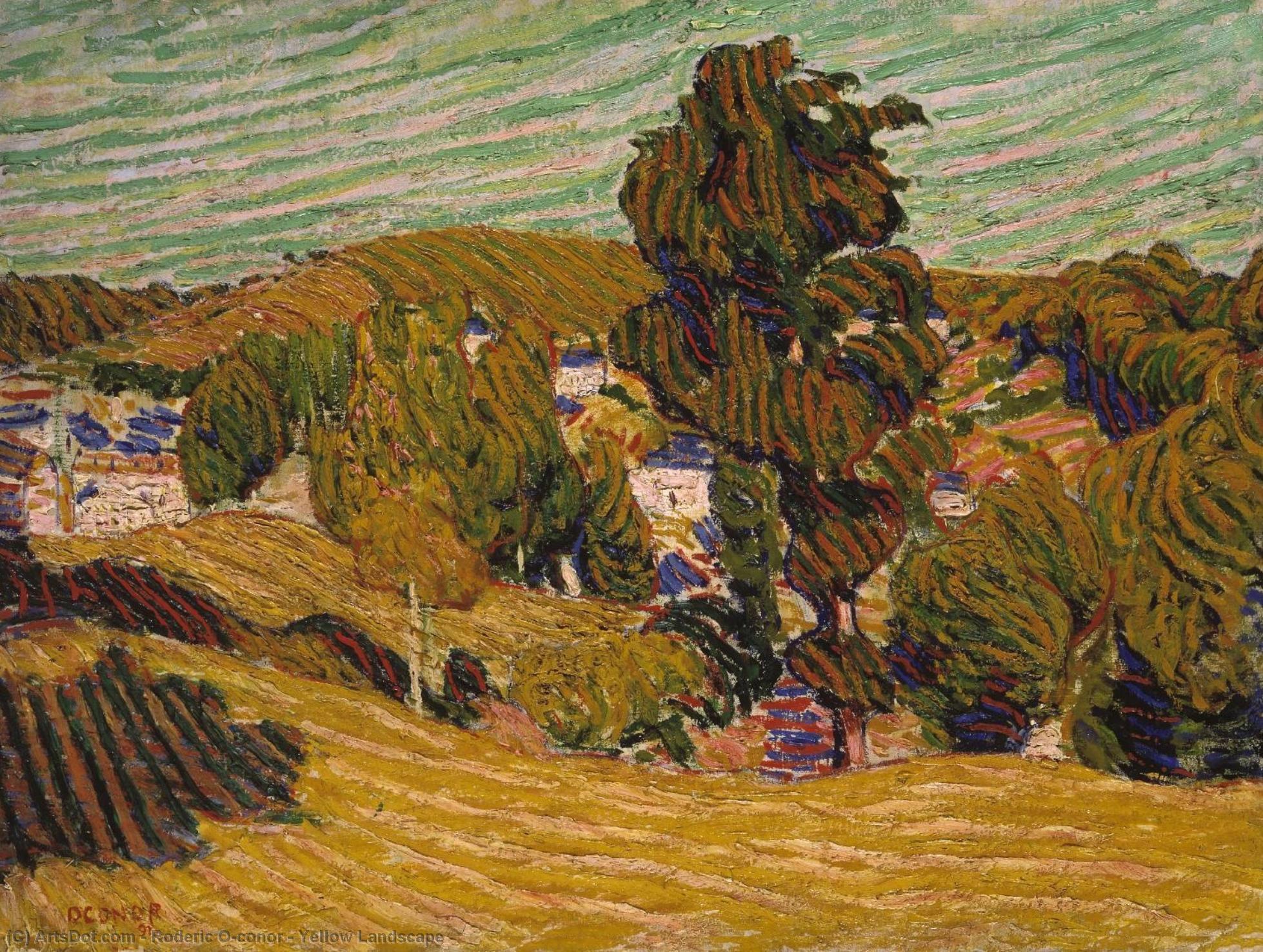
Yellow Landscape


 Read More
Hand Made Oil Reproduction
Hand-painted oil on canvas in your size and frame, made to order by our artists. ( Buy Print Buy Image)




P118B $10

P118H $10

P118W $10

P438Z $10

P508JH $12

P508YH $12

P805H $10

P805Z $10

P919BZ $10

P919G $10

P919XJ $10

P959ZH $10

P968JZ $12

W106C $8

W218G $10

W218JH $8

W218Y $10

W307PJ $10

W316G $10

W316PJ $8

W316Y $10

W398PJ $8

W4111J $10

W500HY $15

W500JH $15

W692G $12

W849H $8

W940BG $15

W953PJ $8




Pick from our preset sizes that match the artwork's original proportions.

You may enter your own dimensions to fit a specific frame or space. If your selected size does not match the original image's proportions, we will either crop the artwork or extend the painting with additional hand-painted elements. A digital mockup will be sent for your approval before production begins.
Please note that the on-screen preview does not reflect the actual cropping or extension. Only the mockup will accurately show the final composition.
While custom sizes are available, we recommend selecting a dimension from the predefined list to preserve the original proportions.
After order, ArtsDot.com team will email client for instructions and provide a mockup preview
Worldwide Delivery () in 3/4 weeks instead of standard 5 weeks. (17 August). No compromise on quality.

Free Worldwide Express Shipping

High-Quality Linen Canvas

Full Shipping Insurance

Customs Tax Refund Guarantee

True Color Matching Guarantee

60-Day Return Policy (Defects Only)

100% Money-Back Guarantee

Bulk Discount Offer
 Glass option is only available in size under 110 CM

Yellow Landscape
Reproduction Medium
Reproduction Size
-


Total Price
$ 263
Artwork Description
A Symphony in Dots: Exploring Yellow Landscape
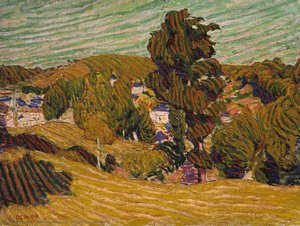
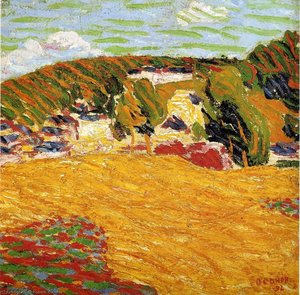
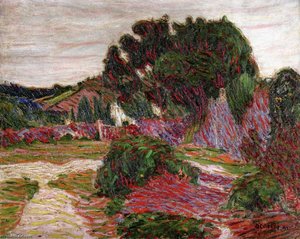
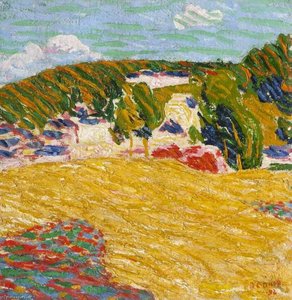
To stand before this depiction of a rolling hillside is to step into a moment suspended between dream and vibrant reality. Yellow Landscape, painted in 1892 by Roderic O'Conor, is not merely a view; it is an orchestrated experience of light filtered through the meticulous discipline of color theory. The scene unfolds with a profound sense of pastoral tranquility, capturing the essence of rural life under what appears to be a vast, contemplative sky. One feels the gentle slope of the earth beneath one’s feet and hears only the whisper of wind through distant fields.
The Pointillist Vision: Technique and Texture
What immediately arrests the eye is the painting's remarkable technique. This work is a masterful exercise in Pointillism, a style that demands patience and precision from its creator. Instead of broad washes of color, O'Conor built his entire world using countless small, distinct dots—a veritable tapestry woven from pure pigment. These short, broken brushstrokes do not merely decorate the surface; they function as the very structure of light itself. Observe how the warm yellows mingle with cool blues and varied greens across the fields; it is the optical blending of these individual dots that creates the illusion of depth, the richness of the foliage, and the soft diffusion of an overcast day’s glow. This reliance on scientific color placement gives the landscape a unique, vibrating energy.
Historical Echoes: O'Conor in Late-Century Art
Painted during the late 19th century, this piece situates itself within the vibrant intellectual ferment of Post-Impressionism. While Impressionism sought to capture the fleeting *impression* of a moment, Pointillism, as exemplified here, approached it with a more systematic, almost scientific rigor. Roderic O'Conor, whose life spanned the transition from these revolutionary movements, channeled this academic discipline into something deeply emotive. The composition balances the strong horizontal sweep of the land—suggesting stability and continuity—against the occasional vertical punctuation of the trees. It is a dialogue between the grounded earth and the reaching sky.
Emotional Resonance for the Modern Collector
For the contemporary admirer, Yellow Landscape offers more than just decorative beauty; it offers an emotional anchor. The pervasive warmth emanating from the yellows speaks to optimism, while the deep greens ground the spirit in nature’s enduring cycle. It evokes a profound sense of peace—a quietude that modern life often makes us forget. Whether used as a focal point in a sun-drenched drawing room or as a contemplative piece above a writing desk, this reproduction invites the viewer to pause, breathe deeply, and reconnect with the elemental beauty of the natural world, all rendered through the exquisite poetry of colored dots.
Related Artworks

Artist Biography
A Life Immersed in Color and Light: The World of Roderic O'Conor
Roderic O’Conor, born October 17, 1860, in Milltown, County Roscommon, Ireland, was a painter who navigated the shifting currents of late 19th and early 20th-century art with a quiet determination. Descended from the kings of Connacht, his lineage hinted at a certain inherent nobility, yet it was not through inherited titles but through dedicated artistic pursuit that O’Conor carved his place in history. His father, Roderic Joseph O'Conor, a barrister and high sheriff, provided a stable upbringing and an education—first at Ampleforth College in Yorkshire, where he demonstrated academic prowess—that laid the foundation for a life of intellectual curiosity. This early exposure to rigorous learning would subtly inform his artistic approach, even as he embraced the more intuitive realms of color and form. Subsequent studies at the Metropolitan School of Art and the Royal Hibernian Academy in Dublin provided formal training, but it was his journey to Antwerp under Charles Verlat that truly ignited his passion and set him on a path toward Paris, the epicenter of artistic innovation.Paris, Pont-Aven, and the Embrace of Modernity
The year 1883 marked a pivotal moment: O’Conor's relocation to Paris. He arrived in a city brimming with new ideas, where Impressionism was challenging traditional academic painting. While he absorbed the lessons of Monet, Renoir, and Degas—the emphasis on capturing fleeting moments of light and atmosphere—he wasn’t content merely to replicate their style. A deeper transformation awaited him in Brittany, specifically at Pont-Aven during the 1890s. This artistic community, a haven for those seeking alternatives to Parisian conventions, proved crucial to his development. It was here that he forged a profound friendship with Paul Gauguin, an encounter that would irrevocably alter his artistic trajectory. Gauguin’s bold use of color, flattened forms, and symbolic imagery resonated deeply with O'Conor, encouraging him to move beyond the purely optical concerns of Impressionism. The influence of Van Gogh, also present in the Pont-Aven circle, further fueled this exploration of expressive brushwork and emotional intensity. He began to experiment with textured surfaces and contrasting hues, building layers of paint that conveyed not just what he *saw*, but how he *felt*.The Evolution of a Post-Impressionist Vision
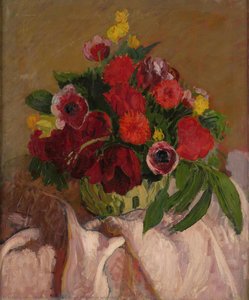
O’Conor's work is firmly situated within the realm of Post-Impressionism, a movement characterized by its subjective interpretation of reality. He wasn’t interested in simply mirroring nature; instead, he sought to convey his personal response to it. His paintings are immediately recognizable for their vibrant color palettes—often featuring bold reds, yellows, and blues—and their dynamic brushwork. Early works still bear the imprint of Impressionistic techniques, but they gradually evolve into a more individual style incorporating elements of Pointillism and expressive mark-making. Initially, his subject matter centered on Breton life – peasants, landscapes, and scenes of rural existence. However, as he matured, his focus shifted towards nudes, female figures, portraits, and still lifes. These later works reveal a growing interest in formal concerns—the interplay of light and shadow, the arrangement of shapes, and the expressive potential of paint itself. Yellow Landscape (1892), La Jeune Bretonne (1895), Mixed Flowers on Pink Cloth (circa 1916), and Landscape, Cassis (1913) stand as testaments to this artistic evolution.Recognition and Legacy
Despite his significant contributions to the development of Post-Impressionism, O’Conor remained largely unrecognized in Ireland and Britain during his lifetime. He exhibited at the Paris Salon and the Salon des Indépendants, gaining some recognition within Parisian art circles, but widespread acclaim eluded him. It wasn't until after his death on March 18, 1940, in Nueil-sur-Layon, France, that his work began to receive the attention it deserved. The posthumous sale of Landscape, Cassis for £337,250 in 2011 served as a dramatic confirmation of his artistic value and enduring appeal. Today, Roderic O’Conor is celebrated as a pioneer of Post-Impressionism among English-speaking artists—a bridge between the traditions of Irish painting and the innovations of the European avant-garde. His association with prominent figures like Somerset Maugham, Gerald Kelly, and Aleister Crowley further underscores his involvement in the vibrant intellectual life of Paris. He was a man who lived fully within the artistic currents of his time, leaving behind a body of work that continues to captivate and inspire.A Lasting Influence
O’Conor's legacy extends beyond his individual paintings. He demonstrated an ability to synthesize diverse influences—Impressionism, Pointillism, the lessons of Gauguin and Van Gogh—into a uniquely personal style. His willingness to experiment with color, texture, and form paved the way for future generations of artists. While he may not be as widely known as some of his contemporaries, Roderic O’Conor occupies a vital position in the history of modern art, representing a crucial link between the artistic traditions of Ireland and the revolutionary movements that transformed painting in Europe. His life serves as a reminder that true artistic innovation often requires courage, independence, and an unwavering commitment to one's own vision.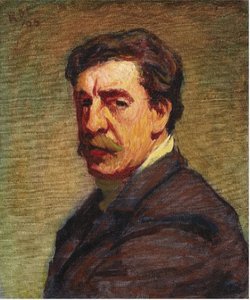
Roderic O'Conor
1860 - 1940 , Ireland
Quick Facts
- Artistic Movement Or Style: Post-Impressionism
- Artists Or Movements Influenced By This Artist: ['Post-Impressionism']
- Artists Who Influenced This Artist:
- Paul Gauguin
- Vincent van Gogh
- Date Of Birth: October 17, 1860
- Date Of Death: March 18, 1940
- Full Name: Roderic O'Conor
- Nationality: Irish
- Notable Artworks:
- Yellow Landscape
- La Jeune Bretonne
- Mixed Flowers...
- Landscape, Cassis
- Place Of Birth: Castleknock, Ireland
Related Articles

Beyond the Horizon: 10 Landscape Masterpieces for Your Home Decor
Journey through 10 breathtaking landscape paintings by Monet, Van Gogh & more! Explore iconic artworks, artistic techniques & find inspiration for your home decor. Museum-quality reproductions at ArtsDot.com. Discover all masterpieces on ArtsDot.com

Romantic Landscapes: 10 Masterpieces for Your Home | ArtsDot
Journey through 10 Romantic landscape masterpieces by Friedrich, Turner & Cole. Explore emotional art, sublime nature scenes & iconic 19th-century paintings. Find museum-quality reproductions for your home at ArtsDot.com – discover the full collection online!

Evocations of Place: A Historical Journey Through Landscape Art
Explore the rich history of landscape art with ArtsDot. Discover renowned artists, movements like Impressionism & Romanticism, and expert guidance for collecting timeless pieces. Find your perfect serene escape today!

John Constable's Masterpieces: Explore 25 Iconic Landscapes for Your Home
Journey through John Constable's 25 most celebrated landscapes. Explore Romanticism, Dedham Vale & his masterful use of light in iconic paintings like 'Hay Wain'. Find museum-quality art reproductions and elevate your home decor on ArtsDot.com.

Evocations of Place: A Historical Journey Through Landscape Art
Explore the rich history of landscape art with ArtsDot. Discover renowned artists, movements like Impressionism & tonalism, and expert guidance for collecting timeless pieces. Find your perfect serene escape today!