 Preview
 Send
Send Share
Share
 Details

 Download
 Similars
 X-Ray
X-Ray Diaporama
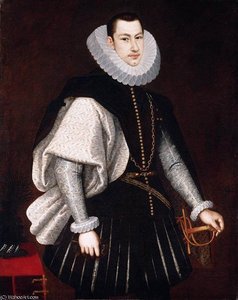
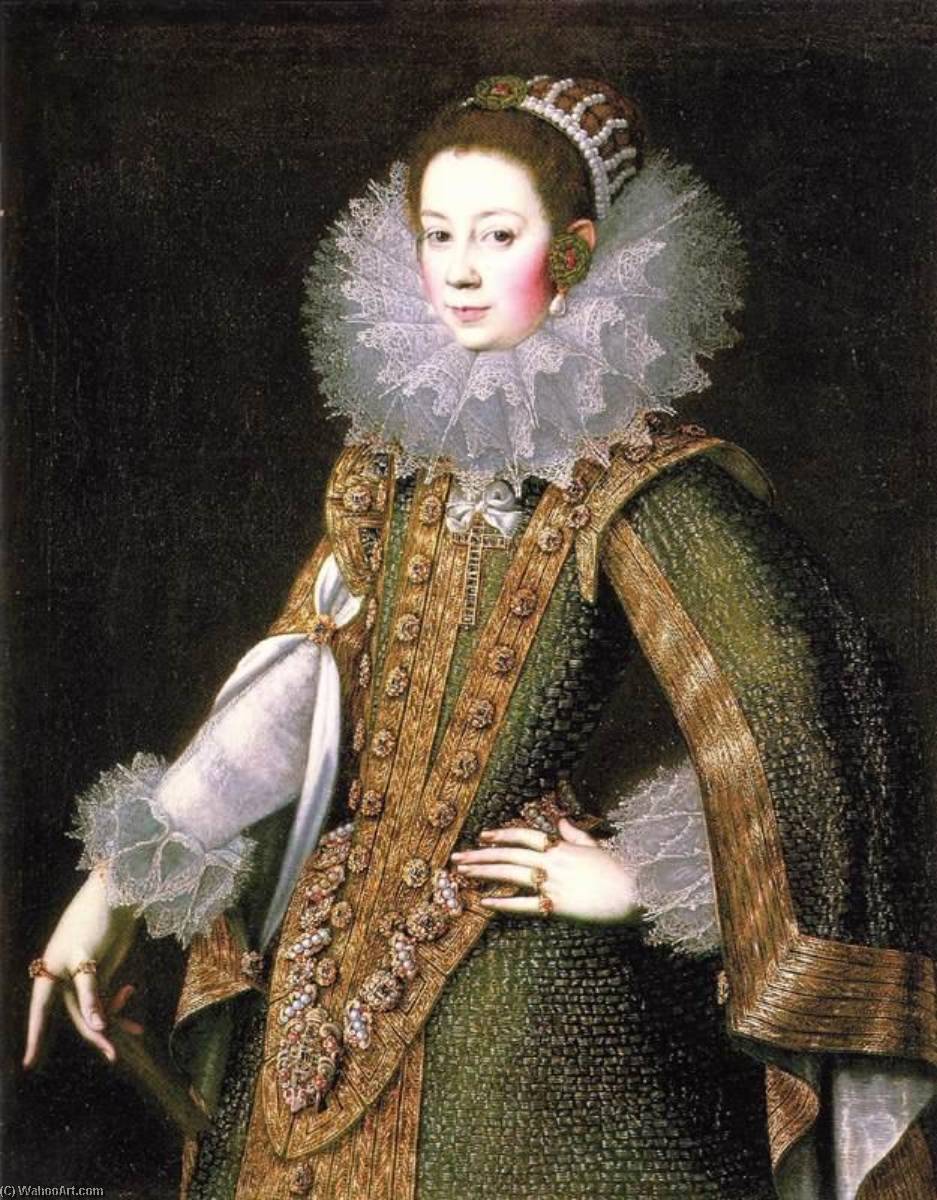
Doña Juana de Salinas

 Read More
Hand Made Oil Reproduction
Hand-painted oil on canvas in your size and frame, made to order by our artists. ( Buy Print Buy Image)




































Pick from our preset sizes that match the artwork's original proportions.

You may enter your own dimensions to fit a specific frame or space. If your selected size does not match the original image's proportions, we will either crop the artwork or extend the painting with additional hand-painted elements. A digital mockup will be sent for your approval before production begins.
Please note that the on-screen preview does not reflect the actual cropping or extension. Only the mockup will accurately show the final composition.
While custom sizes are available, we recommend selecting a dimension from the predefined list to preserve the original proportions.
After order, ArtsDot.com team will email client for instructions and provide a mockup preview
Worldwide Delivery () in 3/4 weeks instead of standard 5 weeks. (24 August). No compromise on quality.

Free Worldwide Express Shipping

High-Quality Linen Canvas

Full Shipping Insurance

Customs Tax Refund Guarantee

True Color Matching Guarantee

60-Day Return Policy (Defects Only)

100% Money-Back Guarantee

Bulk Discount Offer
 Glass option is only available in size under 110 CM

Doña Juana de Salinas
Reproduction Medium
Reproduction Size
-


Total Price
$ 263
Related Artworks







Artist Biography
The Enigmatic Brush of Rodrigo de Villandandro
In the grand, sun-drenched tapestry of the Spanish Golden Age, certain names shine with a blinding brilliance, while others linger like a soft, evocative shadow. Rodrigo de Villandermandro (1588–1623) belongs to that second, more mysterious category. A painter whose life was as brief as it was impactful, Villandandro remains an enigmatic figure, a master of the subtle and the serene. Born in Madrid around 1588, his presence in the historical record is sparse, often glimpsed only through the prestigious commissions he fulfilled for the Habsburg court. Yet, within the few surviving strokes of his brush, one finds a profound sensitivity that speaks volumes of a talent that was perhaps destined for even greater heights had time not been so unkind.
The foundations of his artistry were laid under the watchful eye of Juan Pantoja de Aragón, one of the most formidable court painters of the era. From this mentorship, Villandandro inherited more than just technical proficiency; he absorbed the very essence of the Spanish Baroque. He learned to manipulate chiaroscuro, not merely as a tool for dramatic tension, but as a means to sculpt flesh and fabric with a luminous, almost ethereal quality. While his predecessor often leaned toward the theatrical and the imposing, Villandandro developed a signature style defined by a remarkable delicacy. His work eschews the aggressive bravado of some contemporaries, opting instead for a quiet, psychological depth that invites the viewer into a moment of silent contemplation.
A Legacy Captured in Royal Portraits
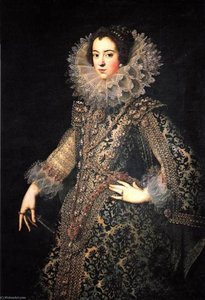
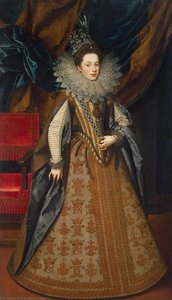
The true significance of Villandandro’s oeuvre lies in his ability to capture the regal dignity of the Spanish monarchy without sacrificing the human soul beneath the crown. His portraits of Philip IV and Isabel de Borbón serve as exquisite windows into the courtly life of the seventeenth century. In these works, the artist demonstrates a masterful command over texture and light; one can almost feel the weight of the heavy velvets, the cold shimmer of pearls, and the intricate metallic threads of royal embroidery. He possessed a rare gift for rendering the nuances of expression, capturing subjects in serene, poised states that convey an inner nobility.
Beyond the high-profile monarchs, his talent extended to more intimate depictions, such as:
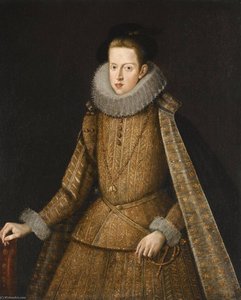
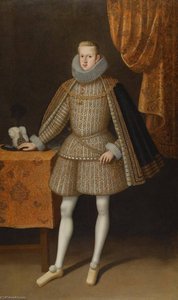
- Portrait of the young Philip IV: A captivating study featuring the monarch in a three-quarter length pose, adorned with a feathered cap and the prestigious Order of the Golden Fleece.
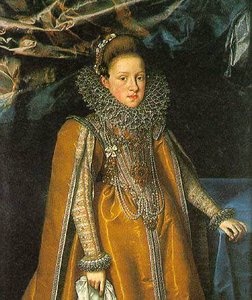
- Isabel of France: A work that showcases his ability to blend historical grandeur with a soft, romanticized elegance.
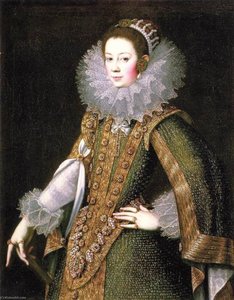
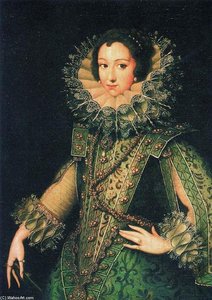
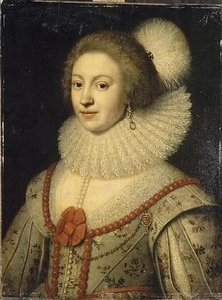
- Portrait of an Unknown Lady: An evocative piece that highlights his skill in capturing the enigmatic beauty of the era's aristocracy.
Through these compositions, Villandandro achieved a delicate balance between realism and idealization. He did not merely record a likeness; he elevated his subjects, using soft light to bathe them in an atmosphere of contemplative beauty. His meticulous attention to detail—the way light catches a single jewel or the subtle fold of a lace collar—underscores a commitment to a realism that feels both tangible and transcendent.
Historical Significance and Artistic Echoes
Though his career was cut short by his untimely death in 1623, the impact of Rodrigo de Villandandro’s refined aesthetic continues to resonate. He represents a crucial bridge in the evolution of Spanish portraiture, moving away from the rigid, formal iconographies of the late Renaissance toward a more nuanced, psychologically aware Baroque style. His ability to infuse royal portraiture with a sense of quiet intimacy helped pave the way for the even more profound emotional landscapes later explored by masters like Velázquez.
To study Villandandro is to encounter a master of the subtle touch. He reminds us that power does not always need to be shouted through bold, sweeping gestures; sometimes, it is most powerfully felt in the softest light, the quietest gaze, and the most delicate rendering of a single, fleeting moment of grace. His life may have been brief, but his artistic voice remains a hauntingly beautiful melody within the vast symphony of Spanish art history.
rodrigo de villandandro
1588 - 1623 , Spain
Quick Facts
- Artistic Movement Or Style: Renaissance Painting
- Artists Or Movements Influenced By This Artist: ['Renaissance']
- Artists Who Influenced This Artist: ['Juan Panto']
- Date Of Birth: ca. 1588
- Date Of Death: 1623
- Full Name: Rodrigo de Villandandro
- Nationality: Spanish
- Notable Artworks:
- Portrait of Philip IV of Spain
- Portrait of Isabel de Borbón
- Portrait of an Unknown Lady
- Place Of Birth: Madrid?, Spain