 Preview
 Send
Send Share
Share
 Details

 Download
 Similars
 X-Ray
X-Ray Diaporama
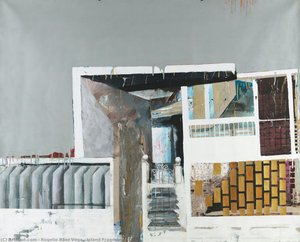
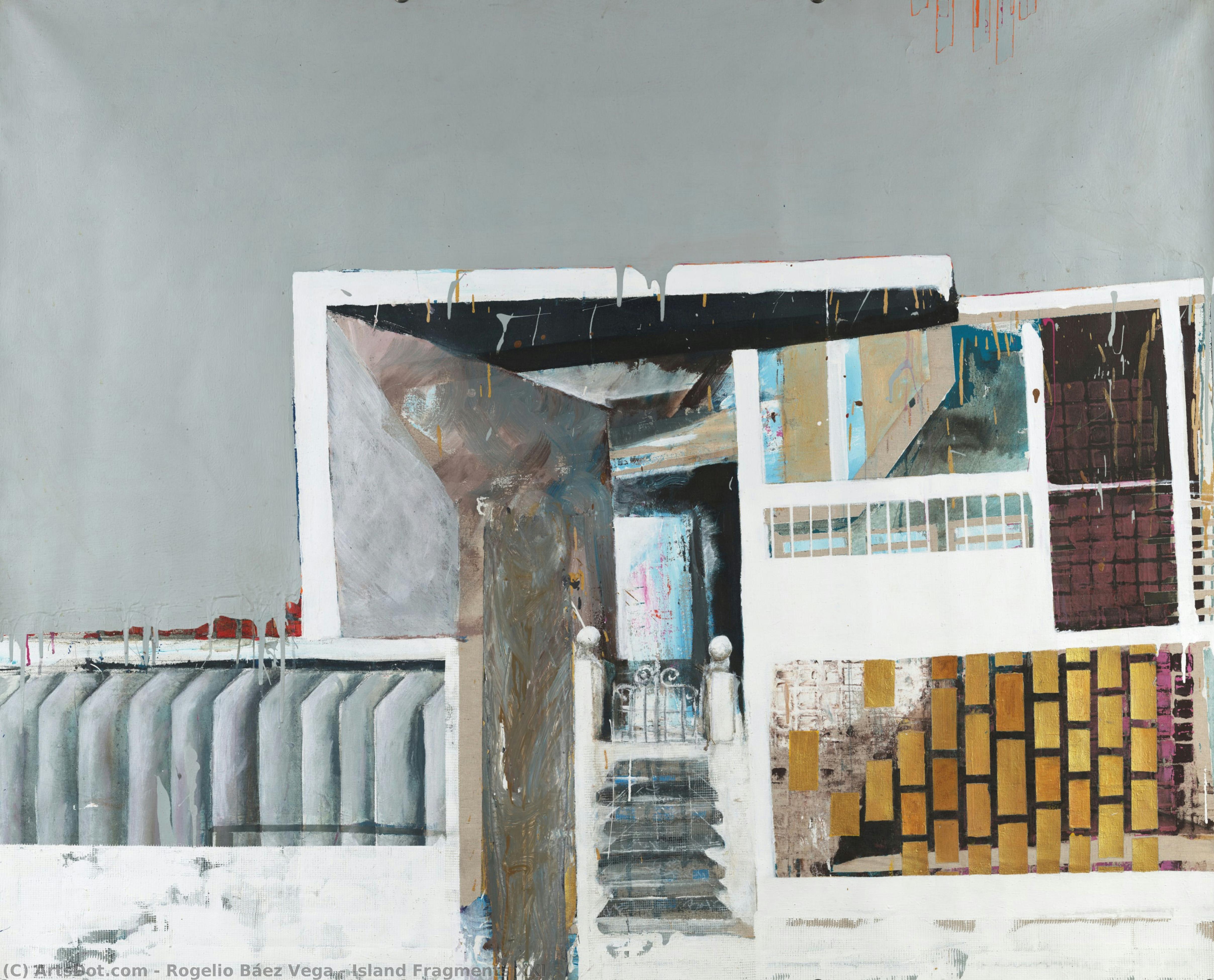
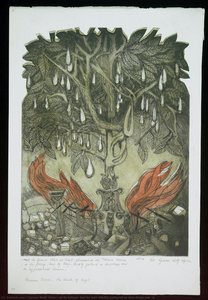
Island Fragments XXI


 Read More
Giclée / Art Print
Museum-quality giclée or canvas print with fast production and flexible finish options. ( Buy Hand Made Painting Buy Image)




































Pick from our preset sizes that match the artwork's original proportions.

You may enter your own dimensions to fit a specific frame or space. If your selected size does not match the original image's proportions, we will either crop the artwork or extend the image with a mirrored or solid-fill edge. A digital mockup will be sent for your approval before production begins.
Please note that the on-screen preview does not reflect the actual cropping or extension. Only the mockup will accurately show the final composition.
While custom sizes are available, we recommend selecting a dimension from the predefined list to preserve the original proportions.
Worldwide Delivery () in 2 weeks instead of standard 4/5 weeks. (22 August)

Free Worldwide Express Shipping

High-Quality Linen Canvas

Full Shipping Insurance

Customs Tax Refund Guarantee

True Color Matching Guarantee

60-Day Return Policy (Defects Only)

100% Money-Back Guarantee

Bulk Discount Offer
 Glass option is only available in size under 110 CM

Island Fragments XXI
Giclée / Art Print
Reproduction Size
-


Total Price
$ 63
Related Artworks




Artist Biography
A Constructed Disquiet: The World of Rogelio Báez Vega
Rogelio Báez Vega, born in San Juan, Puerto Rico, in 1974, doesn’t simply paint architecture; he excavates it. His canvases aren't representations of buildings but rather palimpsests of history, memory, and the fraught relationship between a people and their constructed environment. Growing up on an island steeped in colonial legacies, Báez Vega’s artistic journey has been one of unraveling the layers of imposed structures—both physical and societal—that define Puerto Rico's identity. He earned a Bachelor of Visual Arts from the University of Puerto Rico in 2005, but his education extends far beyond formal training, rooted in independent study with artists like Fran Cervoni and Amanda Carmona Bosch, and shaped by a deep engagement with the island’s artistic communities. This foundation fostered not just technical skill but a critical lens through which to examine the spaces around him.The Architecture of Absence: Themes and Influences
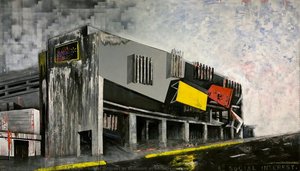
Báez Vega's work consistently returns to concerns surrounding the constructed environment, architecture, and spatial habitats—but these aren’t celebrations of design or feats of engineering. Instead, he focuses on the often-overlooked structures that embody Puerto Rico’s complex history: gas stations, universities built during periods of American influence, abandoned social housing projects. These are spaces imbued with a particular kind of melancholy, sites where utopian aspirations have crumbled and colonial narratives linger. His paintings aren't about what *is* there but rather the absences within those structures—the stories untold, the promises broken, the weight of history pressing down on concrete and steel. He draws heavily from Caribbean literature, using it as a springboard to explore contemporary political culture and the enduring impact of colonialism. This literary influence infuses his work with a sense of allegory and metaphor, inviting viewers to look beyond the surface and consider the deeper social and political contexts at play. The artist’s interest in vernacular architecture—the everyday buildings that reflect local traditions and materials—provides a counterpoint to the imposing structures of colonial power, highlighting the resilience and ingenuity of Puerto Rican culture.A Process of Excavation: Technique and Materials
Báez Vega's artistic process is as compelling as the finished works themselves. He eschews traditional painting methods, rejecting brushes in favor of techniques more akin to construction than depiction. His canvases are built up with dense layers of oil paint and beeswax—a deliberate choice that alters the original appearance of the structures he portrays, creating a new architectural space overtaken by ecological processes. This layering isn’t merely aesthetic; it's a metaphor for the way history accumulates, obscuring and transforming the past. He describes his approach as akin to building models in an architectural studio, emphasizing the preparatory work and meticulous construction that goes into each piece. The use of stencilling—a technique borrowed from screen printing—adds another layer of complexity, requiring intricate planning before the paint even touches the canvas. This deliberate process reflects a rejection of spontaneity, mirroring his desire to carefully excavate and reconstruct the narratives embedded within these spaces. He connects with artisan methods, utilizing knowledge gained through various jobs he held for survival – woodwork, brickwork, build work – reinventing how he applies paint onto the canvas.From Local Platforms to International Recognition
Báez Vega’s career has been marked by a commitment to fostering artistic communities in Puerto Rico. He was a founding member of The Storehouse Group, a gallery that provided a platform for emerging artists to break into the international art market, and founder of La Corporación Artist Studios, which offered studio space to local creatives. This dedication to supporting fellow artists demonstrates his belief in the power of collective action and the importance of creating opportunities within Puerto Rico’s artistic landscape. His work gained wider recognition through exhibitions in Los Angeles, Miami, New York, and Barcelona, culminating in a first-place award at the 3er Certamen de Arte Joven of Oriental Bank and Trust of Puerto Rico in 2010 and a Beca Lexus para Artistas in 2011. More recently, his work has been showcased at prestigious institutions such as MASS MoCA, Art Omi, Vermont Studio Center, and the Joan Mitchell Foundation in New Orleans, solidifying his position as a significant voice in contemporary art. In 2024, he held his first solo museum exhibition at the Museo de Arte y Diseño de Miramar (MAMDMi), featuring over twenty paintings created over the past six years, and presented a new series of works at a leading London gallery.Resonating Visions: Historical Significance and Contemporary Relevance
Rogelio Báez Vega’s work transcends mere representation; it's an act of cultural excavation, a poignant meditation on colonialism, identity, and the enduring power of place. His paintings resonate with a unique vision—one that acknowledges the weight of history while simultaneously offering a glimmer of hope for a more just future. The inclusion of his works in prominent collections such as the Jorge Pérez Collection, Museo de Arte de Puerto Rico, Whitney Museum of American Art, and Norval Foundation underscores their significance within the broader art historical canon. His ongoing exploration of constructed environments—particularly those shaped by colonial forces—remains profoundly relevant in a world grappling with issues of displacement, inequality, and the legacies of power. Through his meticulous process, evocative imagery, and unwavering commitment to social justice, Báez Vega invites viewers to confront uncomfortable truths and imagine new possibilities for Puerto Rico and beyond. He is not simply painting buildings; he’s building narratives—and challenging us to question the foundations upon which they are built.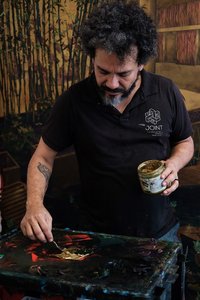
rogelio báez vega
1974 - , Puerto Rico
Quick Facts
- Artistic Movement Or Style: Contemporary Painting
- Artists Who Influenced This Artist:
- Fran Cervoni
- Amanda Carmona Bosch
- Melanie Reign
- Date Of Birth: 1974
- Full Name: Rogelio Báez Vega
- Nationality: Puerto Rican
- Notable Artworks:
- Insolvent Utopias series
- Santurce, De Memoria series
- ID. Parke-Davis & Co.
- Midnight Watch
- Place Of Birth: San Juan, Puerto Rico