 Preview
 Send
Send Share
Share
 Details

 Download
 Similars
 X-Ray
X-Ray Diaporama
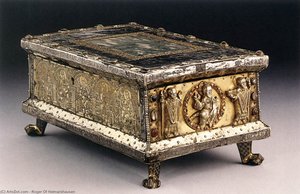
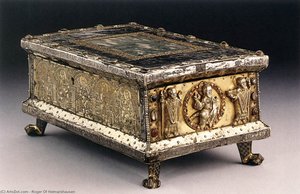
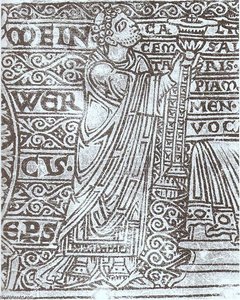
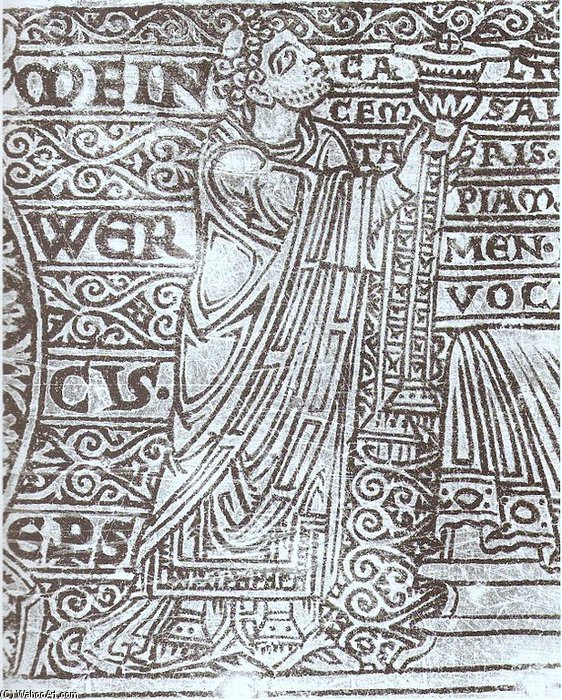
Fbpb 30 Bischof Meinwerk Auf Tragaltar Helmarshausen
 Read More
Giclée / Art Print
Museum-quality giclée or canvas print with fast production and flexible finish options. ( Buy Hand Made Painting Buy Image)




































Pick from our preset sizes that match the artwork's original proportions.

You may enter your own dimensions to fit a specific frame or space. If your selected size does not match the original image's proportions, we will either crop the artwork or extend the image with a mirrored or solid-fill edge. A digital mockup will be sent for your approval before production begins.
Please note that the on-screen preview does not reflect the actual cropping or extension. Only the mockup will accurately show the final composition.
While custom sizes are available, we recommend selecting a dimension from the predefined list to preserve the original proportions.
Worldwide Delivery () in 2 weeks instead of standard 4/5 weeks. (7 September)

Free Worldwide Express Shipping

High-Quality Linen Canvas

Full Shipping Insurance

Customs Tax Refund Guarantee

True Color Matching Guarantee

100-Day Return Policy (Defects Only)

100% Money-Back Guarantee

Bulk Discount Offer
 Glass option is only available in size under 110 CM

Fbpb 30 Bischof Meinwerk Auf Tragaltar Helmarshausen
Giclée / Art Print
Reproduction Size
-


Total Price
$ 63
Related Artworks





Artist Biography
The Enigmatic Visionary: Roger of Helmarshausen and the Flowering of Romanesque Religious Art
Roger of Helmarshausen remains a figure shrouded in the mists of time, yet his artistic legacy shines brightly as a pivotal force within the development of Romanesque painting. Unlike many artists whose lives are meticulously documented, concrete biographical details concerning Roger are scarce. We know him primarily through his surviving works – exquisite altar panels and book covers that bear the hallmarks of exceptional skill and profound spiritual devotion. He is believed to have been active during the first half of the 12th century, a period marked by increasing monastic reform and a renewed emphasis on visual piety. His association with the Benedictine monastery of Helmarshausen in Westphalia, Germany, provides the most substantial anchor for understanding his origins and artistic milieu. The monastery itself was a center of learning and artistic production, fostering an environment where Roger could hone his talents and develop his distinctive style. It is likely he served as a monastic illuminator and painter, creating works intended to enhance liturgical practice and inspire contemplation among the brethren and visiting pilgrims.A Master of Narrative and Symbolism
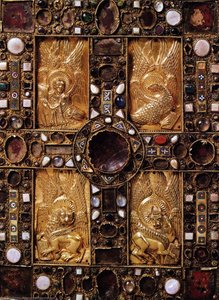
Roger’s art is characterized by a compelling blend of narrative clarity and symbolic depth. His altar panels, often crafted as portable shrines for private devotion or smaller chapels, depict scenes from the life of Christ, the Virgin Mary, and key saints with remarkable directness. He possessed an extraordinary ability to convey complex theological concepts through carefully chosen imagery and expressive figures. The FBPB 30 Bischof, a particularly celebrated example of his work – a portable altar – exemplifies this skill. Within its compact dimensions, Roger presents a complete visual program encompassing the Annunciation, Nativity, Crucifixion, and Resurrection. These scenes are not merely illustrations; they are carefully constructed meditations on the central mysteries of the Christian faith. His figures, though stylized in accordance with Romanesque conventions, radiate an inner intensity that draws the viewer into their emotional world. The use of vibrant color – particularly rich blues and golds – further enhances the spiritual impact of his compositions. Beyond narrative skill, Roger’s work is imbued with a sophisticated understanding of symbolism. Every element—from the gestures of the figures to the architectural settings—contributes to a layered interpretation of the depicted events.Influences and Artistic Development
Pinpointing specific influences on Roger's style proves challenging, given the limited documentation surrounding his life and work. However, scholars generally agree that he drew inspiration from several sources. The Ottonian manuscript tradition, with its emphasis on monumental figures and bold color palettes, likely played a significant role in shaping his early artistic development. He also demonstrates an awareness of Byzantine art, evident in the hierarchical arrangement of figures and the use of gold backgrounds—a common feature in Eastern Christian iconography. Furthermore, the emerging Romanesque style prevalent in other parts of Europe – particularly France and Italy – undoubtedly influenced his evolving aesthetic. His work represents a fascinating synthesis of these diverse traditions, resulting in a uniquely expressive visual language that set him apart from his contemporaries. Over time, Roger’s style appears to have become increasingly refined, moving away from the more rigid conventions of Ottonian art towards a greater naturalism and emotional depth. This development is particularly noticeable in his later altar panels, where figures exhibit more dynamic poses and nuanced facial expressions.Legacy and Historical Significance
While Roger of Helmarshausen may not be a household name, his contribution to the history of medieval art is undeniable. His work represents a high point of Romanesque painting, bridging the gap between the earlier Ottonian style and the more fully developed forms that would emerge in the 13th century. He was instrumental in establishing a visual vocabulary for expressing religious devotion that resonated throughout Europe.- His altar panels served as models for countless other artists.
- His book covers, prized for their exquisite craftsmanship and spiritual beauty, were widely copied and disseminated.
- The enduring appeal of his art lies in its ability to convey profound theological concepts with remarkable clarity and emotional power.